

How to Detangle a Curly Human Hair Wig Safely
A curly human hair wig can turn into a tight knot after sleep, wind, sweat, or friction from clothing. When you need to detangle curly human hair wig curls, the safest method is slow, damp, and section by section.
Human hair can break when you pull through knots too quickly. Before reaching for a comb, inspect the tangle and prepare the right tools. That small pause can protect the wig's curl pattern, lace, and lifespan.
Check the Tangle Before You Comb
The size and texture of the knot determine how you should handle it. A few loose knots need a gentle refresh. Dense matting may need professional care.
Routine tangles need patience
Routine tangles usually appear at the nape, around the ends, or where the wig touches a coat collar. You can still see separate strands, and the hair begins to loosen when you separate it with your fingers.
These knots are often caused by friction, dryness, or product buildup. They respond well to light moisture, conditioner, and careful finger detangling.
Look closely at the hair near the lace and wefts. If the knot moves without pulling the cap, you can work on it at home. Start with the least tangled section so you can learn how the hair responds.
Severe matting needs a different plan
Severe matting feels compact and solid. Several knots may have joined into one felt-like mass. A comb may stop at the outside, while pulling causes hair to shed from the weft or puts tension on the lace.
If a knot pulls the cap when you hold the hair above it, stop combing. More force can damage the wig faster than the matting itself.
Don't cut into a dense knot, soak it aggressively, or keep dragging a comb through it. A wig stylist may be able to separate the hair with less loss. If the wig has major shedding, broken wefts, torn lace, or widespread breakage, replacement may be more practical than repair.
Gather Tools That Protect the Curl Pattern
Set up your work area before you handle the wig. A clean mannequin head or wig stand keeps the hair stable and prevents new tangles from forming on the table.
You need:
- Your fingers for loosening outer knots
- A wide-tooth comb with smooth, rounded teeth
- A spray bottle filled with water
- A small amount of conditioner made for human hair wigs
- Sectioning clips that don't snag the hair
- A microfiber towel or soft cotton T-shirt
- A clean wig stand for drying
Avoid fine-tooth combs, rough brushes, and tools with sharp seams. They can catch curly strands and stretch the hair instead of releasing the knot.
Test any new product on a hidden strand first. Use only a small amount, because heavy layers of conditioner or styling product can flatten curls and leave the wig difficult to wash.
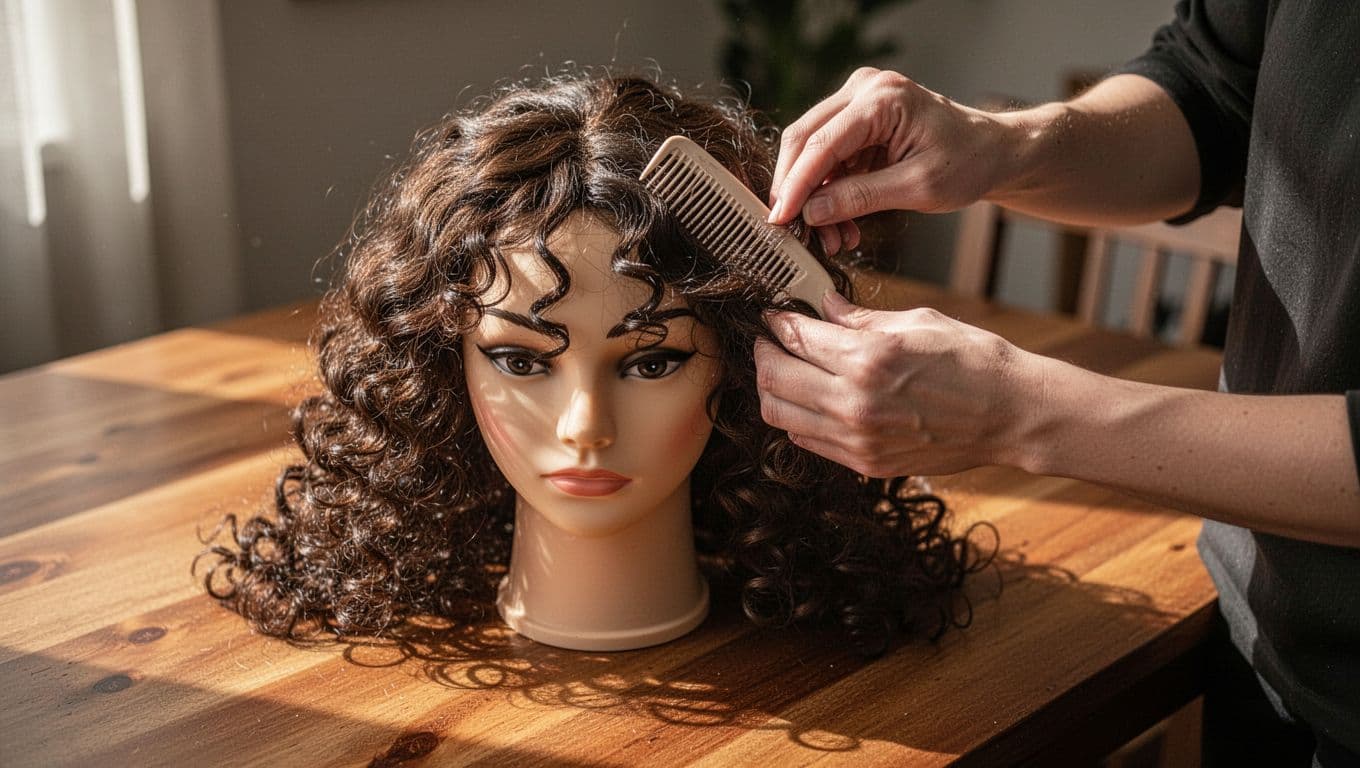
How to Detangle Curly Human Hair Wig Curls Safely
To detangle curly human hair wig hair without causing unnecessary shedding, work with small sections and minimal tension. The goal is to release knots while keeping each curl group together.
- Place the wig securely. Set it on a mannequin head or wig stand. Keep the lace flat and avoid pinning through delicate lace. If you don't have a stand, lay the wig on a clean towel with the hair spread out.
- Divide the hair into sections. Separate the wig into four to six manageable areas. Clip away hair that you're not working on. Sections around one to two inches wide give you better control than large handfuls.
- Add light moisture. Mist one section until it feels lightly damp, not soaked. Apply a small amount of wig-safe conditioner to the middle and ends. Keep most of the product away from the cap, knots, and lace.
- Loosen the knot with your fingers. Start at the outside of the tangle. Separate individual loops and gently pull them apart. Hold the hair above the knot with your other hand, close to the base, so the tension doesn't travel to the lace or weft.
- Comb from the ends upward. Place the wide-tooth comb at the last inch of the hair. Clear that area first, then move slightly higher. Continue in short sections until you reach the roots. Never begin at the roots and force the comb downward through the full knot.
- Pause when the comb catches. Remove the comb instead of twisting or yanking it. Return to your fingers and loosen the exact spot where it stopped. Add a little more moisture only if the section has dried.
- Shape the curl as you finish. Once the section is clear, gently cup and squeeze the curls upward with your palm. Avoid raking through the hair, since that can separate curl groups and create frizz.
Move to the next section only after the previous one is fully clear. If you notice a large amount of shedding, stop and reassess your technique. A few loose hairs may come away during care, but constant shedding indicates that the hair or construction may already be compromised.
When you detangle curly human hair wig curls, patience matters more than speed. Ten gentle minutes can protect the wig better than one forceful pass.
Shop Curly Wigs
-
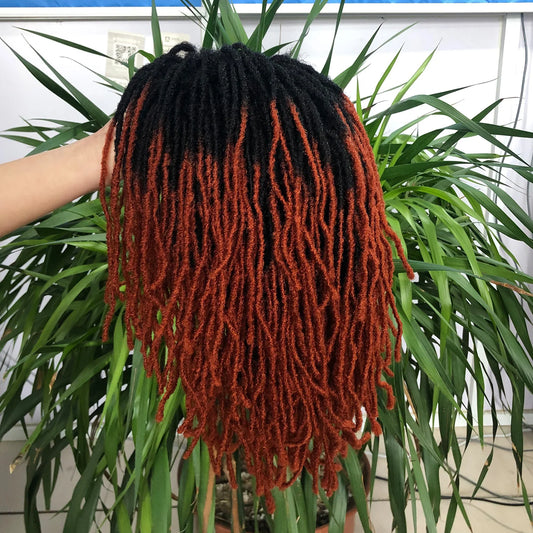
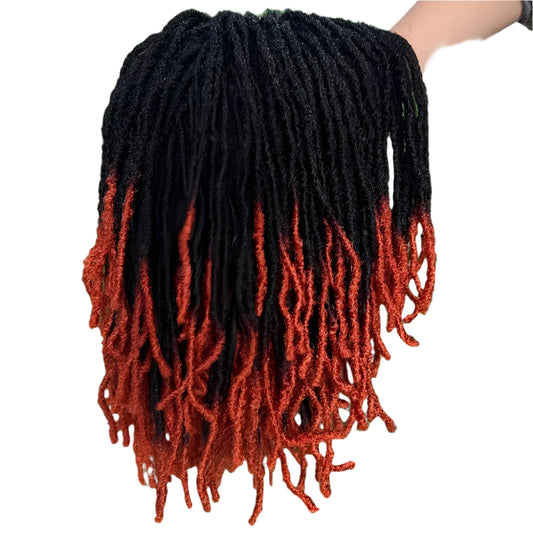
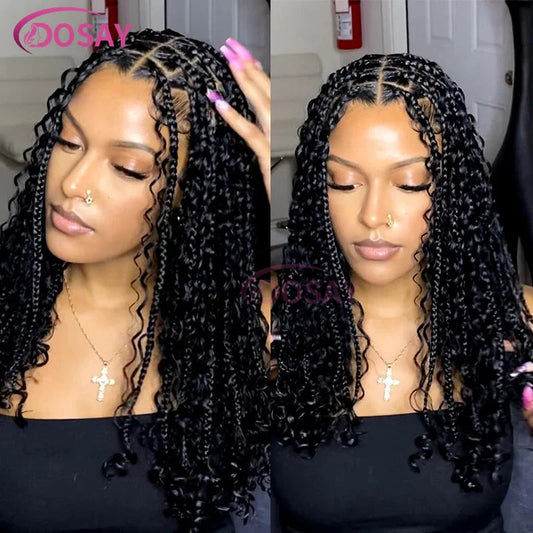
10 Inch Braided Bob Wig | Afro Dreadlock Wig | Curly Ends | Crochet Cap
Regular price From $96.00 USDRegular price$122.00 USDSale price From $96.00 USDSale -
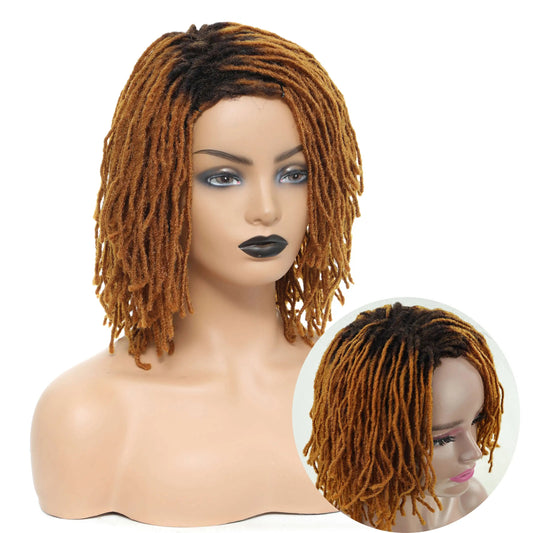
10" Short Braided Bob Wig | Faux Locs & Curly Twists | Black, Blonde, Red | Synthetic Hair
Regular price $153.00 USDRegular price$184.00 USDSale price $153.00 USDSale -
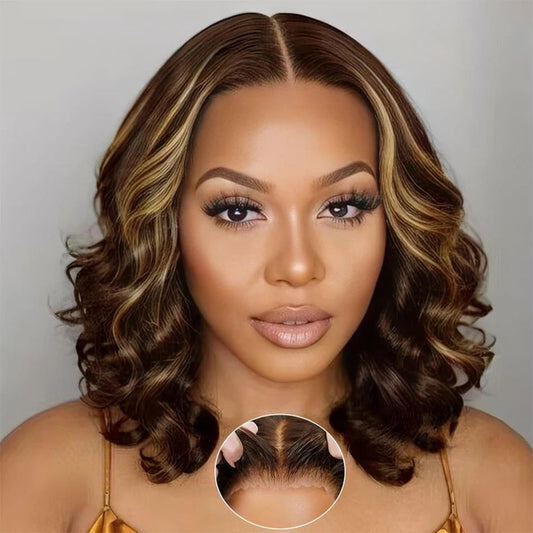
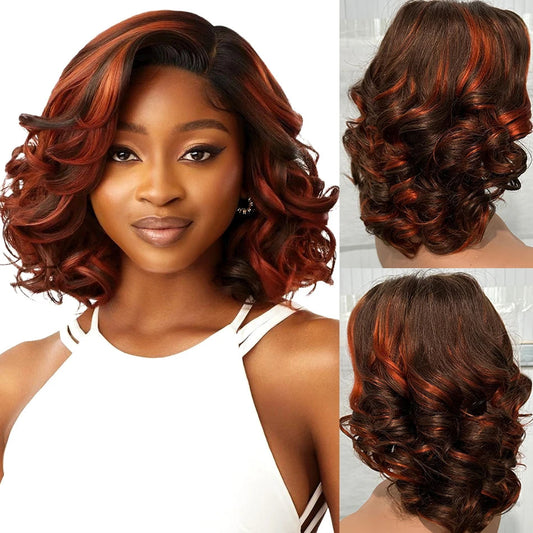
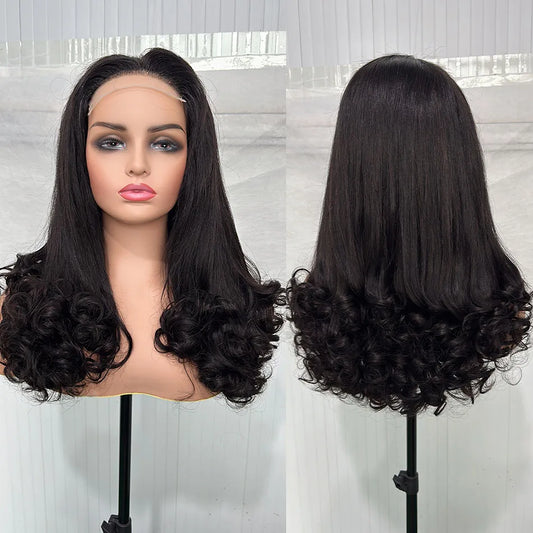
100% Human Hair Curly Bob Wigs | 5x5 HD Lace Closure, Glueless Ready to Wear
Regular price From $261.00 USDRegular price$298.00 USDSale price From $261.00 USDSale -
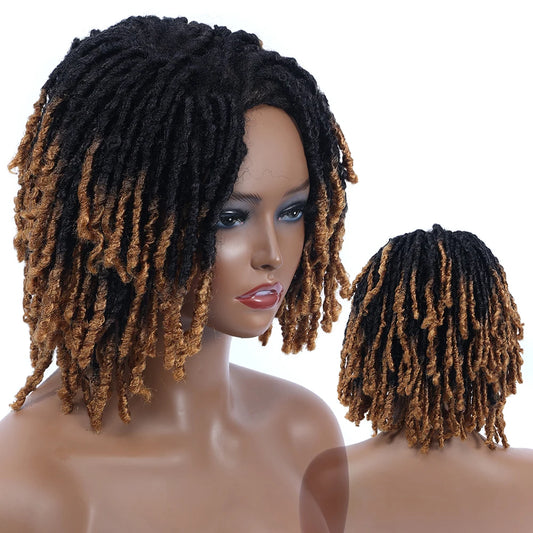
12 Inch Curly Faux Locs Dreadlock Wig | Machine or Headband Cap
Regular price From $133.00 USDRegular price$160.00 USDSale price From $133.00 USDSale -
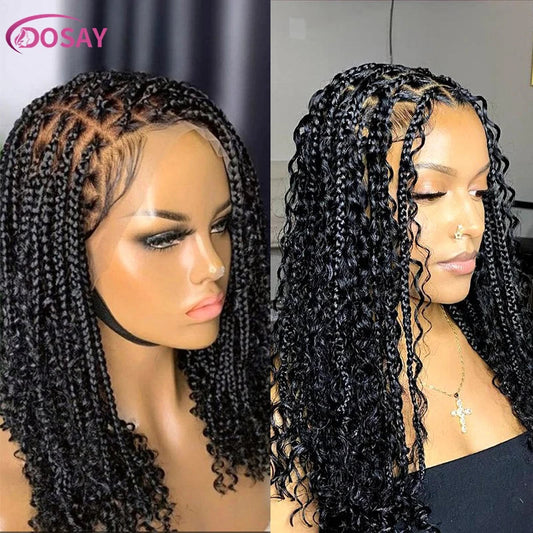
12" Curly Boho Braids Bob Wig | 360 Full Lace | Knotless Box Braids | Baby Hair
Regular price $157.00 USDRegular price$179.00 USDSale price $157.00 USDSale -
12A Burmese Curly Wig | Sophisticated 13x6 HD Transparent Full Frontal | Elegant "Spiral Pixie Curls" 100% Virgin Human Hair | "Dignified" 18–34 Inch High-Density Remy Wig for Radiant Versatile Styling
Regular price From $328.00 USDRegular price$0.00 USDSale price From $328.00 USD -
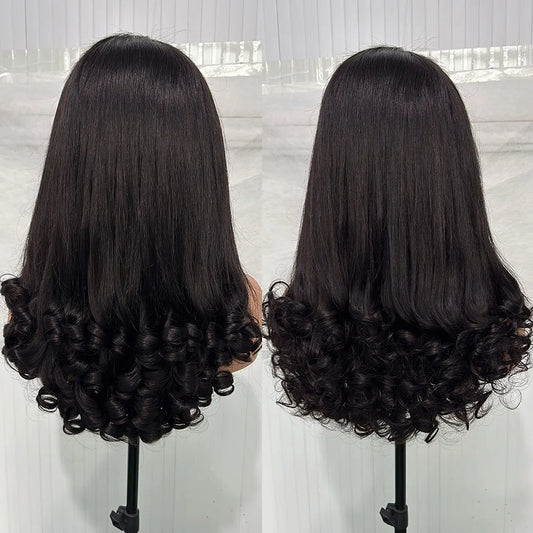
12A Double Drawn Spring Egg Curly Wig | 5x5 HD Lace | Glueless | Wear & Go | 250% Density | Brazilian Virgin Hair
Regular price From $221.00 USDRegular price$0.00 USDSale price From $221.00 USD -
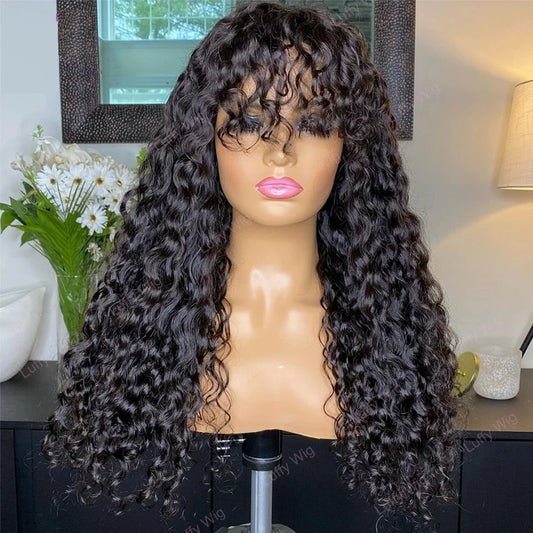
12A Grade Kinky Curly Human Hair Wig with Bangs | 100% Brazilian Virgin Human Hair Glueless Wig | Fully Machine-Made Water Wave & Jerry Curl Fringe Wig for Women
Regular price From $154.00 USDRegular price$0.00 USDSale price From $154.00 USD





Wash and Condition to Restore Curl Definition
Washing can help when tangles come with sweat, dust, or styling product, and our guide to washing a human hair wig without tangling walks through the full routine. However, remove the largest knots with your fingers before washing. Water can make compact tangles harder to separate.
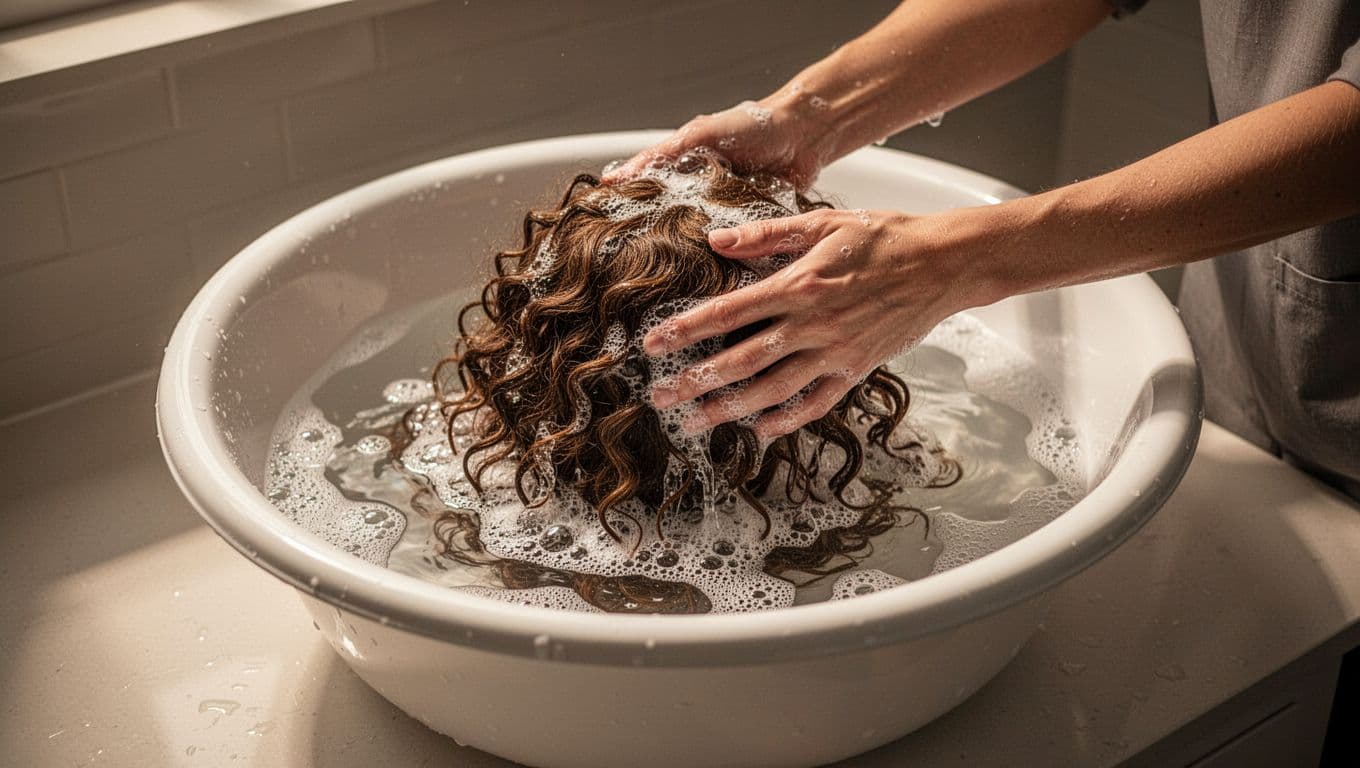
Fill a clean basin with lukewarm water and add a small amount of shampoo intended for human hair wigs. Follow the product label for the amount and use instructions. Hold the wig by the cap, then allow the hair to move in the water. Don't scrub, twist, or rub the curls together.
Rinse in the direction the hair falls. Apply conditioner to the lengths and ends, avoiding heavy product around the cap and lace. Leave it on for the time stated on the label, then rinse gently with lukewarm water.
Press the wig inside a microfiber towel or soft cotton T-shirt. Avoid wringing it, since twisting stretches wet hair and disrupts the curl pattern. Place the wig on a stand and let it air-dry with the curls in their natural shape.
Don't use a high-heat dryer to speed up the process. If you need to use a diffuser, choose low heat and low airflow only when the wig's care instructions allow it. Heat can loosen or change the existing curl pattern.
Keep the Wig from Tangling Again
Good storage prevents many knots before they start. Let the wig dry completely before storing it, then place it on a wig stand or mannequin head. This keeps the curls from being crushed under other items.
A satin or silk storage bag can reduce friction, but don't pack the curls tightly inside it. Arrange longer hair in loose sections so the ends don't twist together. Keep the wig away from rough fabrics, jewelry, and bags with metal fasteners.
Remove the wig before sleeping whenever possible. Pillow friction can create tangles at the nape and sides. If you must wear it overnight, use a smooth satin covering and avoid compressing the curls.
After each wear, check the nape and ends with your fingers. Clear small knots before they become dense mats. Also, keep collars and scarves from rubbing against the same area for long periods.
Use styling products sparingly. Too much cream, gel, or oil can collect dust and make curls cling together. Follow the wig maker's care instructions when they differ from general advice, especially if the wig has custom coloring or delicate lace.
Conclusion
The safest way to detangle curly human hair wig curls is to use light moisture, your fingers, and a wide-tooth comb. Work from the ends toward the roots while holding the hair above each knot. This approach reduces pulling and helps the curls stay grouped.
Routine knots usually need time and care, while severe matting may need a professional wig stylist or a replacement. When you detangle curly human hair wig hair gently and store it without friction, the wig has a better chance of keeping its shape, softness, and usable life.