

How to Remove Product Buildup From a Human Hair Wig
If your wig feels coated, looks dull, or loses its usual movement, adding more oil can make matters worse. Human hair wig buildup often needs a careful wash with suitable products and gentle handling.
The safest routine follows your wig maker's instructions, protects the lace and knots, and removes residue without aggressive scrubbing. Start by checking whether you're dealing with product residue, dryness, or leftover adhesive.
Key Takeaways
- Follow the wig maker's care instructions, including its recommended products and water temperature.
- Detangle carefully, cleanse without rubbing, and rinse thoroughly before conditioning the mid-lengths and ends.
- Keep heavy conditioner and oils away from the cap and knots. Ask the manufacturer before trying clarifying shampoo or adhesive removers.
How to Recognize Human Hair Wig Buildup
Styling products can leave residue when you apply them repeatedly without washing. Hairspray, dry shampoo, curl cream, and heavy serums may collect on the strands or near the hairline.
However, dullness alone doesn't prove that your wig needs stronger shampoo.
Look for a Coated Feel and Reduced Movement
Product buildup often makes strands feel waxy, sticky, or unusually stiff. Hair may separate into clumps, flatten at the roots, or lose its normal bounce.
You might also notice powdery residue after using dry shampoo or flakes where styling products have dried. Check the hair in good light, particularly around frequently styled sections.
Think about what you've applied since the last wash. If the wig became heavy after several layers of cream or serum, residue is a reasonable possibility. Avoid covering that coated feeling with another product.
Separate Residue From Dryness and Adhesive
Dry or damaged hair can also look dull and tangle easily. If the ends feel rough rather than coated, stronger cleansing could make them harder to manage.
Meanwhile, adhesive around a lace front needs separate attention. Don't pull dried glue through the hair or peel it aggressively from delicate lace.
If you see torn lace, loose knots, or severe matting, pause before washing. Ask the retailer or a wig specialist how to proceed. A normal shampoo routine won't repair those problems.
Choose Suitable Products and Prepare the Wig
Before wetting the hair, read the care label or instructions supplied with your wig. Human hair wigs can differ in coloring, processing, cap construction, and recommended maintenance.
Gather your approved shampoo, conditioner, a wide-tooth comb, a clean towel, and a suitable drying stand.
Pick Products Approved for Human Hair Wigs
Choose a shampoo the manufacturer recommends for its human hair pieces. For example, Jon Renau names Argan Smooth Luxury Shampoo in its care routine. That recommendation doesn't automatically apply to every brand.
Luxegan's Buttercup human hair bob wig lists sulfate-free shampoo and conditioner among its care tips. Follow the instructions for your particular wig rather than treating sulfate-free formulas as a universal requirement.
Don't start with clarifying shampoo because residue feels stubborn. Ask the maker whether a particular formula is suitable, especially for colored or heavily processed hair. Dish soap, baking soda, vinegar, alcohol, and harsh solvents aren't safe default substitutes.
Detangle Before Water Touches the Hair
Remove the wig before cleaning it. If it's attached with adhesive, follow the approved removal instructions first.
Work through tangles in small sections, starting at the ends and gradually moving upward. Support the hair above each tangle so your comb doesn't pull directly against the cap.
For curly textures, follow the maker's detangling method rather than forcing a brush through the curl pattern. Jon Renau's human hair care guide also recommends removing tangles before washing.
Stop if a knot won't release gently. Repeated pulling can damage the hair or its attachment points.
Wash Away Residue Without Scrubbing
Use lukewarm water only when your wig maker permits it. If its instructions specify cool water, use cool water instead. Never increase the temperature to tackle stubborn residue.
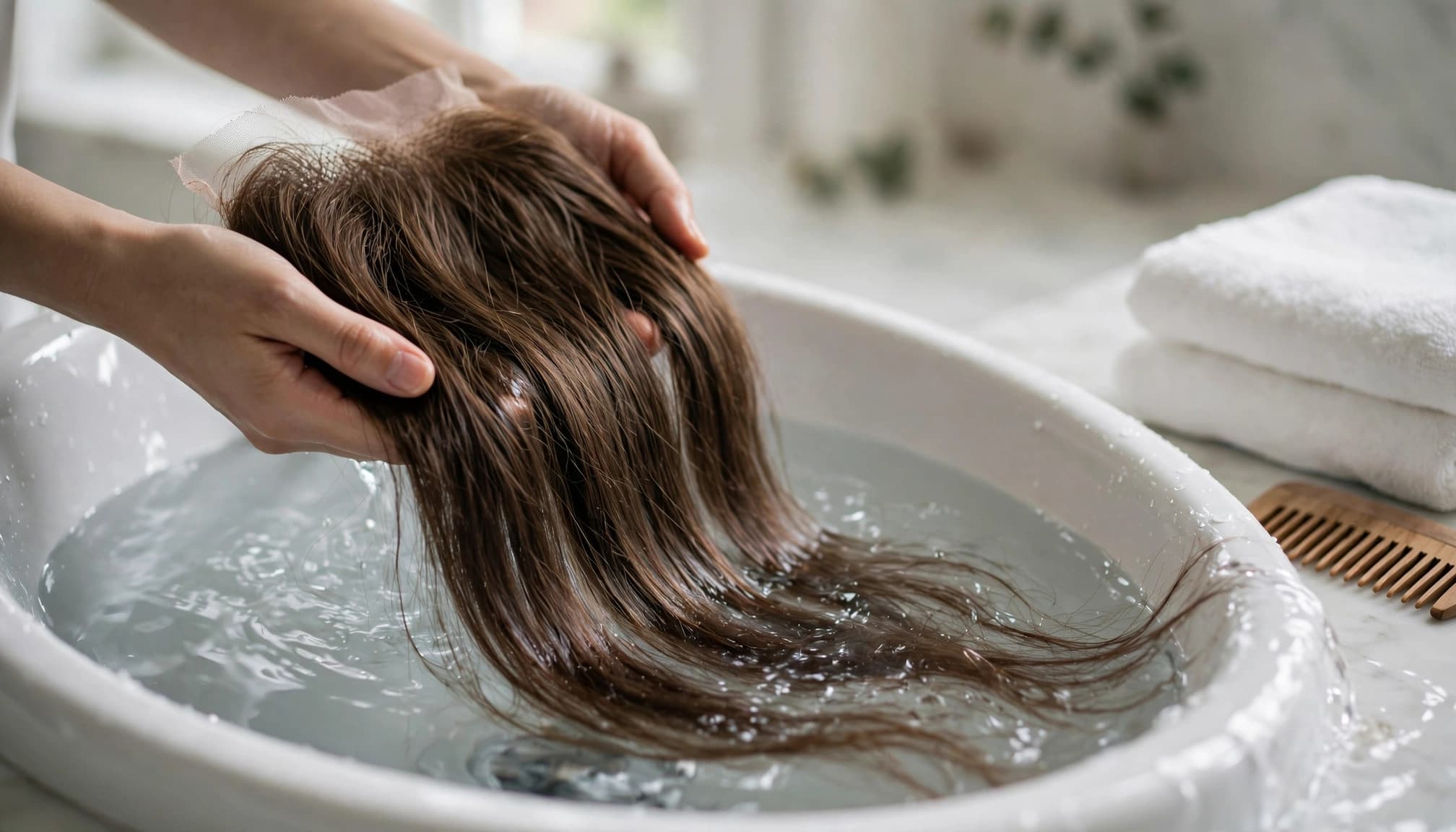
Follow this gentle washing sequence, adjusting the method to your wig's instructions:
- Wet the hair evenly. Support the wig while directing a gentle flow of water along the direction the hair falls. Avoid flipping the lengths back and forth or piling them into the basin. Follow any manufacturer-specific soaking instructions rather than leaving the wig submerged indefinitely.
- Apply the recommended shampoo amount. Work the cleanser through with light finger movements. Keep the lengths aligned and avoid rubbing strands against one another. A bigger lather doesn't mean better cleaning, so don't keep adding shampoo because bubbles look sparse.
- Handle the cap and lace carefully. Clean them only as directed by the maker. Support the base and use light contact rather than scrubbing. Never stretch the lace, scratch at knots, or use a brush to work shampoo into the hairline.
- Rinse thoroughly. Let clean water flow through the hair and cap until visible suds disappear. Check underneath the cap as well as the outer lengths. Keep supporting the wig so the weight of wet hair doesn't tug on delicate areas.
After rinsing, assess the hair without adding more cleanser immediately. Wet hair won't feel exactly like dry hair. If a distinct coating remains, ask the manufacturer about the next suitable cleaning step rather than repeating increasingly harsh washes.
Condition the Lengths, Not the Cap
Once you've rinsed out the shampoo, apply your approved conditioner to the mid-lengths and ends. Keep it away from the lace, knots, and cap unless the manufacturer gives different instructions.
Jon Renau's human hair washing and styling instructions recommend working conditioner through with your fingers for 3 to 5 minutes. They also warn against conditioning the base because it may weaken the knots.
Follow your own product's timing and use only the recommended amount. A thick coating of conditioner can leave the wig feeling heavy again.
Rinse thoroughly while keeping the hair aligned. Don't leave rinse-out conditioner behind as a substitute for a leave-in product.
Conditioner near the base can affect the knots, so keeping it off the cap protects more than the wig's volume.
Avoid adding a deep mask or oil treatment automatically. First see how the wig feels after the approved wash and conditioning routine.
Shop Los más vendidos
-
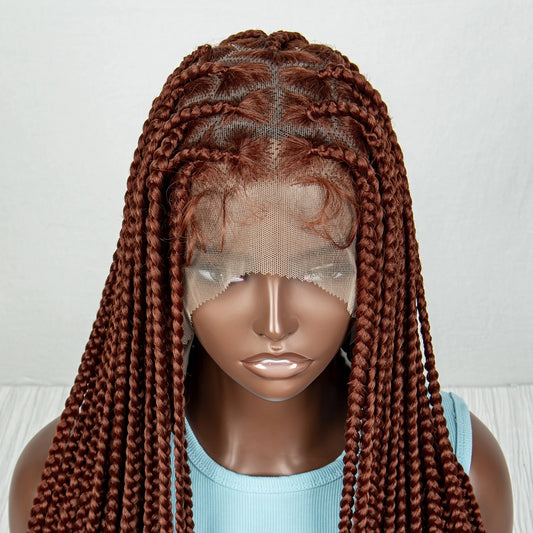
Peluca corta de locs falsos de diosa | Peluca de rastas con reflejos marrones | Peluca de crochet trenzada afro | Cabello sintético
Precio habitual A partir de $158.00 USDPrecio habitual$190.00 USDPrecio de oferta A partir de $158.00 USDOferta -
Peluca frontal de encaje HD de 13x6, rizada, de 30", color borgoña y chocolate, | Peluca de cabello humano de color 99J para mujeres | Onda profunda
Precio habitual A partir de $257.00 USDPrecio habitual$0.00 USDPrecio de oferta A partir de $257.00 USD -
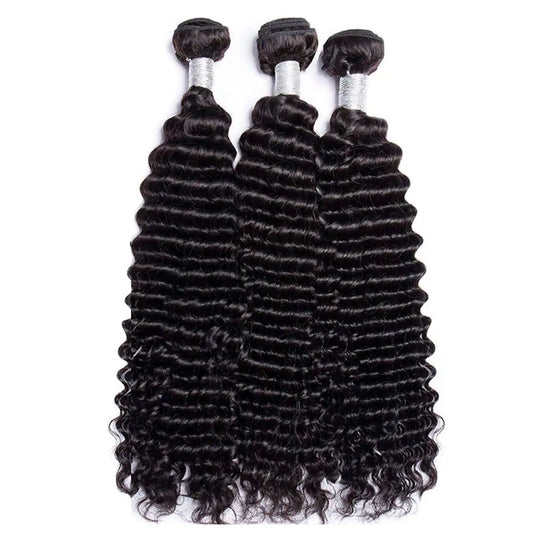
Paquetes de Cabello Humano Malayo Ondulado Profundo 12A | Extensiones de Tejido "Rizo Profundo" Sofisticadas | Opciones Elegantes de Paquetes Individuales/Múltiples de 30-32 Pulgadas | Trama de Cabello Remy "Digna" para un Estilo Radiante y Versátil
Precio habitual $364.00 USDPrecio habitual$0.00 USDPrecio de oferta $364.00 USD -
#350 Knotless Box Braids Wig | Short Lace Frontal Bob | Dark Ombre Ginger
Precio habitual $262.50 USDPrecio habitual$0.00 USDPrecio de oferta $262.50 USD -
Peluca corta de rastas falsas afro | Trenzas sintéticas resistentes al calor | Peluca unisex para mujeres y hombres negros
Precio habitual $90.00 USDPrecio habitual$120.00 USDPrecio de oferta $90.00 USDOferta -
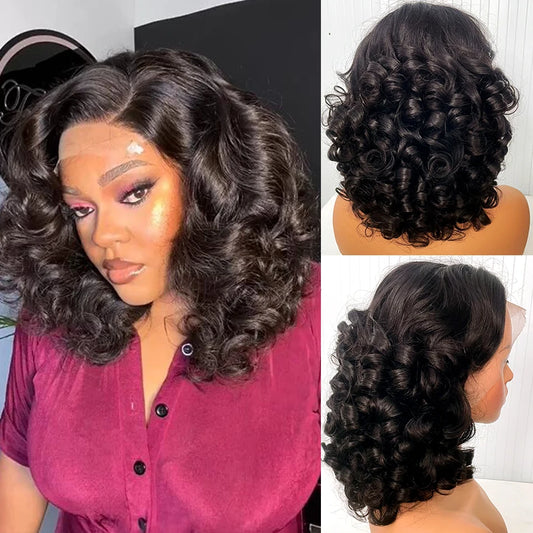
Peluca frontal de encaje HD 13x4 con cabello virgen vietnamita de donante 12A | Densidad del 250% | Doble capa | Ondas voluminosas | Sin pegamento
Precio habitual A partir de $242.00 USDPrecio habitual$0.00 USDPrecio de oferta A partir de $242.00 USD -
Zapatos Derby Wingtip para hombre de Italia | Oxfords clásicos modernos de bloques de color (aumento de altura, piel auténtica)
Precio habitual $263.00 USDPrecio habitual$301.00 USDPrecio de oferta $263.00 USDOferta -
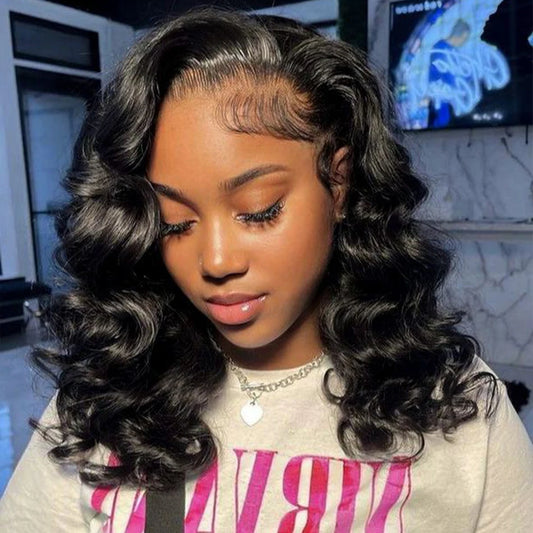
Brazilian Human Hair 13x4 Lace Front Wig | Glueless, Pre-Plucked with Baby Hair
Precio habitual A partir de $99.00 USDPrecio habitual$132.00 USDPrecio de oferta A partir de $99.00 USDOferta







Dry the Wig Without Pulling or Overheating
Lay the wig on a clean towel and gently blot excess water. Don't twist, wring, or rub it between the towel's folds.
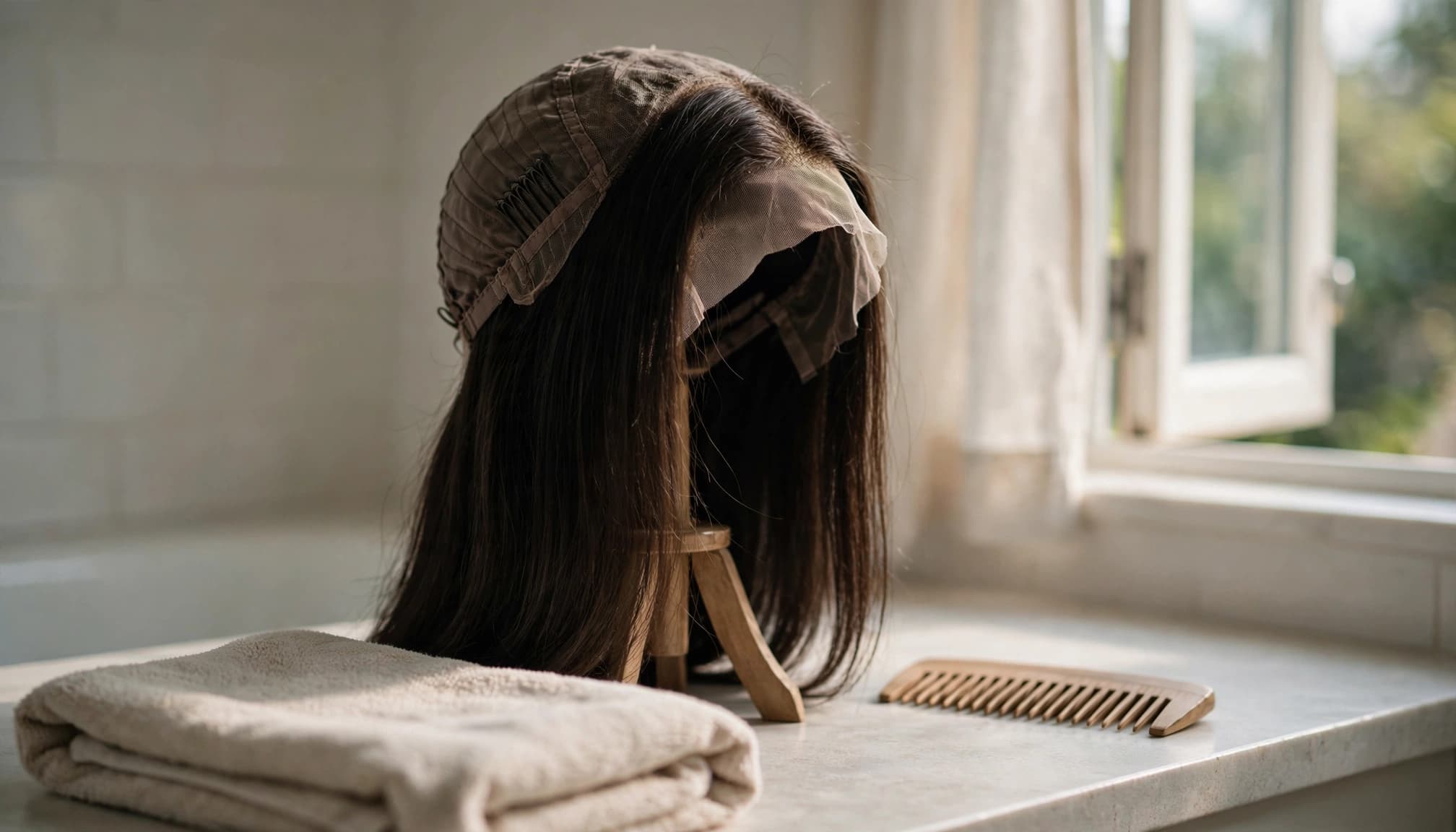
Air-dry according to the manufacturer's instructions, using a stand that supports the wig without stretching its cap. Give the base enough airflow to dry completely before wearing or storing it.
Avoid brushing wet hair. If the maker permits wet detangling, use a wide-tooth comb gently and support the lengths while working.
Jon Renau advises letting the cap dry completely before placing the piece on a canvas block head. That matters because a dense support can restrict airflow around a damp base.
If you plan to blow-dry or heat-style, follow the wig's approved settings and heat-protection instructions. Human hair doesn't make every heat level safe, particularly when the wig has been colored or processed.
Prevent Buildup Without Overwashing
Use the smallest effective amount of styling product, then assess the result before adding more. Applying another layer every morning can make a clean wig feel coated sooner.
Keep heavy oils, rich conditioners, and styling creams away from the cap and knots. When your approved routine includes these products, apply them sparingly where the lengths need them.
Also consider how often you use dry shampoo or hairspray. These products can help with styling, but repeated applications still need washing.
Jon Renau's alternative hair care guide recommends washing every 6 to 8 wears, adjusted for lifestyle and environmental conditions. This is general guidance, not a buildup-specific rule or a schedule for every wig.
Follow your maker's schedule and watch for changes in texture, odor, and product residue. Clean styling tools also help avoid transferring old product back onto freshly washed hair.
Once dry, store the wig as instructed. Don't put a damp cap into a closed bag or container.
Frequently Asked Questions
Can I Use Synthetic-Wig Shampoo on Human Hair?
Use a product only if its label and your wig maker approve it for human hair. Synthetic fibers and human hair have different care requirements, so their products aren't automatically interchangeable.
Jon Renau provides a separate synthetic wig care guide for its synthetic pieces. Don't transfer synthetic-wig soaking, conditioning, or styling instructions to a human hair wig without checking.
Likewise, a human hair wig's ability to accept heat styling doesn't mean a synthetic wig can tolerate the same treatment.
What if Buildup Remains After Washing?
First, check that you've rinsed thoroughly and haven't added too much conditioner afterward. If the wig still feels coated once dry, contact the maker or retailer with the names of the products you've used.
Ask whether another wash or a particular cleanser is appropriate. Don't escalate to clarifying shampoo, alcohol, adhesive solvents, or household cleaners without approval.
Persistent roughness or tangling may involve damage rather than residue. A wig specialist can help assess the hair before you attempt more cleaning.
Keep the Wig Clean With Gentle, Targeted Care
A coated wig needs careful cleansing before it needs another layer of styling product. Start with the maker's approved routine, handle the hair gently, and protect the lace and knots throughout washing.
Thorough rinsing and controlled conditioning help you avoid replacing one residue with another. If buildup persists, get advice before using stronger products so your next step suits the wig you own.