
How to Choose Ponytail Extensions by Texture and Length
The right ponytail extension should look like a believable continuation of your own hair, not a separate piece attached at the base. Texture, length, styling habits, and the way you wear your ponytail all affect the match.
When comparing ponytail extensions, start with the hair pattern you want to blend, then consider how much length feels practical. A few careful checks can help you choose a style that suits your look and your routine.
Key Takeaways
- Compare the extension's visible curl pattern, wave, and finish with your hair when it is styled as you plan to wear it.
- Measure from the spot where you'll secure your ponytail to the point where you want the ends to fall.
- Account for curl shrinkage, volume, attachment style, and the weight of longer hair.
- Check the product listing for fiber type, heat-styling instructions, length, and attachment details.
- A ponytail that feels too tight or heavy can strain your hair, so comfort matters as much as appearance.
Match the Texture to Your Natural Hair
Texture is often the first thing people notice when an extension doesn't blend. A sleek ponytail over a curly base can look disconnected, while a curl pattern that is close but not identical may blend well once you style both together.
Compare the hair in its intended style
Look at your own hair after you have prepared it for the ponytail. If you plan to wear your hair stretched or smoothed, compare the extension with that finish. If you prefer your curls in their natural state, compare the pattern, curl size, and overall fullness in that state instead.
Pay attention to more than the words "curly" or "wavy" on a listing. Two curly ponytails can have different curl sizes, density, and definition. Product photos can help, but check several angles when available, and remember that lighting and styling affect how a texture appears.
Treat texture labels as a starting point
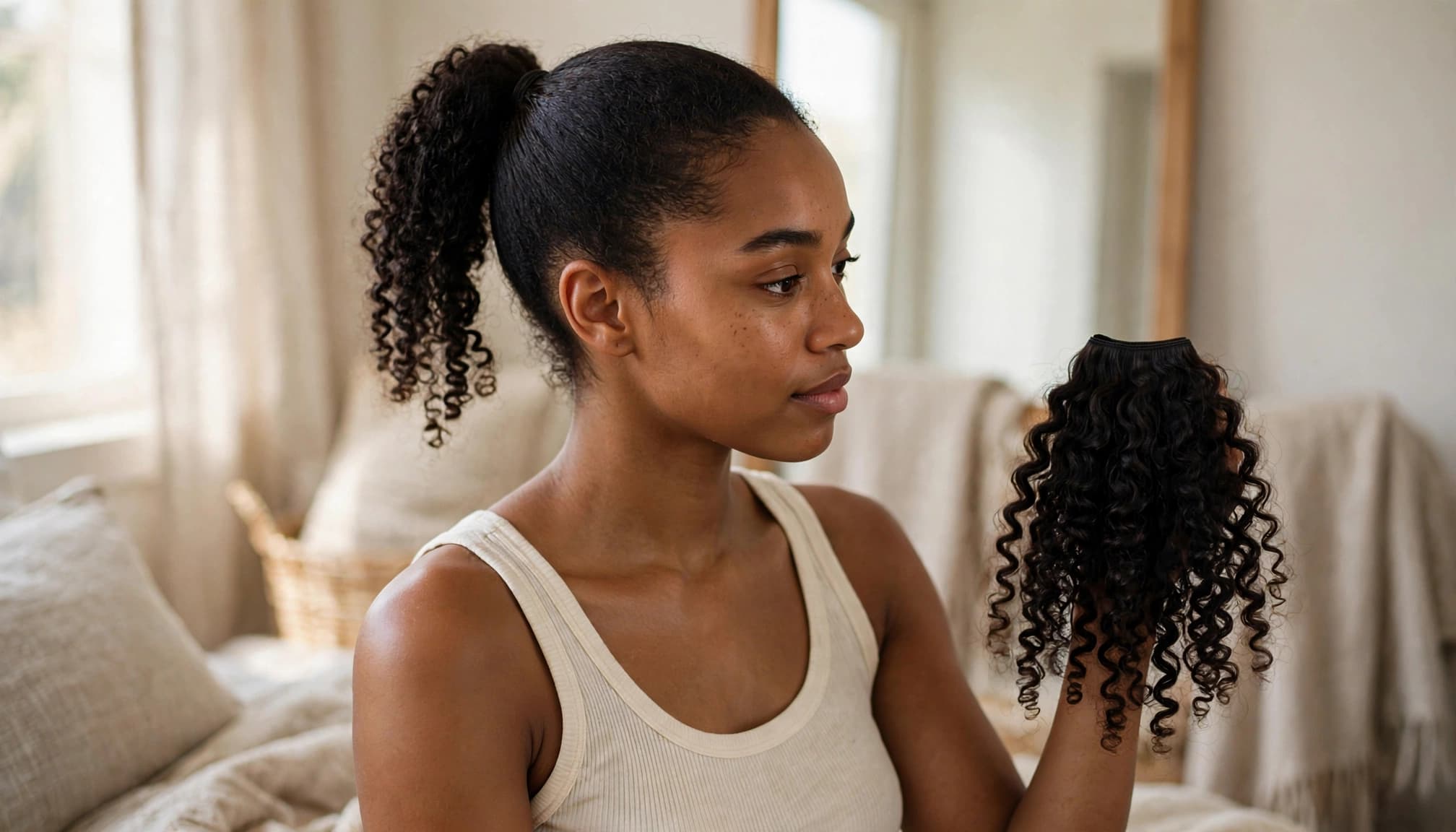
Labels such as straight, body wave, kinky curly, or 4B/4C describe the product's look. They don't guarantee a match for everyone with a similar natural pattern. Your hair may also look different after washing, blow-drying, braiding, or applying styling products.
For a clearly textured option, Luxegan's Afro kinky curly drawstring ponytail is listed as 4B/4C and comes in a 10-to-28-inch range. Compare its displayed curl pattern with your own hair rather than relying on the texture label alone.
Choose a Length for Your Look and Routine
An extension's length changes the shape and movement of the ponytail. A shorter piece can add fullness without a dramatic change, while a longer one creates more length and visual impact. Neither option is automatically more flattering or comfortable.
Measure from your ponytail base
Gather your hair where you expect to attach the extension, then measure down your back to the point where you want the ends to land. This gives you a more useful reference than choosing by a product photo alone. Also check how the listing defines its length, especially if it includes a measurement diagram.
The ponytail's position changes the finished look. A high ponytail falls differently from a low one, and a curly extension may appear shorter when worn because the curls coil up. Consider the extension in its natural texture, not only at its fully stretched length.
Choose for the occasion and how you move
For everyday wear, think about whether the ends will sit comfortably against your back or shoulders while you walk, commute, or sit. A longer style can catch on clothing or feel heavier during a full day. For an event or a planned photoshoot, you may prefer added length that you wouldn't choose for daily use.
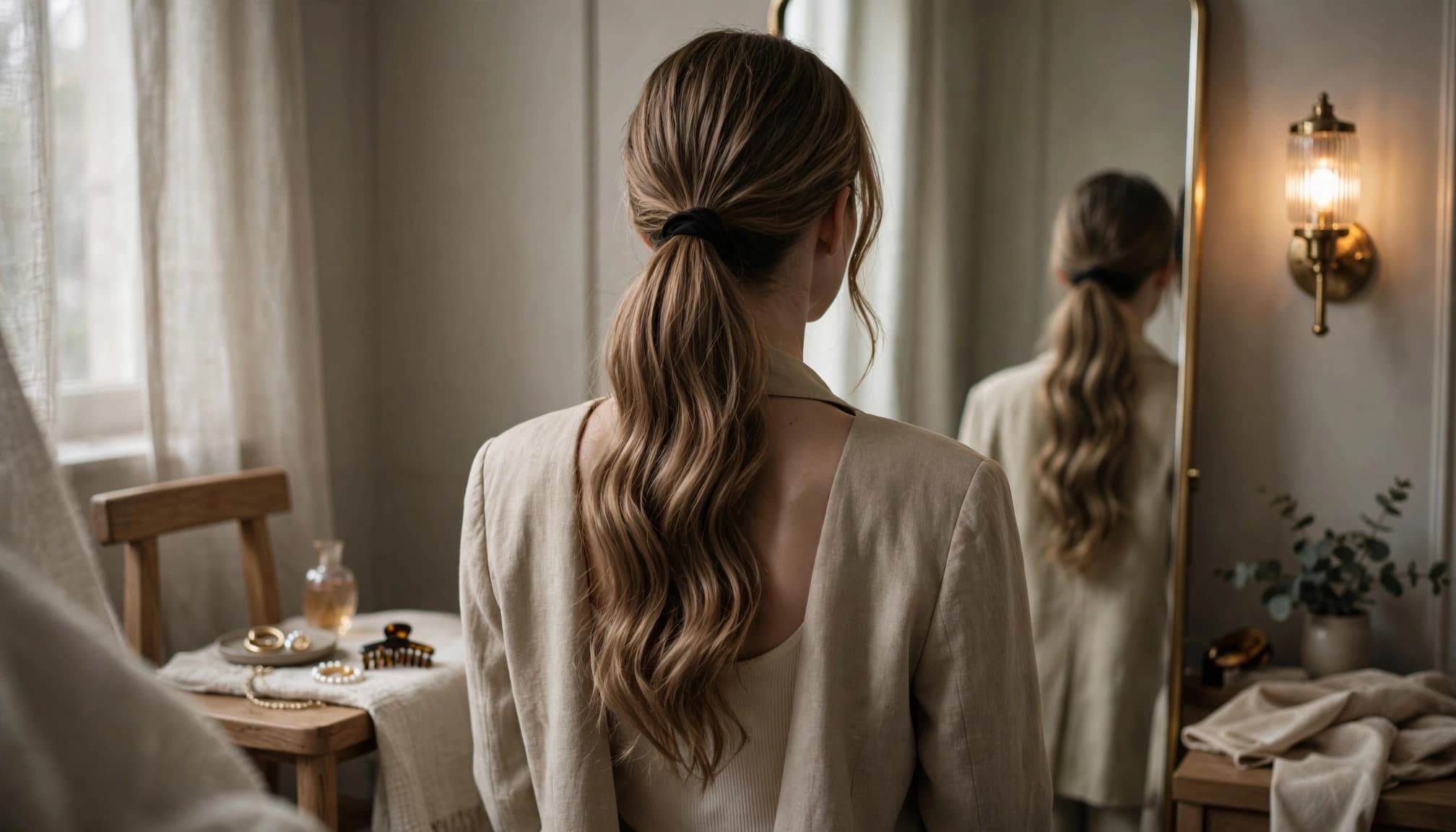
Luxegan lists its natural black human hair ponytail extension at 20 inches. Use that listed length as a comparison point, then decide whether that amount of added length fits your usual hairstyle and plans.
Plan for Blending and Styling
A close texture match helps, but styling at the base determines whether the ponytail looks joined together. Think through what you'll do with your own hair before choosing an extension. Your preferred finish may affect both the texture and the attachment style you need.
Decide how you'll cover the attachment
Some ponytails use a wrap or cuff, while others attach with clips, a drawstring, or a claw clip. The product instructions should show how the piece attaches and whether your own hair needs to be secured in a particular way. Choose an option that works with the ponytail base you can comfortably create.
A wrap section can help cover the join, but it needs to blend with your hair in color and texture. Check whether the listing shows the attachment clearly. If the product description uses more than one attachment term, verify the exact method and what's included before ordering.
Match the finish, not only the pattern
If your natural hair is smooth at the base and the extension is very full or tightly curled, the contrast may stand out. You can reduce that difference by choosing a closer pattern, adjusting how you style your own hair, or selecting a look where the contrast is intentional.
For a human-hair extension, check the product's heat-styling guidance and use the appropriate protection. Synthetic fibers vary, so don't assume a piece can be curled or straightened because another synthetic product can. Follow the care instructions for the specific item, and consult a hair extension care guide for general handling and storage tips.
Check the Fiber and Attachment Details
Human hair and synthetic hair can differ in styling options, feel, care, and price. The right choice depends on how often you plan to wear the ponytail and whether you want to style it with heat. Read the exact product description rather than relying on the material name alone.
Some Luxegan listings describe human-hair ponytails as suitable for curling or straightening. For example, its dark brown human hair ponytail extension is listed as 20 inches and made from 100% human hair. Product-specific details still matter, including care instructions and any limits on styling.
Attachment type also affects how you get ready. A cuff, clip, or drawstring may suit different routines and hair bases. Don't assume every item with similar wording attaches the same way. Review the instructions and product photos before you buy, especially when the description mentions both clip-in and drawstring features.
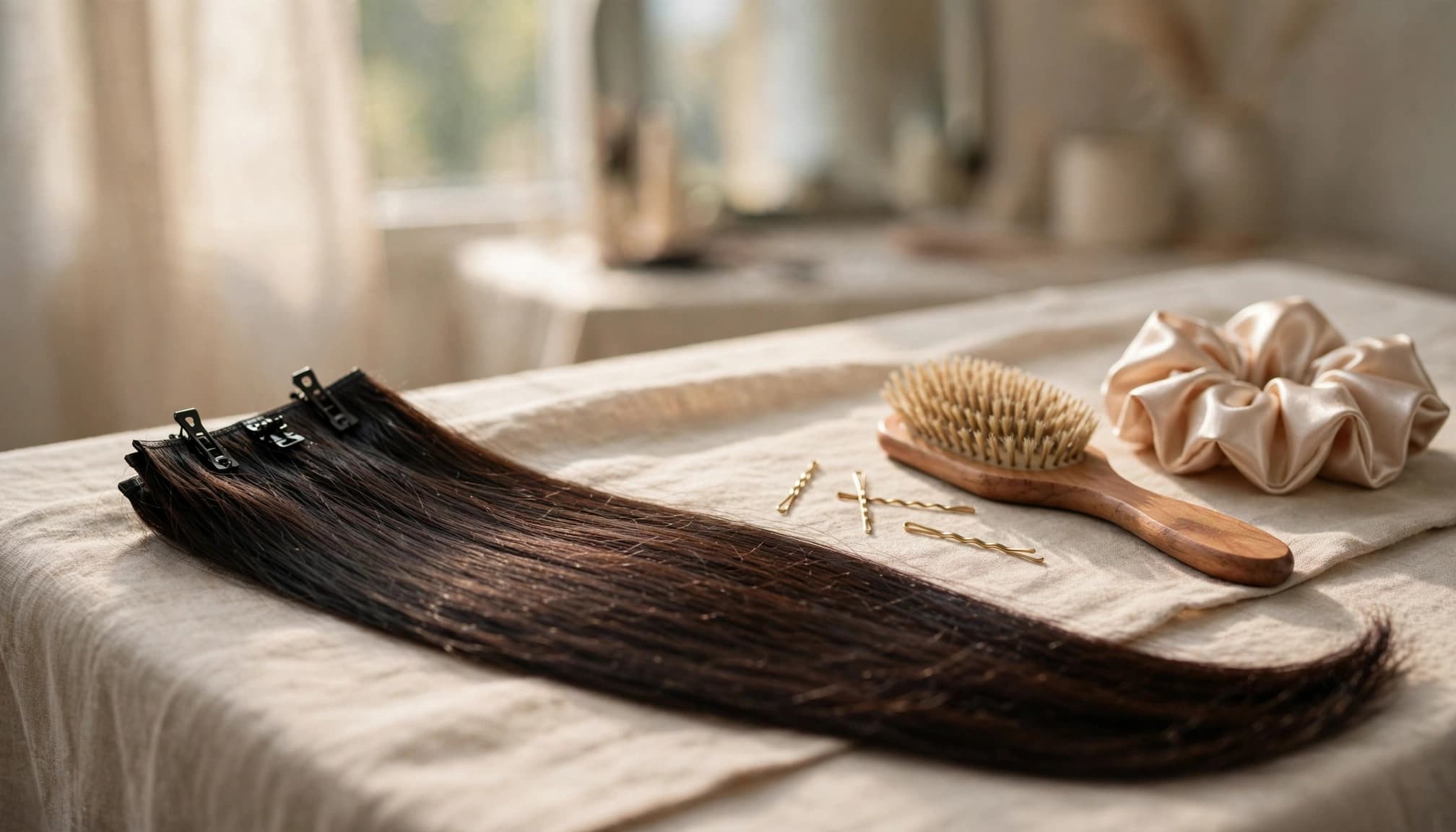
A product listing can also clarify color choices, included accessories, and whether the piece is designed for a particular style. If an important detail is missing, ask the seller instead of guessing. A few minutes spent checking can prevent a mismatch in texture, length, or application.
Shop Cortar el pelo
-
Balmain, Balmain, Hair Clip, Black
Precio habitual $142.05 USDPrecio habitual -
Balmain, Balmain, Hair Clip, Silver/Gold
Precio habitual $487.56 USDPrecio habitual -
Balmain, Printemps Floral, Hair Clip, White
Precio habitual $488.95 USDPrecio habitual -
Balmain, Legacy, Hair Clip, White
Precio habitual $535.72 USDPrecio habitual -
Balmain, Printemps, Hair Clip, White
Precio habitual $428.58 USDPrecio habitual


Keep Comfort and Hair Tension in Mind
A ponytail extension should feel manageable once attached. Consider the weight of the piece, how tightly you need to secure your own hair, and how long you plan to wear it. Longer or fuller hair may feel more noticeable than a short, lightweight style.
If the base pulls, pinches, or causes discomfort, loosen or remove it. The American Academy of Dermatology warns that repeated pulling from tight hairstyles and extensions can contribute to traction alopecia, which may become permanent. Its advice on preventing damage from weaves and extensions is worth reviewing before regular wear.
The AAD also lists tightly pulled ponytails, buns, and updos among hairstyles that can lead to hair loss. See its guidance on hairstyles that pull. Avoid wearing an extension so tightly that your scalp hurts, and give your hair a break if the style feels strained.
Compare Options Before You Buy
Use a consistent set of checks when you compare listings. This makes it easier to weigh a dramatic style against one you'll wear more often, without assuming a particular texture or length suits everyone.
- Texture: Compare the curl size, wave, smoothness, and fullness with your own hair in its planned style.
- Length: Measure from the intended ponytail base to your preferred endpoint, then account for curl shrinkage.
- Fiber: Check whether the listing identifies human or synthetic hair and gives clear styling directions.
- Attachment: Confirm how the ponytail secures and whether the instructions fit your hair base.
- Comfort: Consider the extension's length and fullness, plus how long you expect to wear it.
- Details: Look for product photos, care guidance, color information, and a clear measurement.
A shorter piece with a close texture match may blend more easily than an extra-long style that needs substantial restyling. In contrast, a high-impact look may be worth extra preparation for a special occasion. Compare based on your priorities, not on a single product photo.
Frequently Asked Questions
Should my extension match my hair exactly?
An exact match can make blending easier, but it isn't the only option. Compare the pattern, finish, and fullness, then consider whether you'll style your own hair to meet the extension or wear a deliberate contrast. The best choice depends on the look you want and the time you plan to spend blending it.
How do I know what extension length to choose?
Measure from the base where you'll secure the ponytail to the point where you want the ends to fall. Check the item's stated length and how the seller measures it. If the extension is curly or coily, remember that it may look shorter when worn than when stretched straight.
Can I use heat on any ponytail extension?
No. Check the instructions for that specific product. Some human-hair listings describe heat styling, while synthetic fibers may have different limits or may not be suitable for heat at all. Follow the seller's directions to avoid damaging the extension.
Make the Match Work for You
A natural-looking ponytail starts with a texture you can blend and a length that suits how you move through the day. Product labels and photos help, but comparing the actual pattern, attachment, and listed measurements gives you a better basis for choosing.
Choose the extension that fits your styling habits and feels comfortable to wear. The best match is the one that supports the look you want without asking your hair or scalp to tolerate unnecessary tension.