

How to Remove Clip-In Extensions Without Pulling Hair
A clip-in weft should release with a gentle slide, not a tug. The safest way to remove clip-in extensions is to support your own hair near each attachment, open every clip fully, and take out one weft at a time.
A little preparation helps you see where each clip sits and notice tangles before they become harder to manage. Use the steps below for a calm removal, and pause if a clip or knot resists gentle handling.
Key Takeaways
- Remove one weft at a time so you can see and control each attachment.
- Hold your natural hair close to the clip, open every snap, then slide the weft away.
- Separate tangles with your fingers or a suitable comb, working from the ends upward.
- Stop if a clip remains caught or a knot will not loosen with gentle handling. Ask a stylist to assess it rather than forcing it.
Why remove one weft at a time?
Clip-in extensions attach to your own hair with small snap clips. If you lift a weft while a clip is still closed, the clip can catch strands as it moves. Taking out one piece at a time helps you find each attachment and handle it without pulling surrounding hair.
Clip-ins do not need the same removal process as tape-in or bonded extensions. Don't apply adhesive remover or try to slide out several attached pieces at once. The clip-in removal instructions from Luvme Hair also stress opening every clip before lifting the weft away.
If you feel pulling, stop and check which clip or section is still attached. A weft that's ready to come out should not need a sharp tug.
Get your hair and tools ready
A few minutes of setup can make the attachments easier to see and help prevent rushed handling. Choose a mirror and a well-lit spot where you can reach the back and sides of your head.
Detangle before releasing the clips
If your hair has knots around a weft, loosen them before removing it. Use your fingers to separate strands, or gently comb through the loose lengths from the ends upward. Keep the extension still while you work so you don't pull at the clip.
For curls or coils, avoid brushing through the hair while it's attached. Separate the curls carefully with your fingers, then expose the clip. If you can't see or reach a snag, ask someone you trust to help you locate it rather than tugging blindly.
Expose one row at a time
Use your fingers or a comb to lift the hair covering one weft. Keep the rest of your hair out of the way, but don't pin it so tightly that it pulls at the roots. Check where the weft begins and ends, then locate each snap clip along its band.
There may be more than one clip on a weft. Make a point of checking the full attachment before lifting it away. This small check helps you avoid pulling on a section that is still fastened.
How to remove clip-in extensions without pulling
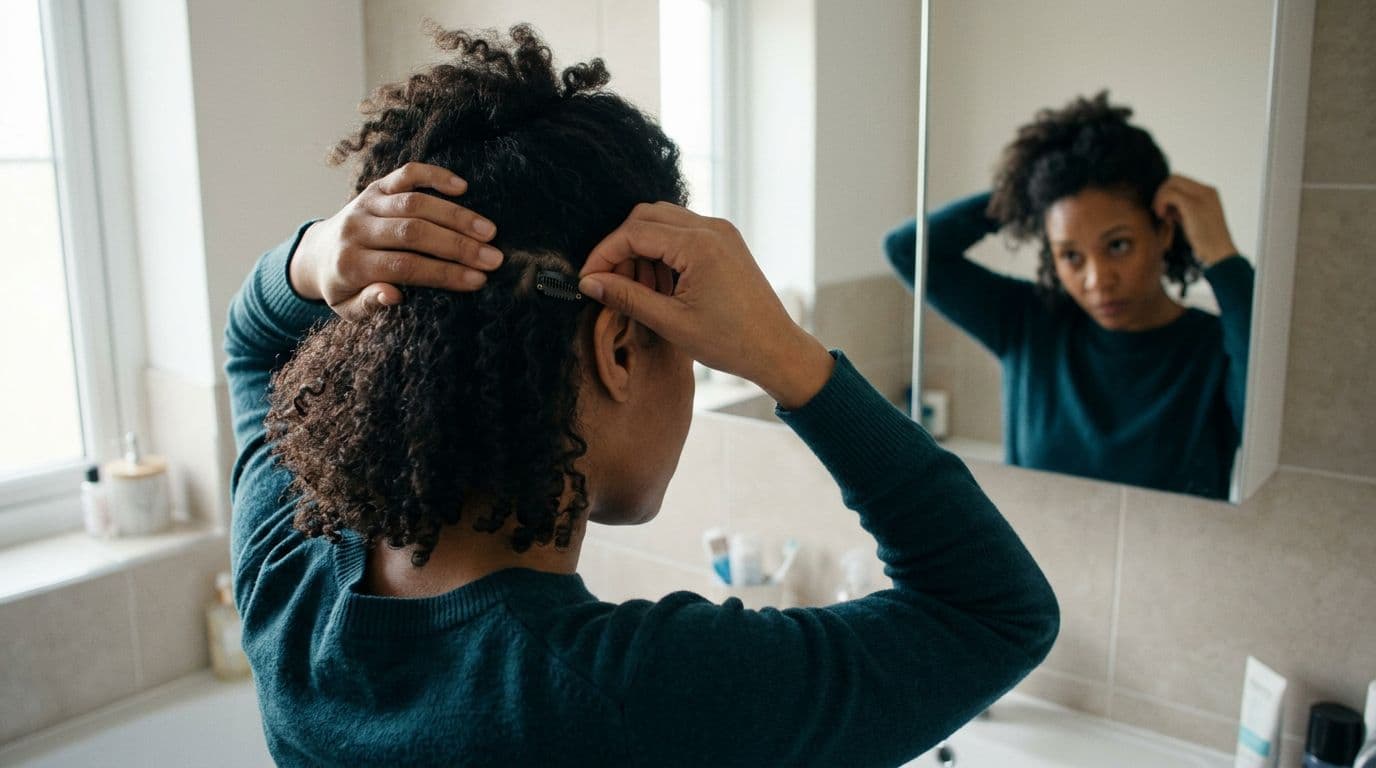
Work with one weft and one attachment at a time. Keep your movements small and controlled, especially when you're removing pieces near the back of your head.
Support the hair near each attachment
Place your fingers against your natural hair close to the clip, near the roots. Hold the hair steady without gripping or pulling it tight. This support helps keep the movement focused on the clip rather than the hair at your scalp.
With your other hand, find the snap and open it completely. If a weft has several clips, open each one before sliding the band away. The Luvme Hair removal guide describes opening every clip before lifting the weft.
Slide the open weft away gently
Once all clips on the weft are open, move the band away from your scalp with a slow, light motion. Keep supporting your hair as you guide the piece out. Don't drag a closed clip through your hair, and don't yank the weft if it catches.
Set the removed piece aside instead of dropping it into a pile. Then check your hair and move to the next weft. If you feel a snag at any point, stop and find the cause before continuing.
Where to start and how to work through sections
There isn't one removal order that suits every head or installation. Some instructions recommend starting at the bottom, while others begin with the top weft. What matters most is that you can see the clips, reach them comfortably, and remove each weft without pulling.
Choose the order that gives you a clear view
If the top layer of your hair covers the lower wefts, move it aside gently so you can see the attachments. Start with a piece you can reach and inspect, then continue through the remaining sections. You might prefer working bottom to top or top to bottom, depending on how your extensions were installed.
The Conde Pro guide to removing clips row by row describes opening clips fully and removing wefts one row at a time. Follow your product's instructions if they specify a method.
Take extra care around the sides and nape
Shorter side pieces and lower wefts can be harder to see, especially when your hair covers the clips. Use a hand mirror or ask someone to help you locate them. Support the hair close to the attachment, open each clip, and guide the piece away without twisting it through nearby strands.
At the crown, lift only enough hair to expose the weft. Avoid pulling the top section upward while you work underneath it. If the angle makes it difficult to open a clip fully, adjust your position or get help instead of forcing the snap.
Shop Los más vendidos
-
Peluca corta de locs falsos de diosa | Peluca de rastas con reflejos marrones | Peluca de crochet trenzada afro | Cabello sintético
Precio habitual A partir de $158.00 USDPrecio habitual$190.00 USDPrecio de oferta A partir de $158.00 USDOferta -
Peluca frontal de encaje HD de 13x6, rizada, de 30", color borgoña y chocolate, | Peluca de cabello humano de color 99J para mujeres | Onda profunda
Precio habitual A partir de $257.00 USDPrecio habitual$0.00 USDPrecio de oferta A partir de $257.00 USD -
Paquetes de Cabello Humano Malayo Ondulado Profundo 12A | Extensiones de Tejido "Rizo Profundo" Sofisticadas | Opciones Elegantes de Paquetes Individuales/Múltiples de 30-32 Pulgadas | Trama de Cabello Remy "Digna" para un Estilo Radiante y Versátil
Precio habitual $364.00 USDPrecio habitual$0.00 USDPrecio de oferta $364.00 USD -
#350 Knotless Box Braids Wig | Short Lace Frontal Bob | Dark Ombre Ginger
Precio habitual $262.50 USDPrecio habitual$0.00 USDPrecio de oferta $262.50 USD -
Peluca corta de rastas falsas afro | Trenzas sintéticas resistentes al calor | Peluca unisex para mujeres y hombres negros
Precio habitual $90.00 USDPrecio habitual$120.00 USDPrecio de oferta $90.00 USDOferta -
Peluca frontal de encaje HD 13x4 con cabello virgen vietnamita de donante 12A | Densidad del 250% | Doble capa | Ondas voluminosas | Sin pegamento
Precio habitual A partir de $242.00 USDPrecio habitual$0.00 USDPrecio de oferta A partir de $242.00 USD -
Zapatos Derby Wingtip para hombre de Italia | Oxfords clásicos modernos de bloques de color (aumento de altura, piel auténtica)
Precio habitual $263.00 USDPrecio habitual$301.00 USDPrecio de oferta $263.00 USDOferta -
Brazilian Human Hair 13x4 Lace Front Wig | Glueless, Pre-Plucked with Baby Hair
Precio habitual A partir de $99.00 USDPrecio habitual$132.00 USDPrecio de oferta A partir de $99.00 USDOferta





Handle tangles without pulling
A strand caught in a clip or wrapped around a weft can make removal feel stuck. Resist the urge to pull harder. First check whether every clip is open, then use your fingers to see where the hair is caught.
Loosen a knot gently
If a loose knot is in the extension hair, hold the hair above the knot and tease it apart with your fingers. Work from the ends toward the band, separating a small amount at a time. A wide-tooth comb can help once the knot has loosened, but avoid pushing through resistance.
For a knot in your own hair, support the section close to the scalp and work on the ends of the tangle first. Don't comb from the roots through a tight knot. If the strands remain caught near a clip, stop and ask someone with a clear view to help.
Know when to stop
Pause if the clip won't open, if the weft will not slide away easily, or if a knot stays tight after gentle finger work. Don't twist the clip, pull the weft sharply, or use scissors near your scalp. A stylist can inspect the attachment and suggest a safe next step.
Stop if you notice pain or the hair is being pulled taut. Give yourself time to identify the snag. Continuing while you can't see the attachment makes it harder to avoid pulling.
After removal, detangle and store the wefts
Once all the pieces are out, separate the extensions from your natural hair. Check your scalp and roots for any remaining clips or strands caught around a band. Then detangle each weft gently, starting at the ends and moving upward.
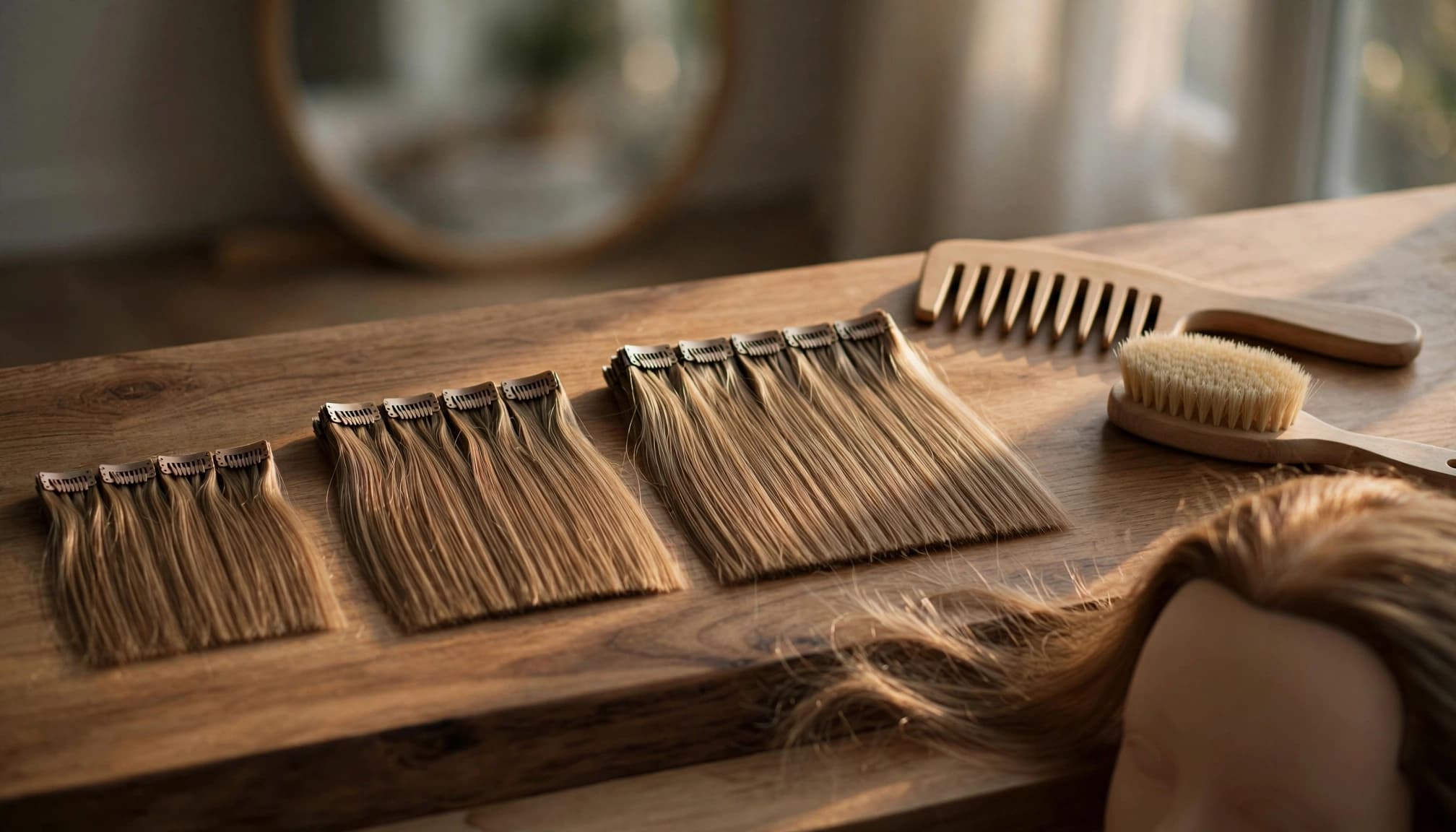
Use a wide-tooth comb or a brush suited to the extension texture. For curly styles, finger separation can help preserve the curl shape; see Luxegan's Kinky Curly clip-in extensions for an example of a textured clip-in style. Store dry extensions neatly, following the care instructions that came with your set.
Your own hair may also need gentle detangling after the wefts are removed. Work from the ends upward and pause if you find a stubborn knot rather than brushing forcefully.
Frequently asked questions
Should I remove clip-ins from the top or bottom first?
Either order can work. Guidance varies, so start with the weft you can see and reach comfortably. Remove one piece at a time, opening every clip before you lift or slide it away.
Can I pull a weft out if one clip is open?
No. Check the full weft for other clips, and open each one before moving the band. If the extension still catches, stop and look for a closed clip or tangled strand.
What if my hair is tangled around a clip?
Keep the clip and your hair steady, then gently separate the strands with your fingers. If you can't loosen the knot or see where it's caught, ask a stylist for help instead of pulling.
A gentle removal protects your routine
The safest removal comes down to patience: support your hair near each attachment, open all the clips, and slide out one weft at a time. When a clip or knot resists, pause and get a better view rather than forcing it.
With that routine, taking out clip-ins can feel more controlled and less stressful. If you're unsure how a piece is caught, a stylist can help you remove it safely.