

How to Wash Braiding Hair Before Installing It
Hair often feels different straight out of the package, but washing it before installation isn't always necessary. The right approach depends on whether you're preparing synthetic or human-hair extensions, and what the package recommends.
You may want to prepare extensions before installation as part of a protective style. Let them dry completely before installing. If you're washing an installed style, cleanse gently and dry it thoroughly.
Check the package instructions, and test any unfamiliar product on a small area of skin first.
Key Takeaways
- Cleanse the scalp regularly while braids are installed. A weekly scalp cleanse doesn't require soaking the full length of every braid.
- Follow package instructions for synthetic and human-hair extensions. Washing and soaking recommendations vary by product and fiber.
- Wash gently to limit friction, and use a microfiber towel to squeeze out water instead of rubbing the braids.
- Let washed extensions and installed braids dry completely, especially at the roots, before installing or covering them.
How often should you wash braids?
Braids don't replace washing your natural hair and scalp. Dermatologists advise keeping the scalp clean while a braided style is installed, which can help reduce the chance of infection. Naana Boakye recommends cleansing at least once a week to remove product buildup and let the skin breathe.
Separate a scalp cleanse from a full wash
A weekly scalp cleanse doesn't have to mean soaking the full length of every braid. For a full wash, Allure's guidance is to wash within four weeks at most, with two weeks an ideal time for the first wash. Sweat, product use, oiliness, and an itchy scalp can affect the right interval.
Some people wash around week two, while others cleanse every seven to ten days. Those schedules appear in a community discussion about washing braids, but they aren't a single expert rule. Let symptoms guide gentle cleansing, and don't leave the style unwashed for weeks if there's buildup or persistent discomfort.
Choose shampoo for your scalp
For a deeper scalp cleanse, dermatologist Whitney Tolpinrud suggests shampoos with ketoconazole, selenium sulfide, or zinc pyrithione. Allure names Mizani Scalp Care Anti-Dandruff Shampoo as one option. If you don't need an anti-dandruff shampoo, use a gentle cleanser that suits your scalp and follow its label.
How to wash braids without frizz or mildew
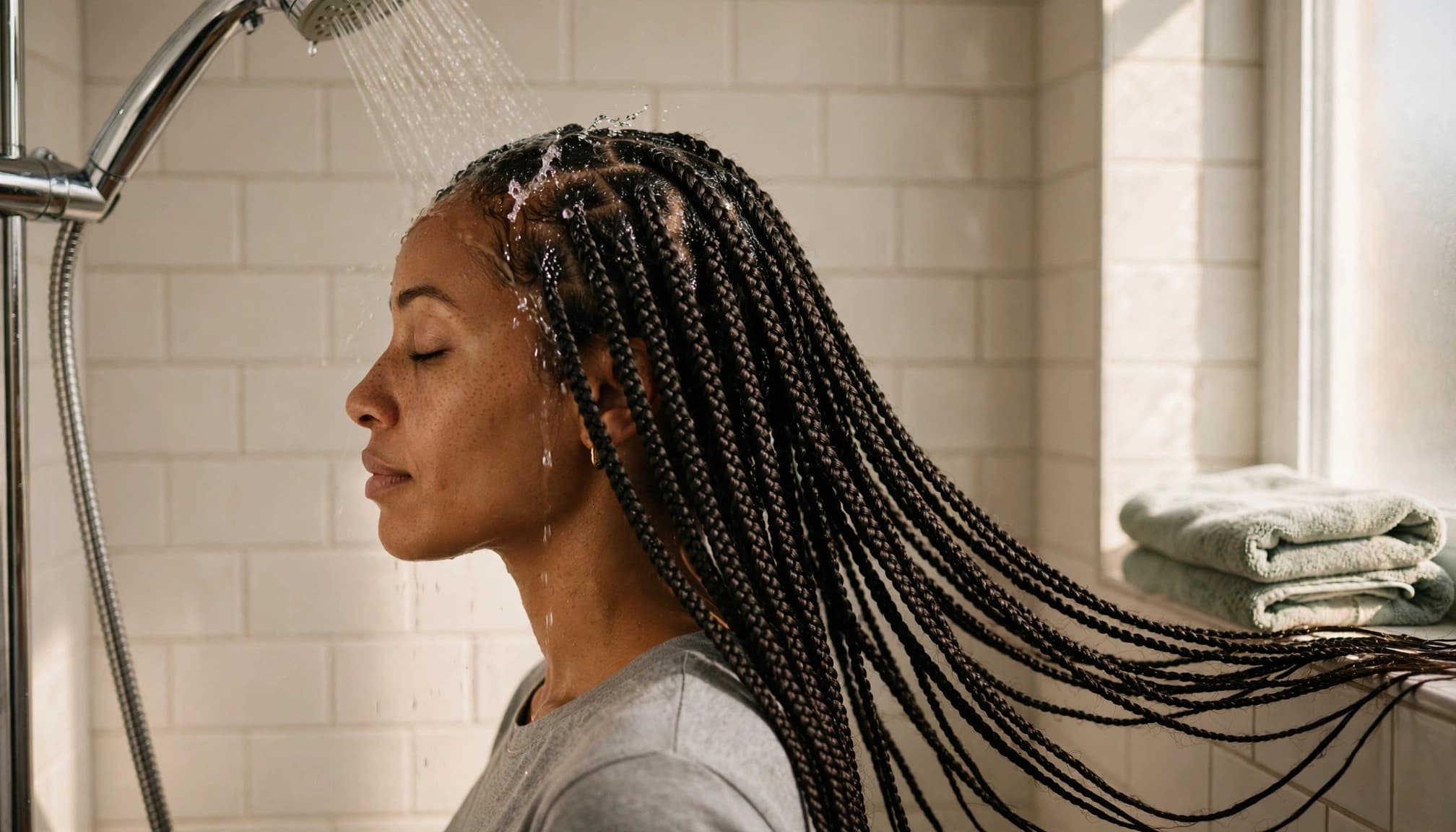
A targeted wash can clean the scalp while limiting friction along the braid lengths. Brendnetta Ashley recommends a clean edge brush or a wig cap to work shampoo into the scalp without disturbing the style.
Follow these steps
- Dilute the shampoo. Mix it with water in a spray bottle for wider coverage or an applicator bottle for precise placement. A spray bottle works well over larger areas, while an applicator bottle directs cleanser along parts.
- Part the braids. Work in small sections so you can reach the scalp. Use the spray bottle to mist exposed areas or the applicator bottle to target narrow parts. A wig cap can hold the braids in place; reposition the wig cap as needed, and use a clean edge brush to spread shampoo gently.
- Apply cleanser at the roots. Use your fingertips or the soft brush to massage the scalp lightly. Don't scrub the braids or pile them on top of your head.
- Rinse the scalp. Use a handheld shower attachment or pour water carefully from a bucket. Direct the flow toward the scalp and keep the lengths as dry as practical.
- Remove excess water. Squeeze the braid sections gently with a microfiber towel, then dry the area near the scalp promptly.
A YouTube tutorial uses a diluted apple cider vinegar and shampoo mixture on the scalp, leaving it for about 10 minutes before washing it away. Its creator also warns against scrubbing braids, which can cause breakage. Treat that as one technique, not a required part of a regular wash.
How to prep synthetic braiding hair before installation
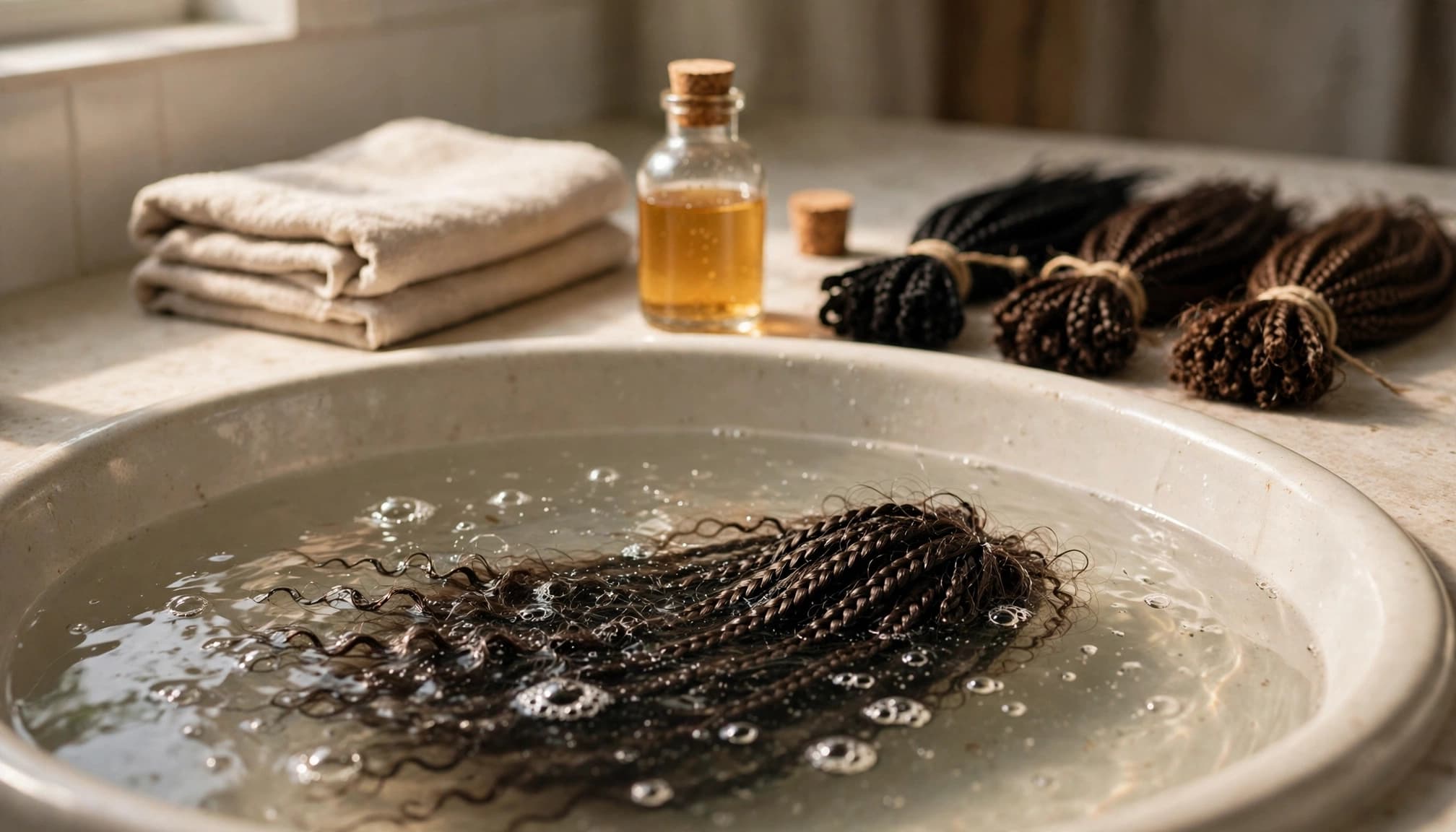
Synthetic hair may have a surface coating that some people find uncomfortable. Just Peachy describes soaking it in warm water mixed with diluted apple cider vinegar for roughly three hours. The author reports that foam formed, then washed and conditioned the hair before letting it air-dry for about a day.
Use a vinegar soak only when it makes sense
This reported method may help people who suspect a coating contributes to itching. It isn't necessary for every pack, and it may not suit every fiber. Read the package instructions first. If they advise against soaking, follow that guidance instead.
If the package allows washing and you choose to try the soak, use warm water, not hot. Keep the hair loosely arranged in a clean basin, then rinse it thoroughly. Wash it with a gentle shampoo, and use conditioner only if the product instructions allow it. Just Peachy's account of the soak describes using conditioner, but conditioner isn't essential for every product.
Don't rush the drying stage
Spread the hair on a clean towel or hanger and let it air-dry fully before installation. A bundle can feel dry outside while staying damp inside. Separate the sections so air can reach them, and don't braid in extensions that still feel cool or wet.
How to wash human-hair extensions
Human-hair extensions need gentler handling than synthetic fibers, and care varies by product and texture. Follow the package directions first. Cool or lukewarm water and a mild shampoo are generally safer than hot water or rough rubbing.
Clean gently and detangle carefully
Wet the hair gradually, then smooth a small amount of shampoo through it in the direction of the strands. Rinse thoroughly. If the care instructions allow conditioner, use a light amount and keep it away from any attachment area or weft if the product warns against applying it there.
For curly or textured human hair, detangle gently while damp if the instructions permit it. A wide-tooth comb or your fingers can help limit snagging. Our care notes for bulk human braiding hair give a product-specific example of washing and air-drying loose human hair.
Keep heat low
Gently blot the extensions with a clean towel, then let them air-dry when possible. If you use a blow dryer, choose a cool or low setting and avoid excessive heat. Heat can alter human-hair texture, while ordinary hot tools can damage synthetic fibers unless the label specifically says they're heat-friendly.
Shop Los más vendidos
-
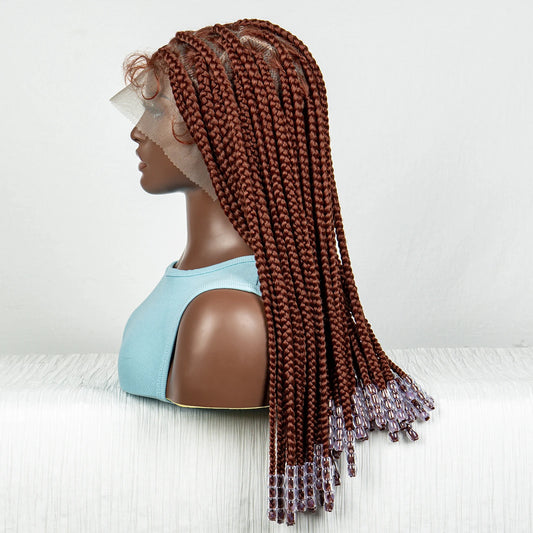
Peluca corta de locs falsos de diosa | Peluca de rastas con reflejos marrones | Peluca de crochet trenzada afro | Cabello sintético
Precio habitual A partir de $158.00 USDPrecio habitual$190.00 USDPrecio de oferta A partir de $158.00 USDOferta -
Peluca frontal de encaje HD de 13x6, rizada, de 30", color borgoña y chocolate, | Peluca de cabello humano de color 99J para mujeres | Onda profunda
Precio habitual A partir de $257.00 USDPrecio habitual$0.00 USDPrecio de oferta A partir de $257.00 USD -
Paquetes de Cabello Humano Malayo Ondulado Profundo 12A | Extensiones de Tejido "Rizo Profundo" Sofisticadas | Opciones Elegantes de Paquetes Individuales/Múltiples de 30-32 Pulgadas | Trama de Cabello Remy "Digna" para un Estilo Radiante y Versátil
Precio habitual $364.00 USDPrecio habitual$0.00 USDPrecio de oferta $364.00 USD -
#350 Knotless Box Braids Wig | Short Lace Frontal Bob | Dark Ombre Ginger
Precio habitual $262.50 USDPrecio habitual$0.00 USDPrecio de oferta $262.50 USD -
Peluca corta de rastas falsas afro | Trenzas sintéticas resistentes al calor | Peluca unisex para mujeres y hombres negros
Precio habitual $90.00 USDPrecio habitual$120.00 USDPrecio de oferta $90.00 USDOferta -
Peluca frontal de encaje HD 13x4 con cabello virgen vietnamita de donante 12A | Densidad del 250% | Doble capa | Ondas voluminosas | Sin pegamento
Precio habitual A partir de $242.00 USDPrecio habitual$0.00 USDPrecio de oferta A partir de $242.00 USD -
Zapatos Derby Wingtip para hombre de Italia | Oxfords clásicos modernos de bloques de color (aumento de altura, piel auténtica)
Precio habitual $263.00 USDPrecio habitual$301.00 USDPrecio de oferta $263.00 USDOferta -
Brazilian Human Hair 13x4 Lace Front Wig | Glueless, Pre-Plucked with Baby Hair
Precio habitual A partir de $99.00 USDPrecio habitual$132.00 USDPrecio de oferta A partir de $99.00 USDOferta





Dry braiding hair completely before installing it
Thorough drying matters whether you've washed loose extensions or an installed style. Box braids can hold water between tightly packed strands, so the inner sections may stay damp long after the surface feels dry. T. Cooper warns that moldy box braids are a real risk when they remain wet.
Remove water without rough friction
After a wash, press a microfiber cloth around the braid lengths and squeeze out water section by section. Don't rub back and forth. Rubbing lifts fibers and encourages frizz, while gentle pressure removes water with less friction.
Finish at the roots
After drying with a towel, use a blow dryer on a cool or low setting. Move the airflow around the scalp and roots, then check the thickest sections, especially in box braids. If the style remains damp, keep drying rather than covering it with a scarf or bonnet.
Some people use a bonnet dryer, mousse, and a scarf after washing to manage frizz. These can help with styling, but they don't replace complete drying. A scarf or bonnet traps moisture if the braid bases or lengths are still wet.
Moisture and frizz care after washing
A full rinse isn't always needed for installed braids. Allure's guidance favors a leave-in conditioner, with moisture focused on the scalp and roots rather than the lengths. Heavy product on braid lengths can leave residue that builds up and makes cleansing harder.
Apply a small amount of leave-in conditioner where your natural hair needs it, following the product label. If your scalp feels dry, a light scalp oil may help, but avoid layering several oils and creams over buildup. Once the hair is fully dry, a small amount of mousse can help settle flyaways. Use a scarf to hold the style while the mousse sets, then remove it when the hair is dry.
Quick checks before you install
Before adding extensions to your natural hair, make sure washed hair is clean, fully dry, and free of excess product. Use a towel to remove moisture, then let the extensions dry completely before installation. Wet extensions are harder to handle and can stay damp after they're braided in. If you didn't wash them, that's fine when the package says they're ready to use and you don't need to pre-cleanse them.
Use separate routines for different materials. Synthetic fibers may have specific temperature and soaking limits, while human hair can generally be washed with mild shampoo and conditioned when the label permits. Don't assume instructions for one type apply to the other.
For installed braids, clean the scalp regularly and dry the area near the scalp fully. For loose braiding hair, follow the package directions and let washed extensions dry before installation. These habits reduce buildup and help prevent a damp style from becoming uncomfortable.
Frequently asked questions
Should I wash my braids while they're installed?
Yes. Clean the natural hair at the scalp while the braids are in, using a gentle method that limits friction. Dermatologists advise washing the scalp, and Naana Boakye recommends cleansing at least weekly. Apply leave-in conditioner to your natural hair, not synthetic fibers.
Can I wash synthetic crochet or braiding hair?
Only if the product instructions allow it. Some synthetic hair can be washed gently, but fiber and finish vary. Avoid hot water and excessive heat unless the label specifically permits them, and let the hair dry completely before installing.
Will an apple cider vinegar soak stop itching?
A soak may help if a surface coating is contributing to discomfort, as described in Just Peachy's account. It isn't a standard requirement for all braiding hair. Follow package instructions, and don't use a method that the manufacturer advises against.
How do I avoid frizz and mold after washing braids?
Keep water focused on the scalp when possible, avoid rubbing the braid lengths, and squeeze them gently with a microfiber towel. Then dry the roots and lengths thoroughly on a cool or low setting. Don't cover damp braids with a scarf or bonnet.
Keep the hair clean and fully dry
Preparing extensions and caring for installed braids call for different routines. Use the package instructions for loose synthetic or human-hair extensions, and don't install washed hair until it's fully dry.
Once braids are in, cleanse the scalp regularly without rough scrubbing. Careful washing and complete drying help keep the style comfortable and reduce frizz and mildew risk.