

How to Store a Wig and Keep Its Shape
A wig can lose its style overnight if you toss it onto a chair, fold it into a drawer, or put it away while damp. Good wig storage protects the fibers, lace, curls, and cap so your style looks ready the next time you wear it.
The right routine depends on the wig's material and shape. Synthetic fibers need gentle handling and limited heat, while human-hair wigs need careful detangling and complete drying. Start with a clean, dry wig, then choose storage that supports its form without crushing the hair.
Prepare the Wig Before Storage
Never store a wig immediately after taking it off if it feels warm, damp, or coated with styling product. Sweat, moisture, and residue can affect the cap and leave the fibers tangled. Let the wig cool in a clean, ventilated spot before you begin.
If you used adhesive, remove it from the lace and cap according to the product instructions. Peel tape or glue away slowly instead of pulling at the lace. Check the inside for bobby pins, combs, clips, or other accessories and remove them before brushing.
Detangle gently
Place the wig on a stable surface or hold it by the cap. Start at the ends and work upward in small sections. A wide-tooth comb or wig brush is usually safer than a regular brush with tightly packed bristles.
For a curly or wavy style, separate the hair with your fingers first. Avoid repeated brushing because it can loosen the curl pattern and create frizz. Arrange each curl with your fingers, then leave the shape intact.
Synthetic wigs can become damaged when you brush them roughly, especially after exposure to friction. Human hair is more flexible, but the strands can still snap when you pull through knots. Work slowly around the nape, where tangles often collect.
Wash only when needed, then dry completely
Follow the care instructions supplied with your wig. A synthetic wig often needs less frequent washing than a human-hair wig. Human hair may need cleansing after heavy styling product use, sweating, or extended wear.
After washing, press out excess water with a soft towel. Don't twist, wring, or rub the hair. Place the wig on a towel or suitable stand and allow the cap, lace, and hair near the roots to dry fully.
A wig must be completely dry before storage. Even slight moisture trapped inside a bag or box can create an unpleasant odor and encourage damage to the cap or hair.
Air-drying is the safest choice for many wigs. If the care label allows a blow dryer, use the lowest suitable heat and keep the airflow moving. Never put a damp wig into a drawer, satin bag, or box.
Better wig storage starts with the right support
The best support depends on how long you plan to store the wig and whether you want to preserve a specific hairstyle.
A wig stand works well for short-term storage between wears. A canvas or foam mannequin head offers more support for longer periods, especially for lace-front wigs, layered styles, and wigs with a defined part. Choose a head size that supports the cap without stretching it.

Place the wig over the stand from front to back. Align the ear tabs and center part before you smooth the hair. Make sure the wig sits naturally instead of pulling the cap too far down. If the stand is too large, it can stretch the cap and change the fit.
For a lace-front wig, avoid pins through the lace or hairline. If you need extra security, use T-pins through the weft or ear-tab area, where they won't damage the visible lace. Remove all pins before wearing the wig again.
Preserve straight, wavy, and curly styles
Straight wigs can hang on a stand or lie flat in a clean box. Brush the hair into its usual direction, then keep the ends free from pressure. Long straight hair may be loosely gathered with a soft scrunchie, but don't tie it tightly.
Wavy hair needs room to keep its movement. Arrange the waves in their existing pattern and avoid stacking heavy items against them. For curly wigs, support the curls with clean tissue paper or a loose hair net if the manufacturer recommends one. Dense packing can flatten the crown and stretch the curl pattern.
When a wig has a side part, place the part where you normally wear it. This small step helps reduce the amount of restyling required later. It also prevents the front hair from drying in an awkward direction after washing.
Synthetic and human-hair wigs need different care
Material affects how you clean, brush, dry, and store a wig. Use this quick comparison before choosing your routine.
| Wig type | Before storage | Shape protection | Main caution |
|---|---|---|---|
| Synthetic | Let the fibers cool, then detangle with a wig brush or fingers | Keep the original curl or wave pattern supported | Avoid heat unless the label confirms the wig is heat-friendly |
| Human hair | Detangle gently and remove excess product | Use a stand or lay the wig flat with the hair arranged naturally | Store only after the hair and cap are fully dry |
| Lace front | Clean adhesive residue from the lace and cap | Support the hairline without pinning through lace | Pulling or crushing the lace can cause visible damage |
Synthetic fibers often hold a set shape, so heat and pressure can create lasting changes. A hot styling tool, radiator, or sunny windowsill can warp the fibers. Even heat-friendly synthetic wigs have temperature limits, so follow the manufacturer's instructions instead of guessing.
Human hair wigs can usually be restyled, but storage still affects their condition. Keep the hair away from humidity, friction, and excess oils. Heavy product left on the strands can attract dust and make the wig look dull when you take it out.
A human-hair wig may need a small amount of approved leave-in conditioner after washing, depending on the brand's care directions. Use only enough to condition the hair. Too much product can transfer to the storage bag and collect dust.
Lace-front wigs need special care in both categories. The lace should lie flat, and the hairline shouldn't press against a rough surface. If the wig has a pre-styled part or baby hairs, arrange them gently before covering the wig.
Choose a breathable bag or a protective box
A satin or silk-lined wig bag can reduce friction during short-term storage. It works well when the wig is already dry and you don't need to display it on a stand. Choose a bag that gives the hair enough space to rest without compressing the crown.
A clean wig box offers more structure for long-term storage. The original packaging may work if it remains clean, dry, and large enough for the style. You can also use a sturdy, breathable box with acid-free tissue paper to support the crown and protect the hair.
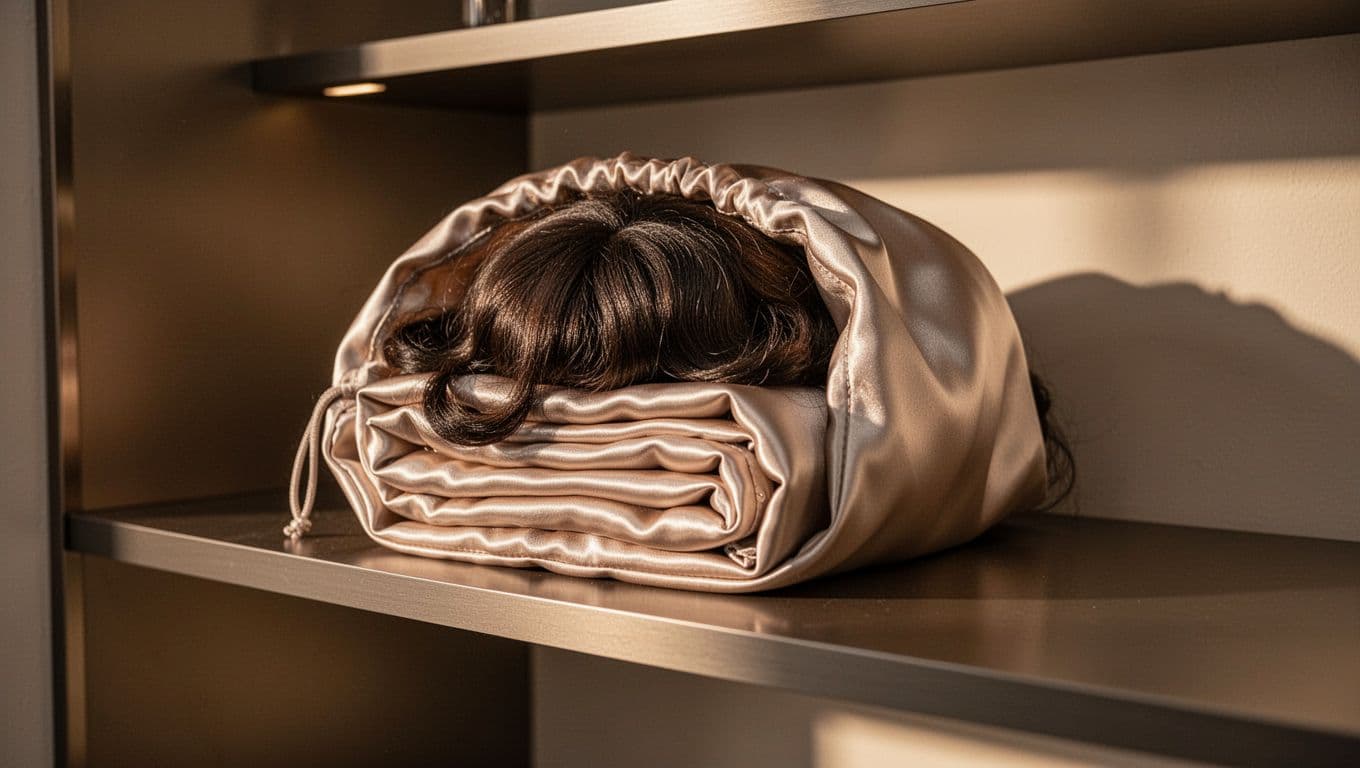
Before placing a wig in a box, gently fold the hair inward only when the style allows it. Straight wigs usually tolerate careful folding better than full curls. For curls, loosely coil the lengths and use tissue to prevent the hair from pressing against itself.
Avoid airtight plastic bags for extended storage. They can trap moisture, especially if the wig wasn't fully dry when packed. A breathable satin bag inside a clean box provides protection without sealing the wig in a damp environment.
Store the container in a cool, dry, dark place. Keep it away from direct sunlight, heaters, bathroom steam, and strong air-conditioning vents. Sunlight can fade colored fibers, while heat and humidity can affect the cap and style.
Don't stack handbags, boxes, or other heavy items on top of the wig container. Pressure can flatten the crown, bend the lace, or leave dents in the hair. If you own several wigs, give each one enough room to keep its original shape.
Shop Pelucas
-
Musicology, White Is Wight, Eau De Parfum, Unisex, 95 ml
Precio habitual $404.33 USDPrecio habitual -
36 Inch Knotless Box Braided Wig with Curly Ends | Full Lace Boho Braided Wig | 5 Colors
Precio habitual $163.00 USDPrecio habitual$186.00 USDPrecio de oferta $163.00 USDOferta -
Jerry Curly Human Hair Wig – Short Pixie Afro Kinky Curly Wig with Bangs
Precio habitual $104.00 USDPrecio habitual$125.00 USDPrecio de oferta $104.00 USDOferta -
Wigundle Kanekalon Pre-Stretched Crochet Braiding Hair Extensions – Jumbo Braids for Women
Precio habitual A partir de $105.00 USDPrecio habitual$133.00 USDPrecio de oferta A partir de $105.00 USDOferta -
Short Water Wave Curly Bob Human Hair Wig 10in – Glueless Brazilian Remy Wig | Brown, Black, Red & Blonde
Precio habitual A partir de $114.00 USDPrecio habitual$136.00 USDPrecio de oferta A partir de $114.00 USDOferta -
Pixie Cut Wig for Black Women – Straight Remy Human Hair | Short 6in | Bangs | Machine Made
Precio habitual A partir de $103.00 USDPrecio habitual$123.00 USDPrecio de oferta A partir de $103.00 USDOferta -
Short Pixie Afro Kinky Curly Wig for Black Women – Glueless Brazilian Remy Human Hair | Bob with Bangs
Precio habitual A partir de $95.00 USDPrecio habitual$126.00 USDPrecio de oferta A partir de $95.00 USDOferta -
Highlight P4/30/27 Brazilian Straight Human Hair Wig with Bangs – 100% Remy | Full Machine Made | 16–28 Inch
Precio habitual A partir de $162.00 USDPrecio habitual$185.00 USDPrecio de oferta A partir de $162.00 USDOferta














A simple between-wears storage routine
Use the same sequence after each wear. Consistency prevents small tangles and storage mistakes from becoming larger problems.
- Remove clips, pins, adhesive, and accessories from the wig.
- Let the wig cool after styling, especially if you used a blow dryer or approved heated tool.
- Check for sweat, product buildup, or tangles around the nape and hairline.
- Detangle from the ends upward with your fingers, a wide-tooth comb, or a wig brush.
- Wash the wig only when its care instructions call for it.
- Air-dry the hair, cap, lace, and roots until they are completely dry.
- Place the wig on a correctly sized stand, or arrange it loosely in a satin bag or box.
- Store it in a cool, dry area away from sunlight and pressure.
If you wear the wig again the next day, a stand is often the easiest option. For seasonal storage, clean and dry the wig first, then use a box or roomy protective bag. Check it occasionally so you can spot moisture, dust, or crushed sections early.
Common wig storage mistakes to avoid
Many shape problems come from the storage method rather than the wig itself. Watch for these habits:
- Putting the wig away while the cap or hair is still damp.
- Hanging the wig from a single lace edge or thin cap section.
- Stuffing curly hair into a small bag.
- Storing a wig beside a radiator, steamy shower, or sunny window.
- Using a hot tool on synthetic fibers without checking the label.
- Leaving heavy styling products on the hair for long periods.
- Pinning directly through delicate lace.
- Placing heavy objects on a wig box.
- Using a dirty brush, stand, or storage bag.
A storage container also needs occasional cleaning. Wash a satin bag according to its care label and let it dry fully before reuse. Wipe plastic or foam stands with a clean, slightly damp cloth, then allow them to dry before placing a wig on them.
When a stored wig looks flat, don't immediately add heat. Put it on a suitable stand, separate the sections with your fingers, and follow the original styling method. Synthetic curls may need steam or a specific refresh technique, while human hair may respond to gentle brushing and approved styling products.
Keep the shape by controlling pressure and moisture
Good wig storage comes down to two conditions: the wig stays dry, and the hair has enough room to rest in its intended shape. A stand is useful for ready-to-wear styles, while a roomy satin bag or box works better when the wig needs protection from dust.
Synthetic and human-hair wigs can both last longer with careful handling, but they don't respond to heat and product in the same way. Remove residue, detangle gently, let every part dry completely, and store the wig away from pressure, sunlight, and humidity.
Conclusion
A wig keeps its shape when you prepare it before storage and give it the right support afterward. Detangle from the ends, protect lace-front areas, and never pack away a damp cap or wet hair.
Choose a stand for easy between-wear care, or use a breathable bag or roomy box for longer storage. With a dry, low-pressure storage routine, your wig will be easier to style and ready to wear when you need it.