

How to Sleep Comfortably in a Human Hair Wig
Sleeping in a wig can save time, but overnight comfort depends on the fit, cap design, hair length, and your scalp's response. A human hair wig needs protection from friction and tangling, while your scalp needs enough comfort to rest without pressure or irritation.
Some people sleep comfortably in a wig for short periods. Others feel better removing it every night. Use the routine below as a practical starting point, then adjust it based on how your scalp, hairline, and wig feel in the morning.
Key Takeaways
- A wig should never cause pain, pressure, persistent itching, or scalp irritation while you sleep.
- Loosen adjustable straps and remove unnecessary combs or adhesive before bed.
- Detangle human hair gently, then keep long lengths from bunching beneath your head.
- A satin pillowcase, scarf, or bonnet can reduce friction, but none guarantees a tangle-free morning.
- Remove the wig when your scalp feels sore, hot, itchy, or tender.
- Store the wig on a stand when you take it off, rather than leaving it in a pile beside the bed.
The most protective overnight routine is the one that keeps both your scalp and the wig comfortable.
Sleeping in a wig: should it stay on overnight?
Before adjusting your bedtime routine, decide whether wearing the wig overnight suits you at all. A secure daytime fit can still feel too tight after several hours in bed, especially if you sleep on your side or move frequently.
Comfort and scalp symptoms come first
Check your scalp and hairline before bed. Look for tenderness, redness, pressure marks, itching, or areas where the lace or cap rubs. If the wig feels uncomfortable while you're awake, it probably won't become more comfortable after several hours of sleep.
Your natural hair also matters. Braids, ponytails, or a tightly wrapped base can add pressure beneath the wig. Keep the foundation flat but loose enough to avoid pulling. The American Academy of Dermatology explains that repeated tension from tight hairstyles can cause traction alopecia, a type of hair loss that may become permanent. Read its guidance on hairstyles that pull before using a tight overnight setup.

When removing the wig is the better option
Take the wig off before bed if your scalp feels sore, sweaty, itchy, or irritated. Removing it also gives your scalp a break from the cap, lace, straps, combs, and adhesive.
You may also prefer removal when the wig has long, dense hair that tangles easily, or when you use strong styling products. Sleeping without the wig can reduce friction and make it easier to protect the unit properly overnight.
If discomfort continues after removing the wig, or if you notice sores, unusual shedding, or ongoing scalp changes, speak with a qualified healthcare professional. A bedtime wig routine isn't suitable for everyone.
Make the Fit Less Tight
A comfortable wig should stay in place without pressing hard against your temples, hairline, or nape. Small adjustments can make a noticeable difference before you settle into bed.
Check straps, lace, combs, and adhesive
Start by loosening the adjustable straps one step at a time. The cap should feel secure but shouldn't leave deep marks. If your wig has combs, check whether they pull on your natural hair when you turn your head. Remove them if the wig can stay in place without them.
Adhesive can also create extra tension at the hairline. If you wear a glueless unit, use its straps or grip only as much as needed. For example, the Luxegan glueless body wave human hair wig is described as a wear-and-go style with adjustable construction, but any cap still needs to feel comfortable on your head.
Avoid sleeping in a wig that shifts enough to require tight straps. A better fit, a wig grip used gently, or removing the unit may be safer for your hairline than increasing pressure.
Keep the base flat and relaxed
If you braid your hair underneath, use loose, flat braids rather than tight rows. A smooth, low-tension base reduces bulky spots that can press against your head while you sleep.
The same rule applies to a wig cap. Choose a cap that fits without squeezing your edges. If the wig feels tight around your forehead or behind your ears, adjust it before lying down. The goal is a stable fit with room for natural movement.
Control the Hair Length and Texture
Human hair wigs can tangle overnight because the strands rub against bedding, clothing, and the pillow. Long or wavy units need extra attention before you turn off the light.
Detangle gently before bed
Use your fingers first to separate obvious knots. Then work with a wide-tooth comb or a wig brush designed for the texture. Start at the ends and move upward in small sections. Hold the hair above the area you're brushing so you don't pull on the lace or wefts.
For curly or body wave hair, avoid aggressive brushing that disrupts the pattern. Smooth the surface with your hands, then separate larger tangles carefully. If the hair feels dry, follow the care directions for the unit rather than adding heavy products at bedtime.
Never yank through a knot. Pulling can stress the hair strands and may loosen the wig's construction over time.
Keep long hair from bunching beneath your head
Before lying down, move the hair behind your shoulders or place it over one side of the pillow. Avoid trapping the full length beneath your neck or back. A loose braid can help control very long straight hair, but don't tie it tightly.
The same approach works for long lace fronts and 360 units. Luxegan describes its 30-inch bone straight 360 lace wig as having a breathable framework and adjustable straps. Those features may support a lighter daytime fit, but they don't remove the need to manage the hair length at night.
If the hair repeatedly catches beneath your body, removing the wig before bed is usually the simpler choice.
Shop Human Hair Wigs
-
"Put On & Go" Straight Bob Wig | Easy Wear Human Hair with Bangs & Realistic Scalp
Regular price From $111.00 USDRegular price$133.00 USDSale price From $111.00 USDSale -
#4 Brown Pixie Short Cut Wig with Bangs | Straight Human Hair Full Machine Made
Regular price $112.00 USDRegular price$168.00 USDSale price $112.00 USDSale -
#4 Chestnut Brown Straight Lace Front Wig | 13x4 & 13x6 Transparent Swiss Lace Frontal Wig | 150% & 180% Density 100% Brazilian Remy Human Hair Long Closure Wig for Women (26+ Inch)
Regular price From $364.00 USDRegular price$0.00 USDSale price From $364.00 USD -
#4 Chocolate Brown Bob Wig | Glueless | Ready To Wear | Brazilian Hair | Human Hair | Straight | Invisible | Closure Wigs For Women
Regular price From $151.00 USDRegular price$172.00 USDSale price From $151.00 USDSale -
#4 Chocolate Brown Straight Bob Wig | Sophisticated 200% Density HD Transparent Lace Frontal | Elegant "Short Bob" Silhouette | "Dignified" Pre-Plucked Brazilian Remy Human Hair for Radiant Versatile Styling
Regular price $150.00 USDRegular price$200.00 USDSale price $150.00 USDSale -
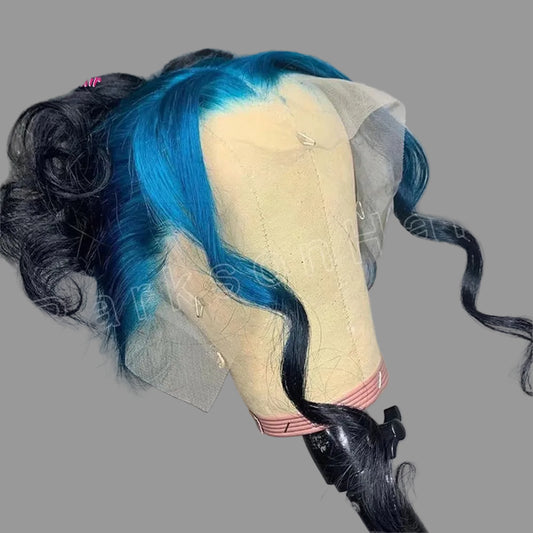
#4/613 Ombre Blonde Lace Front Wig | High-Impact Black with Blue Custom Tone Option | 13x4 HD Transparent Swiss Lace Frontal Body Wave Human Hair Wig for Women
Regular price $502.00 USDRegular price$0.00 USDSale price $502.00 USD -
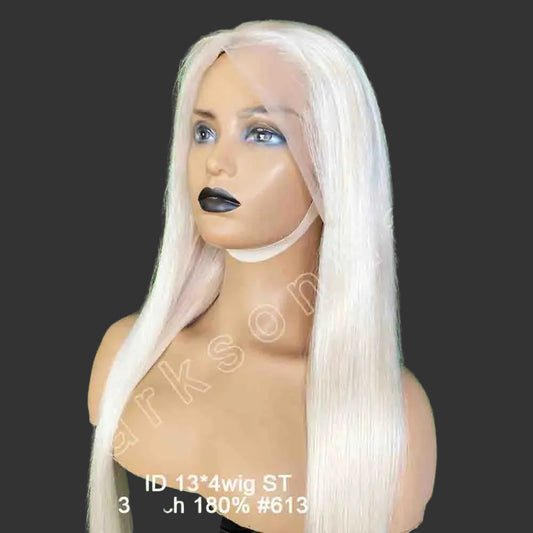
#60 613 Platinum Blonde Wear-and-Go Glueless Wig | 13x4 HD Transparent Lace Frontal Wig | 100% Brazilian Remy Human Hair Body Wave Long 26+ Inch Wig for Women
Regular price From $249.00 USDRegular price$0.00 USDSale price From $249.00 USD -
#60 Platinum Ash Blonde Lace Front Wig | 100% Brazilian Human Hair Glueless Wig | 13x4 & 13x6 HD Transparent Swiss Lace Frontal Body Wave Gown for Women
Regular price From $249.00 USDRegular price$0.00 USDSale price From $249.00 USD









Build a Low-Friction Bedtime Setup
Your bedding and nighttime accessories affect how much the wig rubs while you sleep. Set up the bed before putting the wig on so you don't need to handle the hair repeatedly.
Choose satin accessories carefully
A satin pillowcase, scarf, or bonnet may help the hair move more easily against the surface. Use whichever option feels comfortable and leaves the wig secure without compressing it.
A scarf should sit gently around the unit, not tightly across the hairline. A bonnet should have enough space for the wig's length and volume. If it presses the lace against your forehead or makes your head feel hot, remove it.
Keep the hair arranged in its natural direction. Folding waves sharply or pushing long hair into a small bonnet can create creases and tangles. These accessories can reduce friction, but they aren't guaranteed to prevent damage or knots.
Protect the wig when you remove it
If you take the wig off, don't place it on the floor, under a pillow, or in a crowded drawer. Lightly detangle it, then place it on a ventilated wig stand. Keep the hair hanging in its natural direction and store the unit away from direct heat and damp areas.
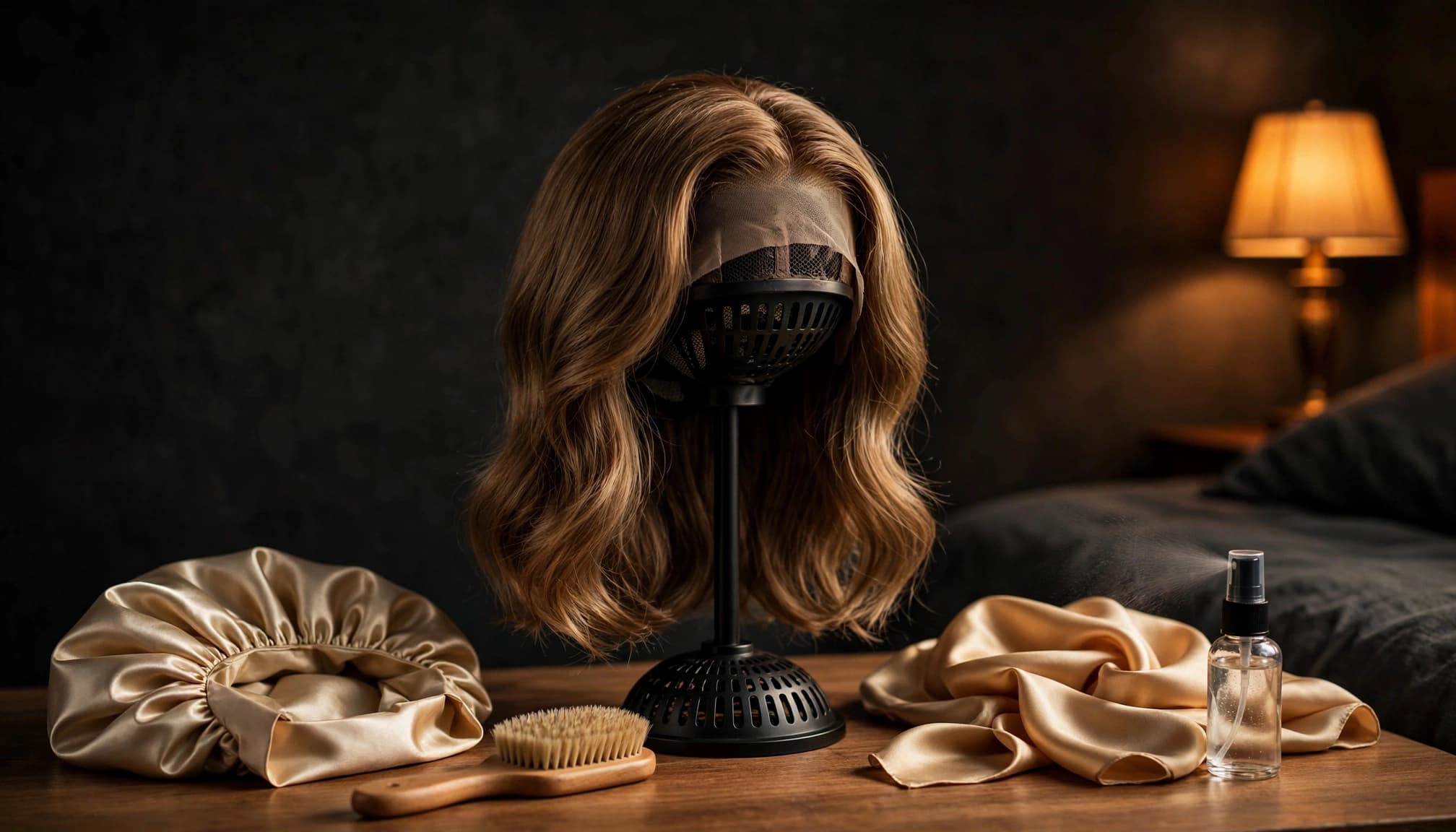
A stand helps preserve the shape and keeps the hair from being crushed. It also makes the next morning easier because you can inspect the cap, lace, and strands before wearing the wig again.
Create a Simple Morning Reset
A few minutes in the morning can prevent small tangles from becoming difficult knots. Check the wig before styling it or applying heat.
Inspect the scalp and hairline
After removing a wig or loosening the setup, check how your scalp feels. Pay attention to tenderness around the temples, behind the ears, and at the nape. Also look for marks from straps, combs, or lace.
If you feel pain or notice irritation, leave the wig off until the area feels comfortable. The AAD advises avoiding styles that irritate the scalp or cause breakage, and its guidance on preventing hair damage from weaves and extensions also stresses the risks of repeated pulling.
Restore the style without excess pulling
Use your fingers to arrange the hair first. Follow with a wide-tooth comb on straight or wavy textures, working from the ends upward. For curls, reshape sections with your hands instead of brushing through the entire unit.
Check the lace and edges before applying adhesive or styling products. If the wig has shifted, remove it and reposition it rather than pulling it forward with force. A small amount of time spent resetting the unit protects the hairline and keeps the style looking natural.
FAQ About Sleeping in a Human Hair Wig
Is it safe for everyone to sleep in a human hair wig?
No. Some people tolerate overnight wear, while others experience pressure, itching, heat, or tangling. Your wig should come off if it causes discomfort or irritates your scalp.
Should I wear a bonnet over my wig?
You can try a roomy satin bonnet if it doesn't press against the lace or make your head feel hot. A satin pillowcase is another option when a bonnet feels restrictive. Neither accessory guarantees that the wig will remain tangle-free.
How should I sleep in a long human hair wig?
Detangle the ends first, then place the hair over one side of the pillow or behind your shoulders. Avoid sleeping directly on the length. If the unit continues to bunch beneath you, remove it before bed and store it on a stand.
Can I sleep in a lace-front wig with adhesive?
Adhesive may add tension at the hairline, especially when the wig is already tight. If you choose to wear it overnight, check for pulling, residue, tenderness, or irritation. A glueless unit may be easier to loosen, but the best option is the one that feels comfortable without pressure.
How often should I remove my wig?
There isn't one schedule that suits every wearer. Remove it whenever your scalp needs a break, the unit needs care, or the fit becomes uncomfortable. Beginners may find that wearing the wig during the day and storing it overnight offers the easiest balance.
Conclusion
Sleeping in a wig works best when comfort guides every decision. Loosen the fit, keep the base relaxed, detangle gently, and protect long hair from rubbing against the pillow.
A satin accessory may help reduce friction, but removing the wig remains the best option whenever your scalp feels sore or irritated. Your human hair wig should make your routine easier, not leave you choosing between a restless night and a damaged hairline.