

Straight vs Body Wave Wigs for Daily Wear: How to Choose
Your wig can look perfect on its stand and still feel like the wrong choice on a busy Tuesday. When you're comparing straight vs body wave wigs, the useful question is how each texture fits the way you get ready, travel, and care for your hair.
Straight hair offers a sleek finish; body waves add movement and fullness. Neither is automatically easier to wear. The better choice is the one you'll enjoy maintaining on an ordinary day, so start with what each texture asks of you.
Straight vs body wave wigs at a glance
Both textures can work for daily wear, but they create different starting points. A straight wig gives you a smooth outline that can look polished with little styling. A body wave wig arrives with bends through the lengths, giving the hair a softer, fuller shape.

These differences matter most when you consider the look you want to leave the house with.
| Daily-wear question | Straight wig | Body wave wig |
|---|---|---|
| What is the starting look? | Smooth and defined | Soft with visible movement |
| What might need attention? | Keeping the finish even | Keeping the waves shaped to your liking |
| How does it change styles? | A sleek base for updos or added waves | A waved base that can be restyled if the fiber allows |
| What happens after brushing? | The hair may look smoother | The wave pattern may loosen until you reshape it |
The table describes appearance and styling choices, not a maintenance ranking. Hair fiber, length, density, and the wig's care instructions all affect what a particular unit needs.
How each texture looks on an ordinary day
Photos often show a freshly arranged wig. Daily wear includes wind, coats, commutes, and the moment you tuck your hair behind an ear. Picture the texture after those small interruptions, not only under studio lighting.
Straight hair makes the outline crisp
A straight wig highlights its cut. On a bob, the ends can create a sharp line; on a longer style, the lengths fall in a smooth sheet. If you like a neat middle part or a tidy low ponytail, that clean outline may feel like you.
That finish also makes your personal standard important. If one bent section bothers you, you'll probably want time to smooth it. If you prefer a little natural movement, a straight style doesn't have to be perfectly flat.
Body waves bring shape before styling
Body waves add broad bends rather than tight curls. The result can feel dressed-up even when you leave the hair down and keep accessories simple. You may also prefer how the waves frame your face or soften the outline of a longer wig.
The pattern won't look identical after every brush or wash. If you enjoy arranging the waves with your hands and letting them settle, that flexibility may suit you. If you want every bend in exactly the same place, consider the time that takes.
Styling versatility depends on the starting point
With human hair, both textures offer styling options, subject to the individual wig's instructions. The practical difference is how much work sits between its starting look and the finish you want most days.
Start straight if sleek is your default
Straight hair is a natural base for a smooth bob, a low ponytail, or a polished half-up style, provided the cap allows the placement you want. You can add waves to a suitable human-hair wig, but doing so creates another styling step. Washing and restyling may then take it back toward its original look.
If you expect to wear it straight most mornings, choose a straight unit you like without extra work. Luxegan's ready-to-wear straight glueless wig is one example with a pre-cut 6x4 lace closure.
Start wavy if movement is your default
A body wave wig gives you a shaped look before you reach for a styling tool. You can change the parting where the lace construction permits, pin back the front, or dress it up with an accessory.
Straightening a human-hair body wave wig may be possible if its care instructions allow heat. Still, repeated heat styling adds time and wear, so choose the texture closest to your usual look. That matters more than the occasional style you might try for an event.
What daily maintenance involves
Neither texture stays fresh without care. Both need gentle detangling, cleaning when needed, and somewhere to rest between wears. The difference is what you want the hair to look like after those steps.

Detangle before a wash
Work through tangles gently before wetting the hair. The wig care instructions attributed to Jon Renau advise removing tangles before washing a human-hair wig. Start at the ends and work upward, holding the hair to avoid pulling on the cap.
For straight hair, check the nape and ends even if the surface looks smooth. With body waves, take care not to force a brush through sections you want to keep shaped. Follow the wig maker's tool recommendations, especially for delicate lace or a fiber other than human hair.
Wash and finish with your goal in mind
Bravadas' human-hair wig washing guidance calls for gentle detangling, cool water, wig-safe shampoo, and conditioner. Follow your own wig's instructions for products, washing, and drying.
Once the hair is dry, a straight style may need smoothing to match the finish you prefer. Body waves may need gentle reshaping. Neither task has to take long, but factor it into your routine before choosing the texture that looks best in a product photo.
Frizz and tangles: what changes in practice
Frizz and tangles can affect either texture. Length, friction, weather, product buildup, and handling all matter, so the wave pattern alone can't tell you which wig will need more attention.
Notice where your hair rubs
A long wig may catch against a jacket collar, scarf, or shoulder bag strap. Check those contact points when you take it off, particularly around the nape and ends. Removing a small snag gently is easier than pulling through a larger one later.
Straight hair can show flyaways against its smooth outline. Body waves may make scattered hairs less obvious to you, but they still need care. Choose based on what you're comfortable seeing and fixing, rather than assuming one texture won't tangle.
Adjust for humid days
Human hair can develop frizz in humid conditions. The Hair Society's humidity care guidance favors gentle cleansing, adequate conditioning, low-friction drying, and light, compatible styling products.
A smooth look may call for a quick touch-up if humidity changes its finish. With waves, you may prefer to refresh their shape instead. Avoid adding heavy product each time the weather changes; check the wig's care directions and see how the hair responds.
Shop Straight Wigs
-
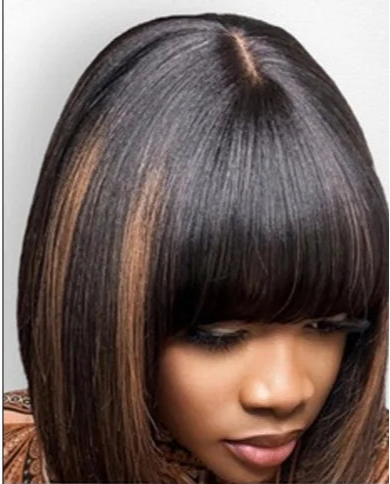
"Put On & Go" Straight Bob Wig | Easy Wear Human Hair with Bangs & Realistic Scalp
Regular price From $111.00 USDRegular price$133.00 USDSale price From $111.00 USDSale -
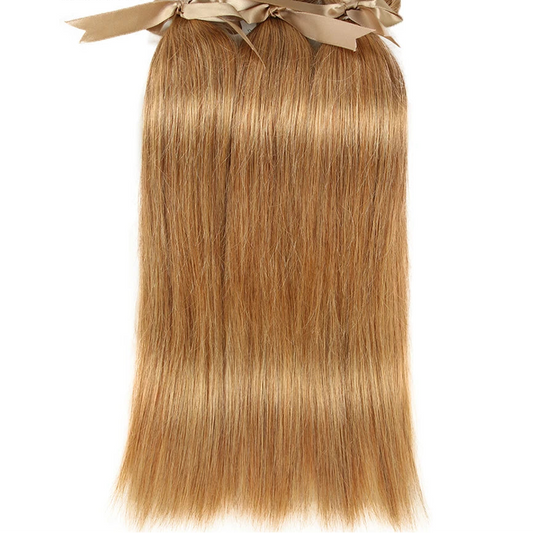
#27/30 Honey Blonde Auburn Straight Human Hair Bundles | Premium Brazilian Remy Human Hair Weaving | Multidimensional Highlighted Sew-In Extension Bundles (3-Piece Multipack)
Regular price $221.00 USDRegular price$0.00 USDSale price $221.00 USD -
#4 Brown Pixie Short Cut Wig with Bangs | Straight Human Hair Full Machine Made
Regular price $112.00 USDRegular price$168.00 USDSale price $112.00 USDSale -
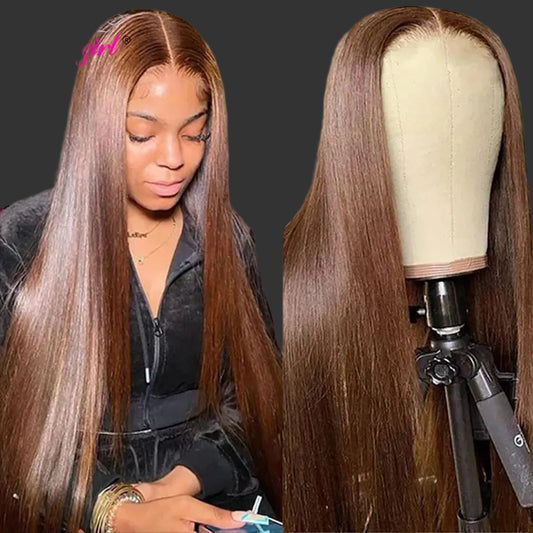
#4 Chestnut Brown Straight Lace Front Wig | 13x4 & 13x6 Transparent Swiss Lace Frontal Wig | 150% & 180% Density 100% Brazilian Remy Human Hair Long Closure Wig for Women (26+ Inch)
Regular price From $364.00 USDRegular price$0.00 USDSale price From $364.00 USD -
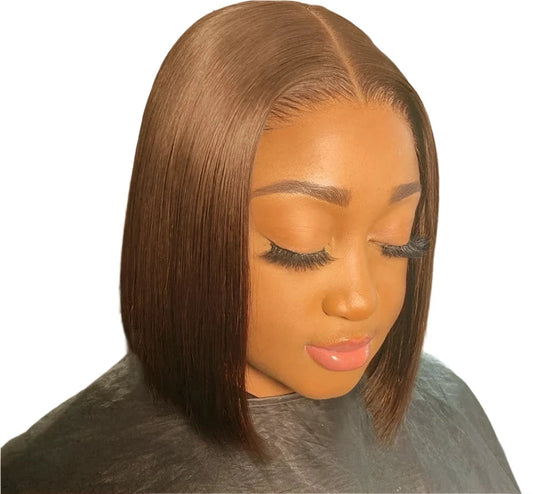
#4 Chocolate Brown Bob Wig | Glueless | Ready To Wear | Brazilian Hair | Human Hair | Straight | Invisible | Closure Wigs For Women
Regular price From $151.00 USDRegular price$172.00 USDSale price From $151.00 USDSale -
#4 Chocolate Brown Straight Bob Wig | Sophisticated 200% Density HD Transparent Lace Frontal | Elegant "Short Bob" Silhouette | "Dignified" Pre-Plucked Brazilian Remy Human Hair for Radiant Versatile Styling
Regular price $150.00 USDRegular price$200.00 USDSale price $150.00 USDSale -
10-16 inch Short Straight Bob Wig | Brazilian Remy Human Hair | 13x4 Lace Frontal | Natural Looking | Ready to Wear
Regular price $72.51 USDRegular price$120.85 USDSale price $72.51 USDSale -
10-Inch Glueless Bob Wig | Sophisticated 4x4 HD Transparent Lace Closure | Elegant "Ready to Wear" Brazilian Human Hair | "Dignified" Pre-Cut Lace Straight Remy Wig for Radiant Versatile Styling
Regular price From $140.00 USDRegular price$160.00 USDSale price From $140.00 USDSale





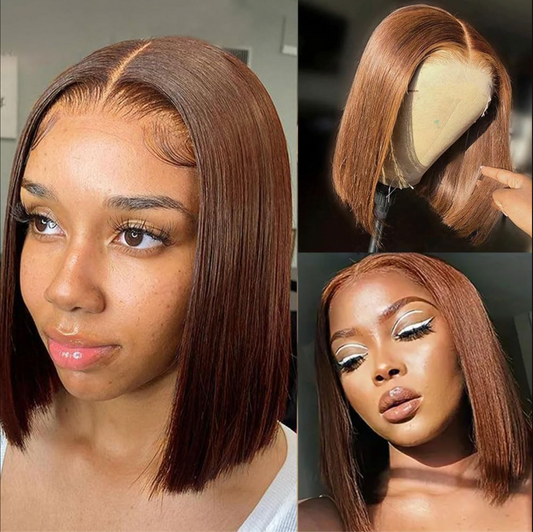


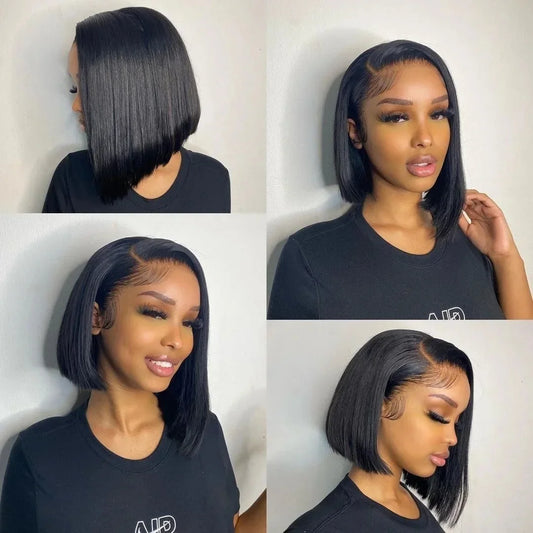



Check the wig beneath the hairstyle
Texture is only one part of a comfortable daily choice. A cap that fits your head and a lace area that supports your favorite part can matter more during a full day than the difference between straight and wavy hair.
Compare lace and parting space
A closure gives you a defined lace area, while a lace frontal typically offers more room to change the front parting. Compare the actual dimensions and construction on each listing rather than assuming every wig of one texture is built alike.
For example, Luxegan lists a bone straight glueless lace front wig with a 13x4 frontal. Its lace layout is a feature of that unit, not of straight wigs generally.
Look beyond the texture name
Check length and density alongside cap size, fastening method, and fiber. Longer hair may need more detangling simply because there's more hair to handle. A fuller unit may also feel different from a lighter one, regardless of its wave pattern.
Luxegan's glueless body wave human-hair wig listing includes multiple length and lace options. Compare the exact variant before buying. Even within one product listing, construction choices can change how you part and wear the hair.
Choose for the routine you already have
When weighing straight vs body wave wigs, think about the mornings when you have less time than planned. Which starting look would you be happy to wear after a gentle detangle and a quick check in the mirror?
If you regularly wear sleek outfits and prefer a defined hairline and smooth lengths, straight may feel more natural to you. If you usually want movement around your face, body waves may get you closer to your preferred look sooner. Neither preference says anything about how much effort you should spend on your hair.
Before ordering, compare two wigs at a similar length and density. Then check the fiber, cap fit, lace area, and care instructions. Those details make a fairer comparison than photos of a short straight bob beside a much longer, fuller wave wig. Your best daily texture is the one that fits both your taste and the care you're willing to do.
Key takeaways
- Straight wigs begin with a smooth, defined look; body wave wigs begin with softer bends and movement.
- Both textures need detangling and washing. Your preferred finished look affects the styling you'll do afterward.
- Frizz and tangles depend on more than texture, including length, friction, weather, and how you handle the hair.
- Compare cap construction, fiber, and care instructions before treating any wig as a daily-wear option.
FAQ
Are body wave wigs harder to maintain than straight wigs?
Not necessarily. A body wave wig may ask you to reshape the waves after washing, while a straight wig may need smoothing to meet your standard for a sleek finish. The particular hair, its length, and your styling preferences matter more than a blanket rule about texture.
Can I straighten a body wave wig or curl a straight wig?
A human-hair wig may allow both, depending on its care instructions. Confirm that heat styling is permitted and follow the maker's temperature guidance. Don't assume a synthetic wig is heat-safe. If you plan to restyle it often, consider buying the texture closest to your everyday look instead.
Which texture is better for a first wig?
Start with the appearance you already like wearing, then choose a cap and lace construction you understand. A first wig feels easier to use when its usual look needs little adjustment. If you rarely style your hair, don't buy a texture that requires regular heat work to look the way you want.
Conclusion
The choice between straight and body wave wigs comes back to an ordinary Tuesday. Your favorite starting look should fit the time and care you can give it that day.
Pick the texture you like after a realistic morning routine, then check the wig's cap, fiber, and instructions. Both can look polished for daily wear when the whole unit fits your needs.