

How to Clean a Wig Cap Without Stretching Its Elastic
A clean wig cap can make a wig feel fresher, but stretched elastic can leave it loose and harder to wear securely. The safest approach is simple: use cool or lukewarm water, handle the cap gently, and support its shape instead of pulling on the edge.
Care instructions differ by wig and cap material, so check the label or manufacturer's guide first. With the right method, you can clean away residue without wringing, twisting, or stressing the elastic.
Key takeaways
- Use cool or lukewarm water and a mild cleanser only when the wig's care instructions allow it.
- Hold and support the cap while rinsing. Don't pull on the elastic, lace, or seams.
- Blot out extra water, then air-dry the wig in its natural shape.
- Follow the specific care directions for the wig's hair and cap materials.
Before washing, check the cap and gather supplies
Start with the wig's care label or product instructions. A human-hair wig, synthetic wig, lace-front cap, and stretch cap may need different products or washing methods. If you can't find instructions, contact the seller before using a cleanser on delicate lace or a coated interior.
Inspect the inside of the cap
Turn the wig inside out only if its construction allows it, and avoid forcing the cap into position. Look for makeup, oil, adhesive residue, or visible buildup. Check the elastic band and seams for loose threads or signs of wear. If the elastic is already stretched or damaged, washing won't restore its fit.
For a wig with delicate lace, avoid scrubbing or picking at residue. If adhesive has built up near the hairline, use only a remover recommended for that wig. Pulling dried adhesive can strain the lace and nearby stitching.
Set up a gentle wash area
Use a clean basin or sink, a soft towel, and a mild cleanser approved for the wig. Keep water cool or lukewarm, not hot. Clear away jewelry or anything that could snag lace or fibers as you handle the piece.
If the instructions call for a wig-specific shampoo, use that instead of regular shampoo. Some guidance differs on whether shampoo should touch the cap directly. For example, Headcovers' human-hair wig washing instructions recommend rinsing the inside of the cap with cool water without shampooing it.
How to clean wig cap lining without pulling the elastic
Keep the washing motion small and controlled. The goal is to rinse or lift away residue, not stretch the cap to reach every spot.
Support the cap while rinsing
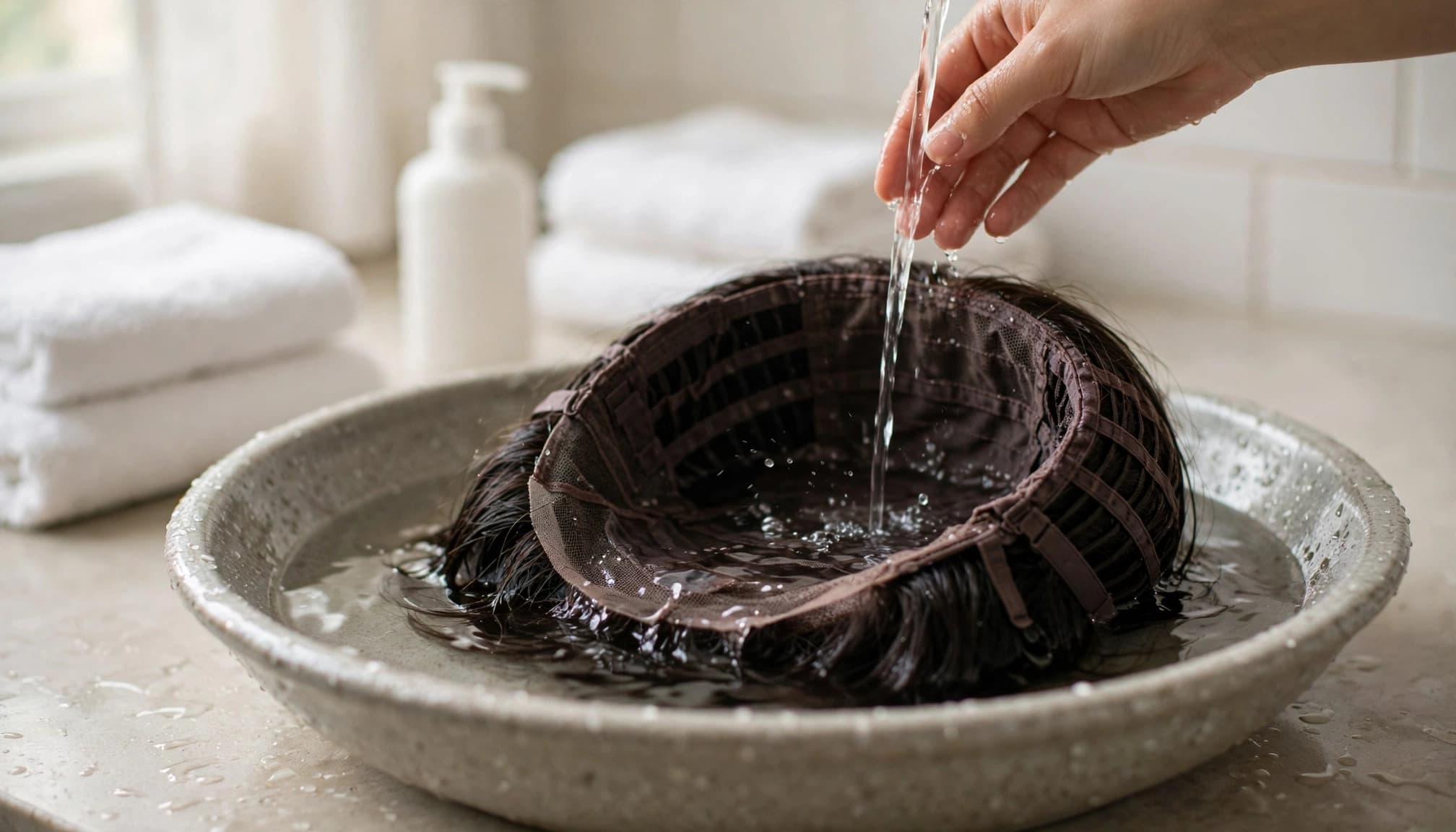
Hold the wig over the basin with one hand supporting the cap from underneath. Let cool or lukewarm water run gently over the area that needs cleaning. You can also rest the wig in the basin so the cap doesn't hang from the elastic or lace.
If the instructions permit cleanser on the cap, dilute a small amount in water or apply it lightly with your fingertips. Avoid concentrating product on the elastic, seams, or lace. Don't scrub with a brush or fingernails. For a cap that only needs a rinse, water may be enough.
Press gently, then rinse thoroughly
Use your fingertips to press water through the lining in short, light motions. Don't stretch the opening to make the cap easier to handle, and don't rub the material back and forth. If you're washing the full wig, keep the hair supported as well.
Rinse until the water runs clear and any permitted cleanser is gone. When you lift the wig, support the cap with both hands rather than lifting it by the edge. General wig-care instructions differ on water temperature and soak time, so don't assume a long soak is right for your piece.
Blot the wig and air-dry it in shape
Water makes a wig heavier, which can place extra strain on the cap if it hangs unsupported. Take a moment to remove excess water carefully before setting it aside.
Blot instead of twisting
Lay a clean towel on a flat surface and place the wig on it. Fold the towel over the cap and hair, then press gently to absorb moisture. Don't wring or twist the wig, even if the cap seems sturdy. Those motions can stretch the elastic and distort the cap's shape.
For longer hair, avoid rubbing the towel along the strands. Blot sections gently, keeping the cap supported so its weight doesn't pull on the lace or band.
Let the cap dry naturally
Place the wig cap-side up on a suitable wig stand, or lay it flat in a well-ventilated area if a stand isn't recommended for that cap. Arrange the cap in its natural shape and leave the elastic relaxed. Keep the wig away from direct heat and don't stretch it over an oversized stand.
Air-drying is a common recommendation in wig-care guidance. The National Alopecia Areata Foundation's wig care guide advises air-drying and gives a general wash interval of every 10 to 14 wears. Follow your wig's own instructions if they differ.

Wig and cap materials can change the method
There isn't one washing routine for every wig. Hair fiber, lace, cap construction, and any attached adhesive or coating can affect which products and steps are safe.
Human-hair wigs
Human hair can usually be washed with products made for human hair, but the cap still needs gentle handling. Avoid pulling the wig taut to wash the interior, and keep cleanser away from parts the manufacturer says not to treat. A lace-front style may need extra care along the hairline.
For an example of a human-hair style with a lace frontal, see Luxegan's Buttercup bob wig care details. Its product page recommends sulfate-free shampoo and conditioner for the hair. That advice doesn't replace instructions for cleaning the cap itself.
Synthetic wigs and specialty caps
Synthetic fibers may require a shampoo formulated for synthetic wigs. Some instructions suggest washing the wig in cold water with synthetic-wig shampoo, while others recommend a shorter, gentle soak. For instance, Unlimited Wigs' care guide gives its own cold-water washing directions.
A glueless cap, stretch cap, or lace construction can also respond differently to handling. Check the product's specific guidance before using cleanser or submerging it. If instructions are missing, a cautious water rinse is safer than experimenting with a new product on delicate material.
Shop Wigs
-
Musicology, White Is Wight, Eau De Parfum, Unisex, 95 ml
Regular price $404.33 USDRegular price -
36 Inch Knotless Box Braided Wig with Curly Ends | Full Lace Boho Braided Wig | 5 Colors
Regular price $163.00 USDRegular price$186.00 USDSale price $163.00 USDSale -
Jerry Curly Human Hair Wig – Short Pixie Afro Kinky Curly Wig with Bangs
Regular price $101.00 USDRegular price$135.00 USDSale price $101.00 USDSale -
Wigundle Kanekalon Pre-Stretched Crochet Braiding Hair Extensions – Jumbo Braids for Women
Regular price From $105.00 USDRegular price$133.00 USDSale price From $105.00 USDSale -
Short Water Wave Curly Bob Human Hair Wig 10in – Glueless Brazilian Remy Wig | Brown, Black, Red & Blonde
Regular price From $114.00 USDRegular price$136.00 USDSale price From $114.00 USDSale -
Pixie Cut Wig for Black Women – Straight Remy Human Hair | Short 6in | Bangs | Machine Made
Regular price From $103.00 USDRegular price$123.00 USDSale price From $103.00 USDSale -
Short Pixie Afro Kinky Curly Wig for Black Women – Glueless Brazilian Remy Human Hair | Bob with Bangs
Regular price From $95.00 USDRegular price$126.00 USDSale price From $95.00 USDSale -
Highlight P4/30/27 Brazilian Straight Human Hair Wig with Bangs – 100% Remy | Full Machine Made | 16–28 Inch
Regular price From $162.00 USDRegular price$185.00 USDSale price From $162.00 USDSale













Decide whether the cap needs a spot clean or full wash
A full wash isn't always necessary just because one small area feels dirty. Choose the gentlest method that addresses the actual buildup.
Spot-clean a small area
For a little makeup or sweat residue, dampen a soft cloth with cool or lukewarm water and press it against the spot. If the care instructions allow cleanser, use a small amount of mild product diluted in water. Dab lightly, then use a clean damp cloth to remove residue.
Don't drag the cloth across the cap or pull the material tight beneath it. If the mark doesn't lift, stop rather than scrubbing harder. A specialist may be able to advise you, especially if the spot is adhesive or sits on delicate lace.
Wash the full wig when needed
A broader wash can make sense when residue is spread across the cap or the wig needs its regular cleaning. Follow the maker's steps for washing the full piece, while supporting the cap throughout. The National Alopecia Areata Foundation's 10-to-14-wear interval is general guidance, not a fixed schedule for every wig or wearer.
If you wear your wig with adhesive, sweat heavily, or use styling products near the hairline, your cleaning needs may differ. Check the cap before each wash and avoid repeating a full wash when a gentle spot clean will do.
Mistakes that can loosen or distort the cap
Small handling habits matter, especially when the wig is wet and heavier than usual. Avoid motions that place tension on the elastic or lace.
Don't wring, twist, or hang by the edge
Wringing and twisting squeeze water out by force and can distort the cap. Hanging a wet wig from one edge also puts its weight on a narrow strip of elastic or lace. Instead, support the cap in your hands, blot it with a towel, and set it down or onto an appropriate stand.
Avoid stretching the opening around your hand or pulling the elastic while cleaning. If you need access to the lining, reposition the wig gently rather than forcing the cap wider.
Don't use heat or harsh scrubbing
Hot water, vigorous rubbing, and unapproved cleaners can create unnecessary stress for the cap and hair. Wig USA recommends mild shampoo in lukewarm water, but product directions still take priority for your specific piece.
Skip a hair dryer, radiator, or direct sunlight unless the wig maker explicitly allows that drying method. Heat can affect some fibers and cap materials, while rubbing can snag lace or seams.
Frequently asked questions
Can I use regular shampoo on a wig cap?
Only if the wig's instructions allow it. Some guides recommend wig-specific shampoo, and some advise rinsing the cap without shampoo. When in doubt, avoid applying an unapproved product directly to the lining, lace, or elastic.
Should I turn the wig inside out?
Only if the cap can be turned without stretching or stressing its seams. Support the cap with your hands as you reposition it. If it feels tight or difficult to invert, clean the accessible area without forcing it.
How do I dry the cap without stretching it?
Blot the wig with a towel, then air-dry it with the cap in its natural shape. Use a stand that fits properly or lay it flat if the care instructions recommend that. Don't pull the elastic over an oversized stand.
Can I clean only the inside of the cap?
Yes, when the wig's care directions allow spot cleaning or rinsing. Use gentle water flow and avoid saturating parts that shouldn't get wet. If the cap has widespread residue, follow the manufacturer's full-wash steps instead.
Keep the fit by handling the cap gently
To clean a wig cap without stretching its elastic, support it through each step. Cool or lukewarm water, a mild cleanser when approved, gentle blotting, and relaxed air-drying help you avoid needless pulling and twisting.
Since cap materials and care instructions vary, let the wig's specific directions guide your routine. Gentle handling is the part you can control every time.