

Wig Lace Tinting for a Closer Skin Tone Match
A lace front can look convincing until the hairline catches the light and the lace reads lighter or grayer than your skin. Wig lace tinting can soften that contrast, but the best result comes from a close shade match and a light, even application.
Your skin tone is more than a shade name, and lace can change how a tint appears. Start with a small test area, use a product intended for wigs or makeup intended for skin, and check the finished lace in the lighting where you'll wear it.
Key Takeaways
- Compare tint shades with your skin in natural light, not under a warm lamp or a phone flash.
- Use wig lace tint spray for a product made for lace. Makeup can be an option, but it may transfer or build up.
- Test a small, hidden area before treating the full lace.
- Apply thin layers and let each one dry as directed. It's easier to add color than remove excess.
- Keep the wig protected, follow the product label, and avoid household dyes or chemicals not intended for lace or skin.
Choose a Tint and Shade for Your Lace
Compare lace with your skin in natural light
Hold the lace near your forehead or temple, without attaching the wig, and look at it beside your skin in indirect daylight. Compare the lace itself, not the hair or knots. A good tint reduces the visible contrast without making the lace look darker than your complexion.
Check more than one area if your face and neck vary in tone. If you wear foundation, compare with the skin tone you want the hairline to blend into, rather than the color of a product that may be warmer or lighter. Also consider undertone: a shade that is close in depth can still look off if it is much pinker, more yellow, or more orange than your skin.

Treat shade labels as a starting point
Shade names and descriptions vary by brand, so don't assume "medium" means the same thing across products. For example, Lace Tint Spray by KC describes Tan Nude for light skin tones, Warm Caramel for medium-brown or caramel tones, Pure Coco for dark-brown tones, and Expresso for dark-chocolate tones. Those labels are that seller's guidance, not a universal chart.
If you're between shades, begin with the lighter option and test it. You can usually deepen the color with another thin coat, while an overly dark result may require cleaning and starting over. Lace type, tint formula, and the color beneath the lace can all affect the finished look.
Your wig's lace construction can also shape the result. Browse 13x4 lace front wigs if you're comparing frontal coverage and styling space before choosing a wig.
Prepare the Wig Before Tinting
Protect the hair and work area before opening the product. Place the wig on a stable mannequin head or a clean, flat surface, depending on the manufacturer's method. Keep the hair away from the lace you'll tint, and cover nearby strands with clips or a clean cloth. Lay a towel or disposable protective sheet underneath to catch overspray.
Make sure the lace is clean and fully dry unless the product directions say otherwise. Oils, adhesive residue, styling products, and moisture can interfere with an even finish. Avoid rubbing or stretching delicate lace while cleaning it, since pulling can distort the hairline.
Before treating the whole area, apply tint to a small, less visible section. Let it dry as directed, then inspect it against your skin in daylight. A test helps you catch a shade that looks too warm, too deep, or uneven before it covers the front hairline.
Read the full label before you begin. Product instructions differ, including which side of the lace to tint, how far to hold a spray, and how long it needs to dry.
Apply Lace Tint Spray in Light Layers
Set up and follow the product directions
Use a spray specifically labeled for wig lace, and follow its instructions rather than using a generic method for every formula. EBIN NEW YORK Tinted Lace Aerosol Spray directs users to turn the wig upside down, shake the can, hold it 1 to 3 inches from the lace, and spray the back evenly. The directions also say to brush or shake excess off the hair or lace.
Lace Tint Spray by KC also instructs users to apply to clean, dry lace, then blow-dry or air-dry for one minute. These examples show why it's important to follow the directions for your exact product. Don't assume the same distance, drying time, or application side applies to every brand.
Add color gradually
Hold the lace steady and move the spray in a consistent motion, rather than focusing on one spot. Follow the label's recommended distance and apply a light layer. Once it dries, check the color. Add another light layer only if the lace still looks too pale.
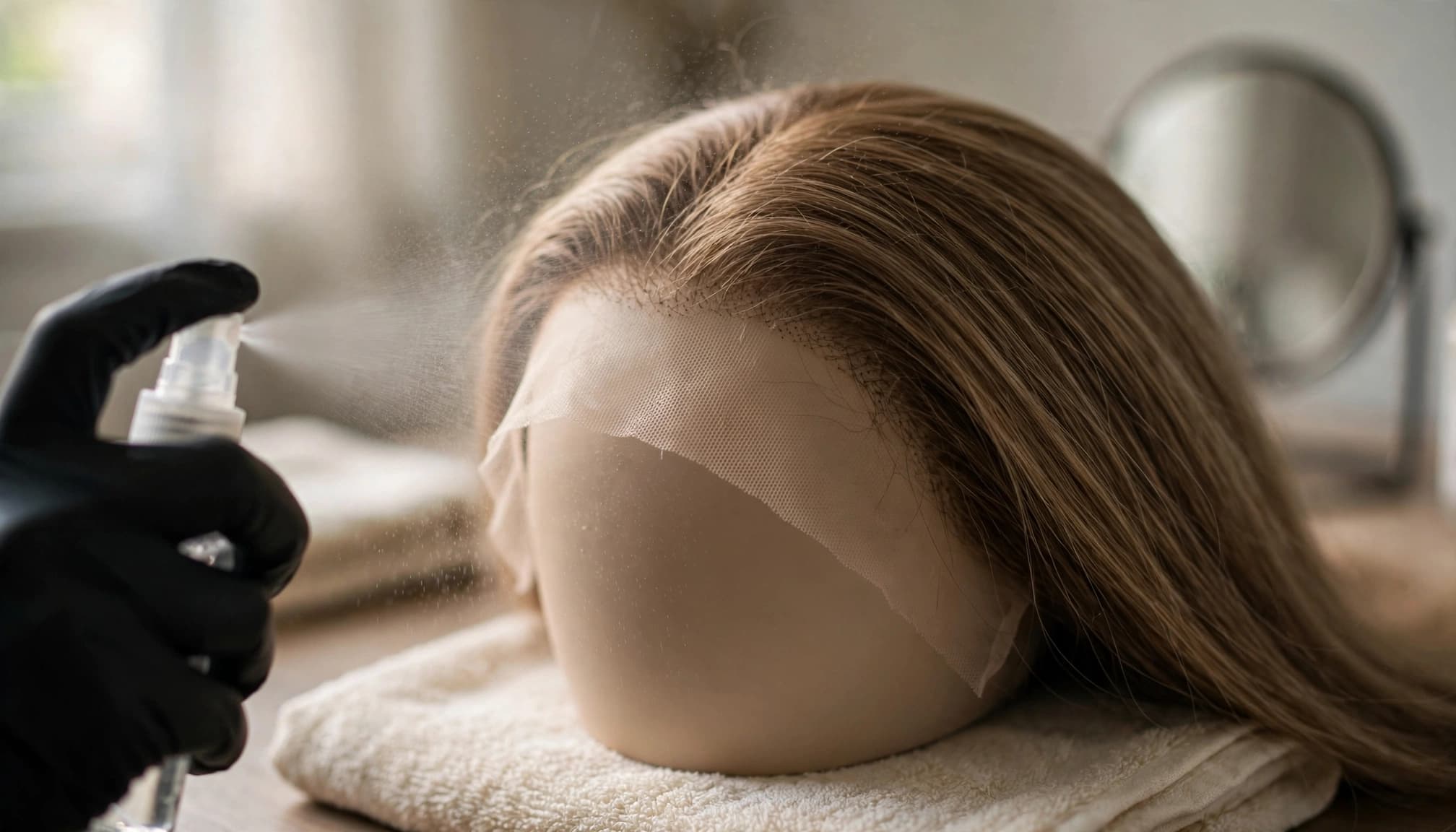
If you use EBIN's spray, the label says to work on the back of the lace. Other products may specify another method, so read the package instead of treating the underside as a universal rule. Keep the spray away from your face, and use it in the manner and setting described on its label.
After the final coat dries, inspect the lace before styling or installing the wig. A section that looks subtle when wet may appear stronger once dry.
Use Makeup as an Alternative With Care
Choose products made for skin
A small amount of foundation or concealer that's intended for skin may help adjust the appearance of lace. Powder makeup can be easier to control than a liquid formula: use a clean brush to apply a thin layer to a test area, then check the result. Use a shade that blends with the skin around your hairline, and avoid piling product onto the knots.
Cream and liquid makeup may cover strongly, but they can leave residue or transfer during wear. If you try one, use a minimal amount and test how it looks once dry. Don't assume that a cosmetic is designed to adhere to lace just because it's safe for use on skin.
Keep the makeup off the hair
Separate the hair from the lace and use a small, clean brush or sponge to apply makeup precisely. Too much product can collect around knots and make them look less natural. It can also rub onto your fingers, clothing, or forehead.
Makeup isn't a substitute for a wig tint product in every case. If the lace needs substantial color adjustment, a purpose-made lace tint may be easier to apply evenly. Either way, test first and follow the product's directions.
Shop Best Sellers
-
Short Goddess Faux Locs Wig | Brown Highlight Crochet Dreadlock Wig
Regular price From $158.00 USDRegular price$190.00 USDSale price From $158.00 USDSale -
30 Inch Burgundy 99J Curly Human Hair Wig | 13x6 Lace Frontal | 200% Density
Regular price From $257.00 USDRegular price$0.00 USDSale price From $257.00 USD -
12A Deep Wave Remy Human Hair Bundles | 30 to 32 Inch Weft Extensions
Regular price $364.00 USDRegular price$0.00 USDSale price $364.00 USD -
#350 Knotless Box Braids Wig | Short Lace Frontal Bob | Dark Ombre Ginger
Regular price $262.50 USDRegular price$0.00 USDSale price $262.50 USD -
Short Afro Faux Dreads Wig | Synthetic Braided Wig for Men and Women
Regular price $90.00 USDRegular price$120.00 USDSale price $90.00 USDSale -
12A Raw Vietnamese Bouncy Wave Wig | 13x4 Lace Frontal | 250% Density
Regular price From $242.00 USDRegular price$0.00 USDSale price From $242.00 USD -
Men's Wingtip Derby Shoes | Genuine Leather Colour Block Lace-Ups
Regular price $263.00 USDRegular price$301.00 USDSale price $263.00 USDSale -
Brazilian Human Hair 13x4 Lace Front Wig | Glueless, Pre-Plucked with Baby Hair
Regular price From $99.00 USDRegular price$132.00 USDSale price From $99.00 USDSale







Fix Blotches, Dark Lace, and Product Buildup
If the color looks blotchy
Uneven color often comes from applying too much product to one section, spraying too close, or tinting lace that isn't clean and dry. Let the product dry fully before deciding whether the color is uneven. If it is, follow the product's removal or cleaning instructions, then retest with a lighter application.
Don't keep spraying a dark patch in an attempt to blend it. That can make the area larger and deepen the whole hairline. Instead, pause, let the lace dry, and reassess in neutral daylight.
If the lace looks too dark or coated
Stop adding tint if the lace is already darker than the skin beside it. Check the product label for safe removal or cleanup directions. Don't use bleach, household dye remover, solvents, or other chemicals to strip the color unless the product maker specifically directs their use on that material.
For buildup, avoid adding more layers of makeup or tint. Remove residue only with a cleaning method suitable for the wig and lace, and handle the material gently. If the product has dried into a stiff or visibly coated patch, contact the manufacturer for guidance before trying a stronger cleaner.
Keep Safety and Wig Care in Mind
A product suitable for one use isn't automatically suitable for another. Household dyes, fabric dyes, and hair color products aren't substitutes for wig lace tint or skin makeup. The FDA explains that color additives are permitted only for specified uses in its color additive guidance. Follow the product label, and don't apply a wig product to your skin unless its directions say that use is appropriate.
The FDA's hair dye safety guidance recommends following package directions and patch-testing hair dye before use. That advice does not establish that hair dye is suitable for lace or facial skin. Use only a product intended for the surface you're treating, and stop if you develop irritation.
Protect the wig by keeping tint away from the hair fibers, knots, adhesive, and cap whenever possible. If product gets onto the hair, follow the wig maker's care instructions. You can also compare lace constructions and wear options, including glueless 13x6 body wave wigs, before deciding which style and hairline suit your routine.
Frequently Asked Questions
Should I tint the top or underside of the lace?
Follow the specific product instructions. Some sprays direct users to apply tint to the back of the lace, while other formulas may give different directions. Don't assume that a method used with one brand suits another product.
Can I use foundation instead of lace tint spray?
You can test a small amount of makeup intended for skin, but it may transfer or accumulate around knots. Use a thin layer, keep it off the hair, and inspect it after it dries. For a larger color adjustment, a lace-specific product may be more suitable.
Why does my tint look different indoors?
Artificial lighting can make lace appear warmer, cooler, lighter, or darker than it does in daylight. Results also vary with the lace material, product formula, and the skin tone beneath it. Check the dried lace in the lighting where you'll wear the wig before deciding whether to add another layer.
A Natural Match Starts With a Small Test
A convincing hairline depends on a tint that blends with your skin without coating the lace. Compare shades in natural light, protect the wig, and build color slowly with a product made for the job.
Because every lace and formula behaves differently, a small test is the safest first step. Check the dry result beside your skin, then decide whether the full lace needs another light layer.