

How to Blend Hair Extensions With Natural Hair
Extensions look most natural when the color, texture, density, and placement work with your own hair. The right method to blend hair extensions depends on whether you wear clip-ins, tape-ins, a sew-in, or another type of installation.
Start by matching the texture before adding length. Then conceal the attachment points, shape the added hair, and check the result in more than one type of light. These steps help create a polished blend without placing unnecessary stress on your natural hair.
Choose the Right Extension Match
A close match makes blending easier before you pick up a brush or styling tool. Compare your hair when it is clean and dry, preferably in natural daylight.
Match color, length, and density
Color should match the mid-lengths and ends of your hair, not only the roots. If your hair has highlights, lowlights, or faded color, a single flat shade may look obvious. A stylist can tone or color human-hair extensions, but follow the product's care instructions before applying chemicals.
Length also affects the result. Very long extensions may look disconnected from shorter natural hair. Choose a length that gives you room to trim and layer the added hair into your existing shape.
Density matters just as much. Fine hair may need fewer wefts, while thick hair can support more volume. Adding too much hair creates a shelf-like edge instead of a gradual transition.
Choose an attachment method
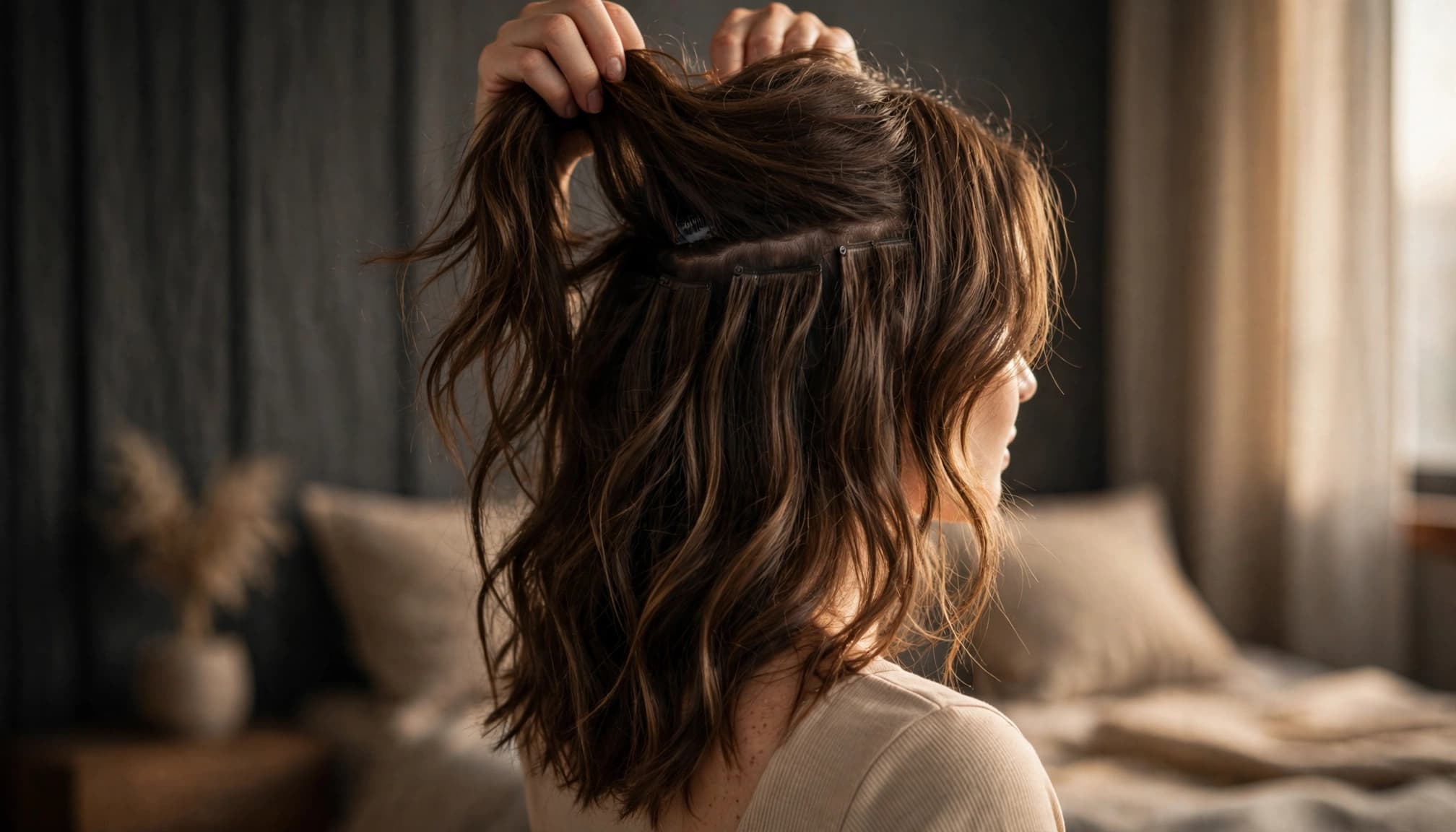
Clip-ins are useful for temporary styling because you can remove them before sleeping. Place them below a layer of natural hair so the clips stay hidden. For example, Luxegan's Kinky Curly Clip-In 100% Human Hair Extensions are listed as 20 inches, 160 grams, and a 3C to 4A kinky curly texture. The listing also identifies them as standard clip-ins, not seamless extensions.
Tape-ins sit closer to the head, but they need careful sectioning and proper removal. One Luxegan option includes 40 pieces, arranged as 20 sandwiches, with an afro kinky curly texture suited to 4A to 4B curls. See the Afro kinky curly tape-in extensions for those specifications.
Sew-ins and bonded methods usually need professional installation, especially if your hair is fine, fragile, or tightly textured. A stylist can assess tension, placement, and whether your natural hair can support the added weight.
Match Texture Before You Style
Texture mismatch is one of the fastest ways to make extensions visible. Straight extensions against tightly coiled hair usually need heat styling or a different installation plan. Likewise, curly extensions can look bulky against fine, straight strands.
Straight, wavy, curly, and coily hair
Straight hair usually blends best with straight extensions of a similar density. If your ends are blunt, lightly layering the extensions can soften the line.
For wavy hair, choose a wave pattern close to your natural bends. Body wave hair may blend with loose waves, but it may look too polished beside a stronger natural wave. Luxegan's Brazilian body wave Remy hair bundles are listed in natural black, with lengths from 10 to 32 inches and one-, two-, or three-bundle options.
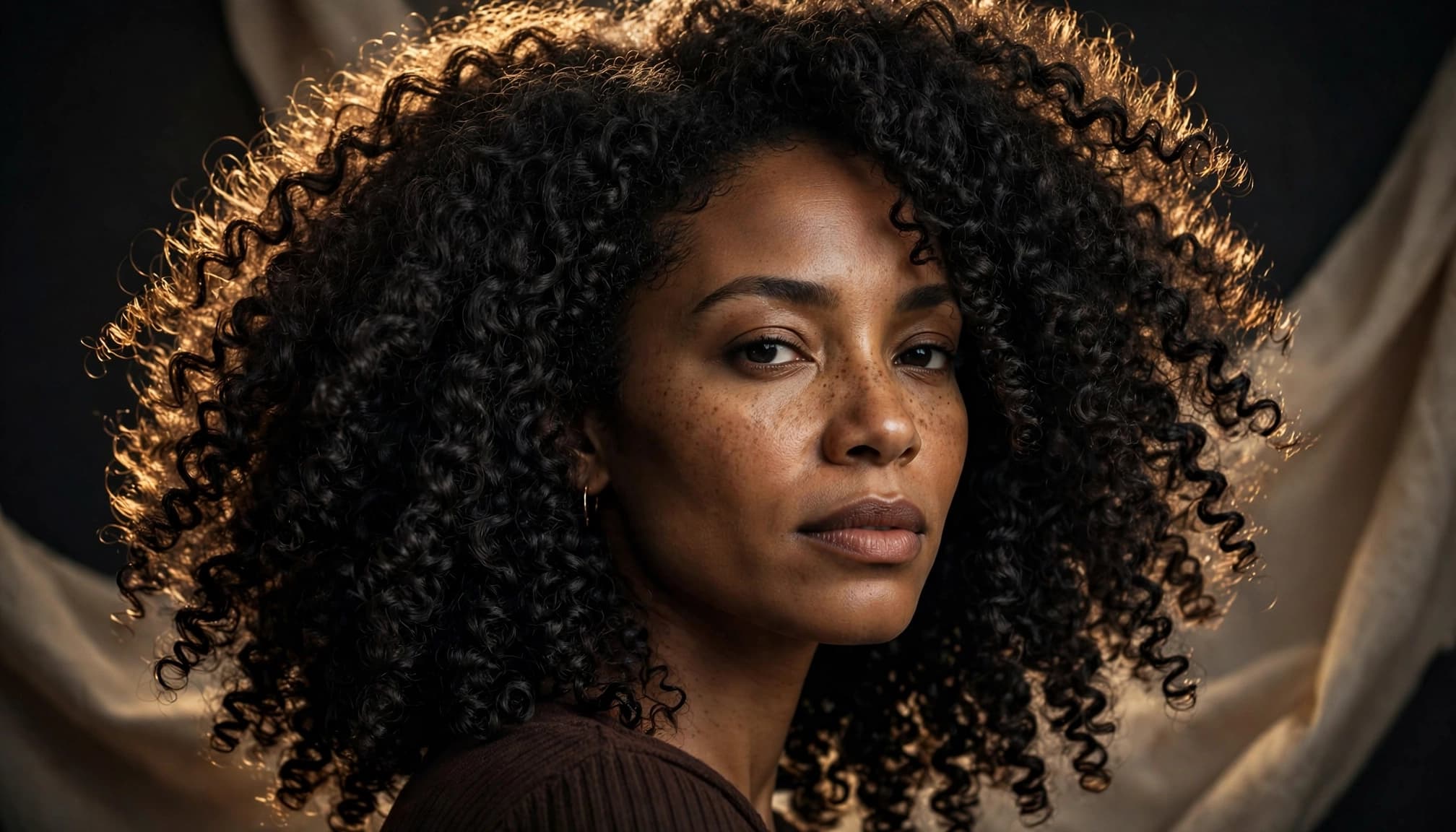
Curly and coily hair need a closer pattern match. Compare the curl size, shrinkage, surface texture, and fullness. A curl pattern can match while the density does not, which leaves the added hair looking separate.
Why curl pattern and volume matter
Extensions may appear longer when your natural hair shrinks more than the added hair. Before installing, stretch or style both hair types in a similar way so you can compare their finished length.
Use only enough hair to match your own fullness. For a textured look, the Kinky Curly Brazilian hair bundles with lace closure are listed as Brazilian Remy human hair with a Jerry curl texture, three bundles plus a closure, and lengths from 10 to 30 inches. Those details help you compare the texture and amount of hair before choosing a full install.
Prepare Natural Hair for Blending
Preparation determines whether attachment points stay hidden. Work with clean, fully detangled hair, and avoid installing extensions over wet roots unless the product instructions specifically allow it.
Create a concealed top layer
Make a horizontal part where you want the first weft to sit. Leave a generous layer of natural hair above it. This top layer should fall over the extension when you release it.
For clip-ins, backcomb only the small section where the clip will attach if you need extra grip. Avoid rough teasing throughout the head. Open each clip, place it close to the part, and close it without pulling the scalp.
With tape-ins, keep the sections clean and even. Hair trapped between adhesive panels can tug at the roots and make removal difficult. Follow the manufacturer's placement and removal instructions.
Place extensions below the part
Start lower than you think, especially around the temples and hairline. These areas have less coverage and can reveal a weft quickly. Leave enough natural hair around the face to soften the sides.
Do not place a heavy piece directly at the crown. The crown needs movement and coverage, while the lower sections can carry more of the added length. Use fewer pieces if the hair begins to feel tight or heavy.
How to Blend Hair Extensions Step by Step
Once the extensions are secure, blend the transition instead of brushing everything together at once.
Layer and shape the lengths
Release the top section and check the attachment points from the front, sides, and back. If the added hair forms a clear horizontal line, move the piece lower or add a softer layer of natural hair over it.
For clip-ins, install the widest weft at the back and use narrower pieces toward the sides. This follows the shape of the head and prevents visible corners. Leave the shortest layers around the face free unless the extensions match them closely.
Human-hair extensions can often be shaped, but cutting is permanent. Begin with a small amount and use point-cutting or soft layers rather than one blunt cut. A professional stylist is the safer choice for a major length change, bangs, or a layered style.
Combine the ends
Straighten, wave, or define both hair types in a compatible way. Use heat only when your natural hair and the extension care instructions allow it. Apply heat protectant to hair that will be exposed to hot tools, and avoid repeated passes over the same section.
For waves and curls, style the natural ends together with the extension hair in small sections. Then let the hair cool before separating it gently with your fingers. Brushing through a defined curl pattern can create frizz and expose the difference in texture.
A light amount of compatible styling product can help the ends sit together. Avoid applying heavy oils or creams near tape, clips, or bonded areas because they may affect grip.
Fix Common Blending Problems
Small changes often solve a visible blend, but some problems point to a poor match or unsafe placement.
When the wefts show
Visible wefts usually sit too high, carry too much hair, or lack enough coverage. Move the piece lower and release more natural hair over it. Around the sides, use smaller pieces and keep them behind the hairline.
If clips show when you move, check whether the section is too thin. A smaller weft may work better than adding more teasing. For tape-ins, ask a stylist to assess the placement rather than pulling or repositioning the adhesive yourself.
When the texture does not match
Do not force two different textures together with excessive heat. That can damage natural hair while still leaving the extensions looking separate. Wash and style both textures in a similar routine, or choose extensions with a closer pattern.
If the curl size matches but the hair looks too full, reduce the number of pieces. If the extensions look limp beside your natural hair, a professional may be able to reshape them, but replacing them with a closer texture may give a better result.
Shop Clip Hair
-
 Esaurito
Balmain, Balmain, Hair Clip, Black
Prezzo di listino $142.05 USDPrezzo di listino -
Balmain, Balmain, Hair Clip, Silver/Gold
Prezzo di listino $487.56 USDPrezzo di listino -
Balmain, Printemps Floral, Hair Clip, White
Prezzo di listino $488.95 USDPrezzo di listino -
 Esaurito
Balmain, Legacy, Hair Clip, White
Prezzo di listino $535.72 USDPrezzo di listino -
 Esaurito
Balmain, Printemps, Hair Clip, White
Prezzo di listino $428.58 USDPrezzo di listino


Protect Your Natural Hair
Blending should never require pain, strong pulling, or a tight feeling at the scalp. Repeated tension from extensions and tight hairstyles can contribute to traction alopecia, a type of hair loss that may become permanent. The American Academy of Dermatologists' extension safety guidance recommends paying attention to tension and stopping styles that hurt.
Avoid repeated pulling
Keep parts clean, avoid attaching heavy pieces to a small amount of hair, and vary placement when possible. Detangle from the ends upward with a suitable brush or wide-tooth comb. Hold the hair near the roots while detangling so the scalp does not absorb the force.
The same warning applies to sew-ins, braids, ponytails, and tight updos. A clinical review on traction alopecia and pressure-related hair loss describes the condition in people with straight, wavy, curly, and coily hair.
Stop when your scalp reacts
Remove temporary extensions if you notice pain, headaches, tenderness, broken hairs, or increased shedding around the attachment points. Do not cover irritated skin with another tight style.
A dermatologist can evaluate persistent hair loss or scalp symptoms. A licensed stylist can also help adjust the installation, reduce weight, and select a method that suits your density.
Product Examples by Hair Texture
Product specifications can help you compare options, but they do not replace an in-person texture and density assessment.
For curly and coily blends
The Brazilian kinky curly Remy hair bundles are listed as six-piece, 10-inch bundles in a deep 99J shade with a Jerry curly texture. A color change can make blending more difficult, so compare the burgundy shade with your intended finished look before ordering.
For a natural-black kinky curly style, compare the curl size and density rather than choosing by length alone. If your hair is tightly coiled, shrinkage may make a shorter extension look longer after styling.
For straight and wavy looks
A body wave can add movement to naturally wavy hair, while straight hair may need a flatter, smoother finish. Choose a bundle amount that matches your density. More hair does not automatically create a more natural result.
If your own hair has a strong curl pattern, a straight or body wave extension may require a professional smoothing or styling plan. Avoid using high heat repeatedly to compensate for a mismatch.
Key Takeaways
- Match texture and density before focusing on length.
- Leave enough natural hair above every attachment point to conceal it.
- Use fewer pieces when your hair is fine or the extension feels heavy.
- Style the natural hair and extensions together at the ends.
- Remove any installation that causes pain, tightness, or scalp irritation.
- Choose a professional stylist for sew-ins, major cuts, chemical processing, or difficult texture matches.
Frequently Asked Questions
Can I blend clip-in extensions with short natural hair?
Yes, but the extension length and density must suit your haircut. Place the clips below the shortest visible layers, then use a stylist to add soft layers if the transition remains obvious. Very short hair may need a wig, topper, or professional installation instead.
How do I blend extensions with curly natural hair?
Choose extensions with a similar curl size, shrinkage, and fullness. Define both textures with compatible products, then separate the curls gently after they dry. If the curls match but the extension hair is much denser, use fewer wefts.
Should extensions feel tight?
No. Secure extensions should stay in place without painful pulling, headaches, tenderness, or strong scalp pressure. Remove the style if discomfort begins. Persistent pain or hair loss needs attention from a dermatologist or qualified professional.
Why do my extensions look longer than my natural hair?
Your natural hair may shrink more, especially if it is curly or coily. Compare both textures after styling, not while one is stretched and the other is not. A closer curl pattern, shorter length, or professional shaping can correct the difference.
Conclusion
A natural blend begins with the right match, then improves through careful placement and soft shaping. Keep attachment points covered, combine the ends gently, and use only the amount of hair your natural strands can support.
The most convincing result should feel comfortable as well as look polished. When the texture, density, and tension all work together, you can blend hair extensions without hiding your natural hair under unnecessary stress.