

How to Fix Dry Ends on a Human Hair Wig
Dry, rough ends can make a beautiful human hair wig look older than it is. When you're searching for a dry ends wig solution, the goal is to restore softness without weighing down the hair or hiding serious damage under layers of product.
Conditioner, careful detangling, and lower heat can improve the wig's feel and appearance. However, no mask or oil can permanently repair a split end. Use the routine below to soften manageable dryness, then trim severely frayed ends when necessary.
Key Takeaways
- Detangle the wig from the ends upward with a wide-tooth comb.
- Wash with lukewarm water and a gentle, sulfate-free shampoo.
- Apply conditioner mainly to the mid-lengths and ends.
- Choose lightweight products so buildup doesn't make the hair stiff or greasy.
- Let the wig air-dry on a stand whenever possible.
- Use low to medium heat and apply heat protectant before styling.
- Treat split ends as permanent structural damage. A small trim may be the only lasting solution.
- Store the wig on a stand or in a satin bag after it has dried completely.
Why Human Hair Wig Ends Get Dry
The ends are the oldest part of the hair, so they usually show wear first. Brushing, friction against clothing, hot tools, chemical processing, sunlight, and repeated washing can remove moisture from the strands.
Unlike hair growing from your scalp, wig hair doesn't receive natural oils from the roots. The ends can therefore feel rough even when the rest of the wig still looks soft and glossy.
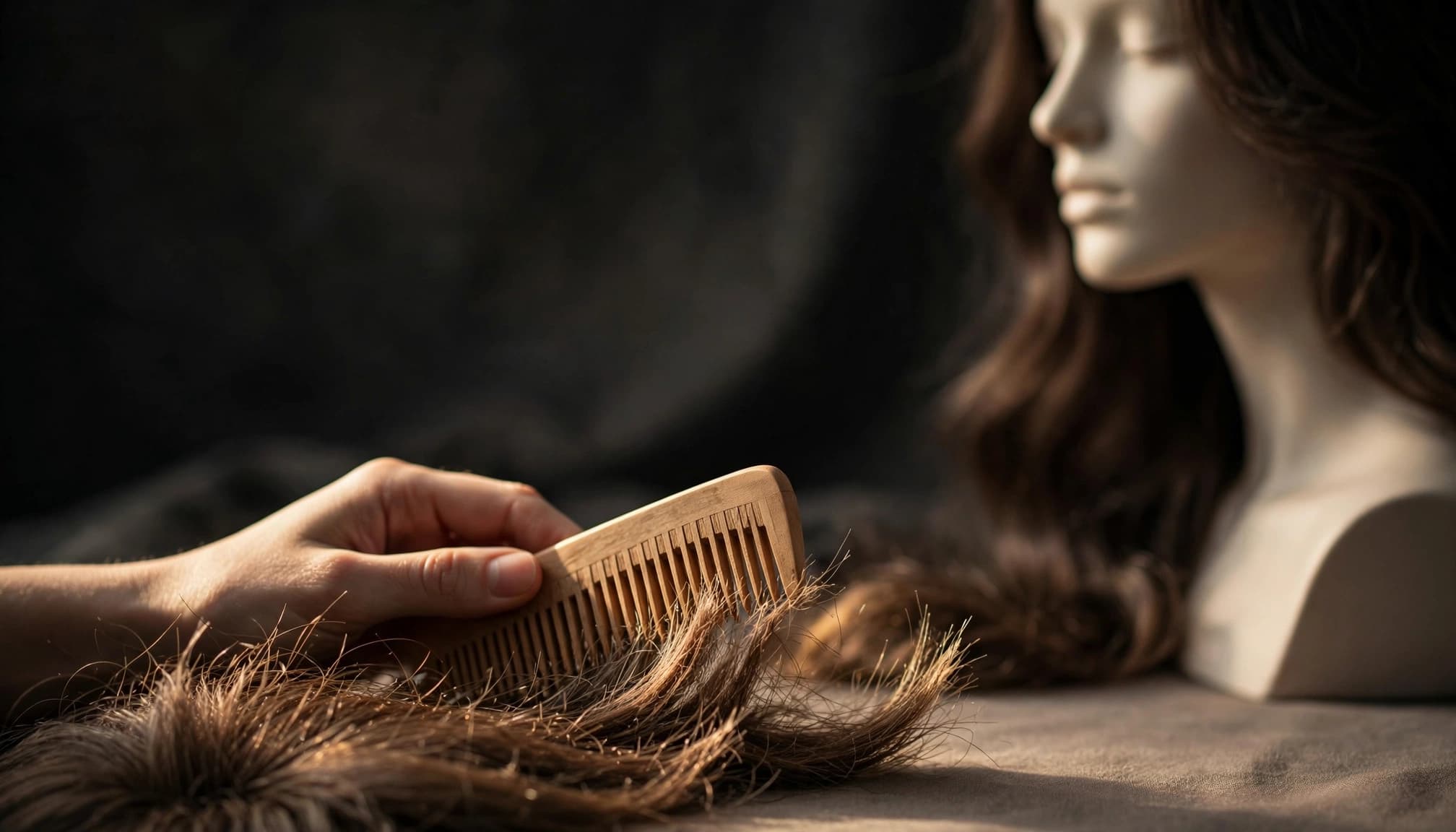
Signs the Ends Need Extra Care
Dryness usually feels like stiffness, roughness, or a straw-like texture. The ends may also look dull, separate into uneven pieces, or tangle faster than the rest of the wig.
Temporary dryness often improves after washing and conditioning. The hair may feel softer, comb more easily, and regain some shine. That improvement means the strands are more manageable, not that they have been permanently repaired.
Split ends look different. You may see forked tips, tiny white dots, thin ends, or short pieces breaking away from the main section. A conditioner can smooth the surface for a while, but it cannot fuse a split strand back together.
Common Causes of Rough Wig Ends
Heavy styling products can leave a coating that feels dry and sticky at the same time. Too much oil can also attract dust and make the ends harder to wash clean.
Heat causes another common problem, especially when you straighten or curl the same section repeatedly. Colored or lightened wigs may feel drier because chemical processing can reduce the hair's softness and elasticity.
Friction matters too. Letting the wig rub against a cotton pillowcase, coat collar, or rough storage bag can create tangles and frayed tips. A consistent care routine addresses all three causes: buildup, heat, and friction.
Dry Ends Wig Care That Actually Helps
Start with gentle handling before adding another product. Rough brushing can turn mild dryness into breakage, especially when the hair is wet.
Detangle From the Ends Up
Place the wig on a stand or hold it securely at the cap. Separate the hair into small sections, then loosen tangles at the very ends first. Move upward gradually as each section becomes smooth.
Use a wide-tooth comb or a wig brush designed for human hair. Hold the section above the area you're combing so the tension doesn't pull against the lace or wefts.
Luxegan gives the same ends-first approach for its Taylor glueless human hair wig, along with satin-bag or wig-stand storage. Never rake a brush from the crown straight through a tangled bottom section.
Wash Gently and Condition the Lengths
Before washing, detangle the wig while it is dry. Use lukewarm water and let the water flow in the direction of the hair. Avoid twisting, rubbing, or bunching the lengths.
Apply a small amount of sulfate-free shampoo to the scalp area and cap. Allow the suds to pass through the hair as you rinse instead of scrubbing the ends. Follow with conditioner on the mid-lengths and ends, then leave it on according to the product directions.
A deep conditioner or mask can help a processed or especially dry wig feel softer. Rinse thoroughly, since leftover conditioner can cause limpness and buildup. Luxegan also recommends sulfate-free shampoo and conditioner for the Buttercup human hair bob wig.
Use Fewer, Lighter Styling Products
Choose a lightweight leave-in conditioner, detangling spray, or light curl cream rather than layering several products. Apply a small amount to the ends, then add more only if the hair still feels rough.
A small drop of serum can reduce the look of frizz, but it won't repair a split. Keep rich oils and thick creams away from the cap unless the manufacturer specifically recommends them. Riviera Hair Replacement also advises using fewer and lighter styling products to extend the time between washes.
For waves and curls, water may be enough for a refresh. Luxegan's deep curly human hair bob wig is described as suitable for refreshes with water or a light curl cream. Match the amount of product to the texture and density of your wig.
Dry With Low Heat or Air-Dry
Blot the washed wig with a soft microfiber towel. Don't wring or twist the hair. Place it on a wig stand and allow it to air-dry with the ends hanging freely.
The Cleveland Clinic recommends air-drying on a wig stand as the simplest drying method, while a blow dryer can be used on natural human hair wigs. If you use one, choose low to medium heat, keep the dryer moving, and stop when the hair is dry.
Product Selection Guide for Dry Ends
The right product should add slip and softness without leaving a heavy coating. Check the wig's care label first, especially if it has been colored, bleached, or chemically treated.
| Product type | What to look for | How to use it |
|---|---|---|
| Shampoo | Gentle, sulfate-free formula | Clean the cap and lengths without scrubbing |
| Conditioner | Moisturizing but lightweight formula | Apply mainly to the mid-lengths and ends |
| Deep conditioner | Richer treatment for persistent dryness | Use occasionally and rinse well |
| Leave-in spray | Lightweight detangling and moisture support | Mist lightly through damp ends |
| Curl cream | Light formula suited to textured hair | Use a small amount on wet or misted curls |
| Serum | Light smoothing finish | Rub a tiny amount between your palms first |
| Heat protectant | Product labeled for heat styling | Apply before a blow dryer, iron, or wand |
Avoid choosing a product only because it says "repair." That word often describes a temporary smoothing effect. A conditioner can coat rough areas and improve shine, but it cannot rebuild a split tip.
For a straight style, a light leave-in spray and a small amount of serum may be enough. Curly and wavy wigs often need water plus a small amount of curl cream. Heavy masks work better as occasional treatments than as daily stylers.
Shop Human Hair Wigs
-
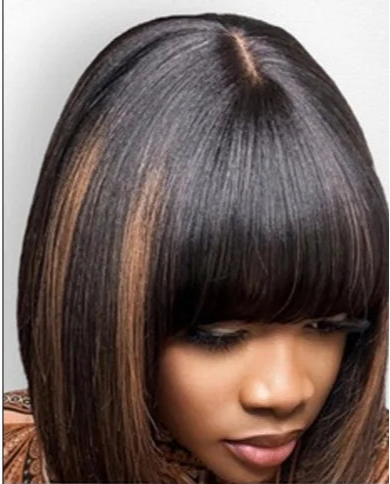
"Put On & Go" Straight Bob Wig | Easy Wear Human Hair with Bangs & Realistic Scalp
Prezzo di listino Da $111.00 USDPrezzo di listino$133.00 USDPrezzo scontato Da $111.00 USDIn offerta -
#4 Brown Pixie Short Cut Wig with Bangs | Straight Human Hair Full Machine Made
Prezzo di listino $112.00 USDPrezzo di listino$168.00 USDPrezzo scontato $112.00 USDIn offerta -
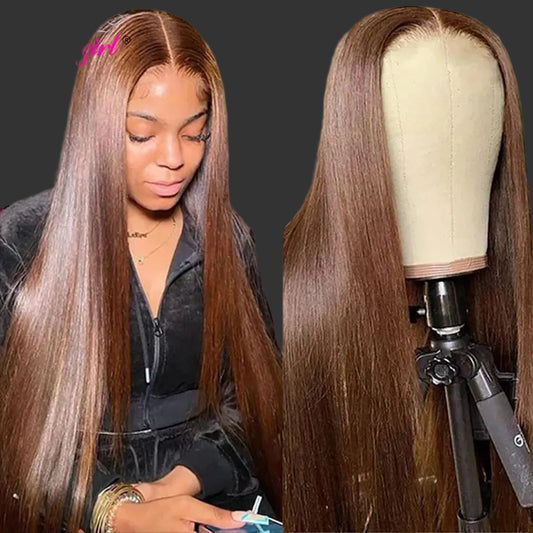
#4 Chestnut Brown Straight Lace Front Wig | 13x4 & 13x6 Transparent Swiss Lace Frontal Wig | 150% & 180% Density 100% Brazilian Remy Human Hair Long Closure Wig for Women (26+ Inch)
Prezzo di listino Da $364.00 USDPrezzo di listino$0.00 USDPrezzo scontato Da $364.00 USD -
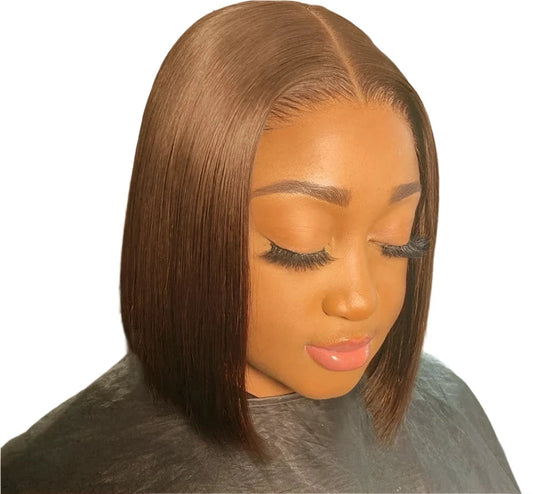
#4 Chocolate Brown Bob Wig | Glueless | Ready To Wear | Brazilian Hair | Human Hair | Straight | Invisible | Closure Wigs For Women
Prezzo di listino Da $151.00 USDPrezzo di listino$172.00 USDPrezzo scontato Da $151.00 USDIn offerta -
#4 Chocolate Brown Straight Bob Wig | Sophisticated 200% Density HD Transparent Lace Frontal | Elegant "Short Bob" Silhouette | "Dignified" Pre-Plucked Brazilian Remy Human Hair for Radiant Versatile Styling
Prezzo di listino $150.00 USDPrezzo di listino$200.00 USDPrezzo scontato $150.00 USDIn offerta -
#4/613 Ombre Blonde Lace Front Wig | High-Impact Black with Blue Custom Tone Option | 13x4 HD Transparent Swiss Lace Frontal Body Wave Human Hair Wig for Women
Prezzo di listino $502.00 USDPrezzo di listino$0.00 USDPrezzo scontato $502.00 USD -
#60 613 Platinum Blonde Wear-and-Go Glueless Wig | 13x4 HD Transparent Lace Frontal Wig | 100% Brazilian Remy Human Hair Body Wave Long 26+ Inch Wig for Women
Prezzo di listino Da $249.00 USDPrezzo di listino$0.00 USDPrezzo scontato Da $249.00 USD -
#60 Platinum Ash Blonde Lace Front Wig | 100% Brazilian Human Hair Glueless Wig | 13x4 & 13x6 HD Transparent Swiss Lace Frontal Body Wave Gown for Women
Prezzo di listino Da $249.00 USDPrezzo di listino$0.00 USDPrezzo scontato Da $249.00 USD










When to Consider a Professional Trim
A trim may be necessary when the ends remain thin, forked, brittle, or uneven after conditioning. It can also help when the last few inches tangle repeatedly despite gentle care.
Ask a wig stylist to assess the hair if you're unsure how much to remove. A professional can preserve the shape of a bob, layer, wave, or long lace-front style while taking off visibly damaged tips.
Don't trim while the wig is wet unless the stylist understands how its texture changes as it dries. Curly hair may spring up, and uneven tension can produce an unintended shape. For a valuable or heavily customized wig, professional trimming is safer than guessing.
The goal is to remove damaged ends, not to chase perfect softness with repeated cuts. Once the hair feels manageable, focus on preventing more friction and heat damage.
How to Prevent Dry Ends on a Human Hair Wig
Prevention starts with reducing the amount of stress placed on the oldest hair. You don't need a complicated routine, but you do need consistency.
Protect the Hair During Styling
Apply heat protectant before using a blow dryer, flat iron, curling iron, or hot brush. Use the lowest setting that gives you the style you want, and avoid passing a hot tool over the same ends repeatedly.
Check the wig's product instructions before using high heat. For example, Luxegan describes its Body Wave HD lace frontal wig as suitable for heat styling, but that doesn't mean unlimited heat is harmless.
Let the wig cool before brushing through a freshly styled section. When possible, choose heat-free rollers, flexi rods, or a gentle air-dried wave pattern. Less frequent heat exposure gives the ends more time to retain moisture.
Store the Wig to Protect Its Shape
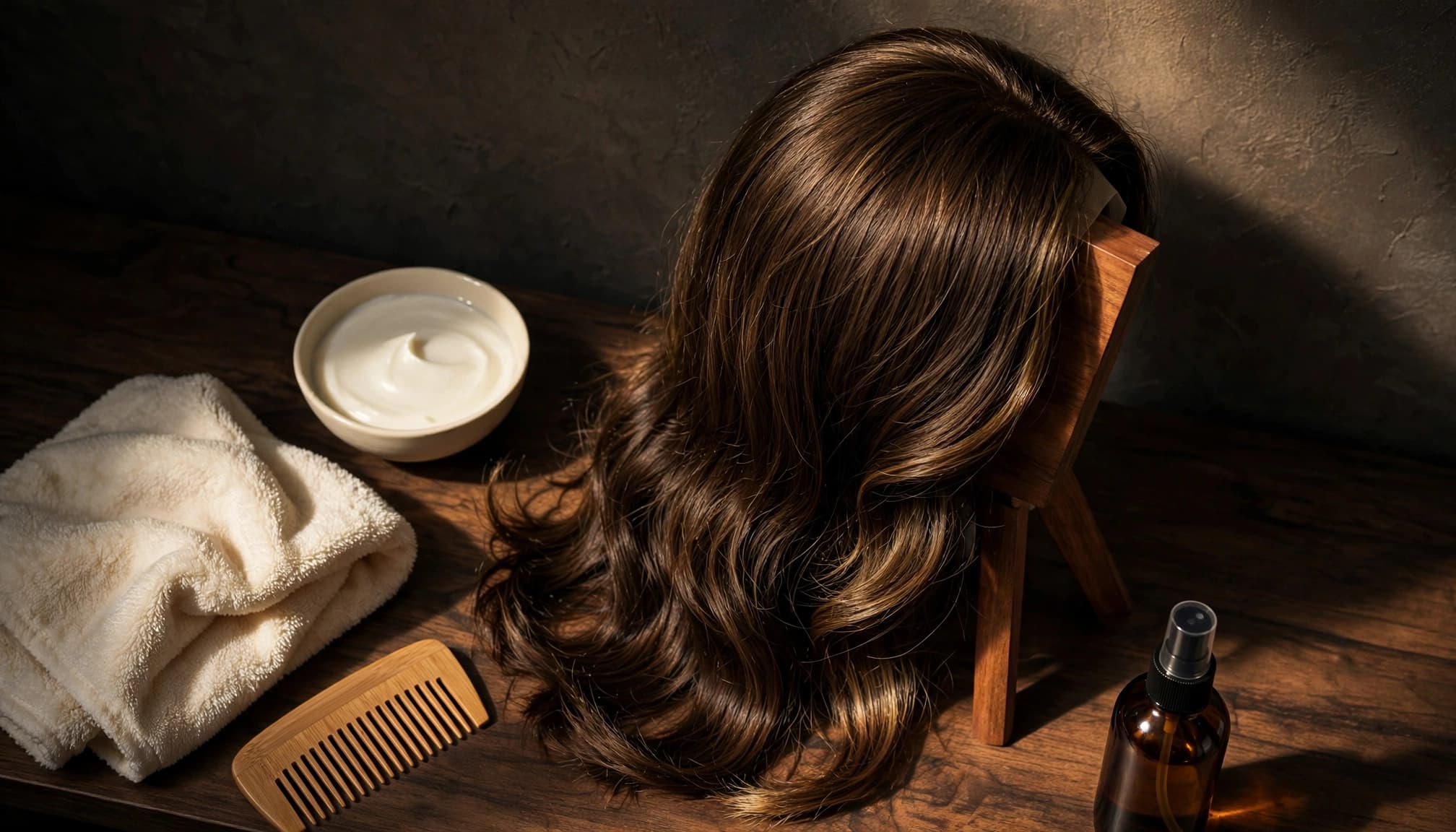
Brush out tangles before storage, starting at the ends. Place the wig on a stand if you want to preserve its shape and reduce crushing. A satin bag can protect dry hair from friction when the wig isn't being worn.
Keep the wig away from direct sunlight, damp bathrooms, and strong sources of heat. Never store it while wet, since trapped moisture can create odor and encourage tangling.
If you wear the wig often, give the ends a quick check before each styling session. A light mist and gentle comb-through can prevent a small tangle from becoming a pulled, frayed section.
FAQ About Dry Wig Ends
Can conditioner fix split ends on a human hair wig?
Conditioner can make split ends feel smoother and look less obvious for a short time. It cannot permanently reconnect the split fibers. If the tips remain forked or break easily, trimming is the dependable way to remove that damage.
How often should I deep-condition my wig?
There isn't one schedule for every wig. Texture, color treatment, heat use, and how often you wear the wig all affect its needs. Start with occasional deep conditioning, then adjust based on how the hair feels after washing. Rinse thoroughly to prevent heavy buildup.
Can I put oil on dry wig ends?
You can use a very small amount of lightweight oil or serum as a finishing product if the wig's care instructions allow it. Apply it to the ends only, and avoid coating the hair repeatedly between washes. Too much oil can attract dirt and make the wig look dull.
Should I brush my wig while it is wet?
Handle wet hair as little as possible because it stretches and tangles more easily. Remove major tangles before washing, then use your fingers or a wide-tooth comb only when needed. Support the section you're combing instead of pulling from the cap.
Conclusion
Dry ends don't always mean a wig has reached the end of its life. Gentle washing, lightweight moisture, careful detangling, controlled heat, and proper storage can restore a softer feel when the problem is surface dryness or buildup.
Split tips need a different response. Products can improve their appearance, but a trim removes the damage. Once the ends are healthy, a simple routine will help keep them smooth, flexible, and easier to style.