

How to Seal Synthetic Braiding Hair Ends Neatly
The right finish depends on the fiber. Use hot water only for heat-safe kanekalon. It can set braid tips and help prevent unraveling, while human hair needs a heat-free option.
Choose a method based on braid length and whether you can keep the bowl away from someone's skin. Prepare your tools first, then work in small sections for an even finish.
Key Takeaways
- Use hot water only on synthetic hair confirmed as heat-safe, and follow the manufacturer's temperature range. For Kanekalon, the article gives 70 to 90°C (160 to 190°F) as the setting range.
- Dip small sections of braid tips, keeping the water away from skin, scalp, and natural hair. Never use actively boiling water.
- Choose a heat-free finish for human hair, heat-sensitive fibers, or hair with unclear fiber content. A slipknot or nylon thread tie can secure the ends without an elastic.
- Wear braids gently: wash about once every one to three weeks, reduce friction with a silk or satin covering, and remove braids sooner if they cause pain, matting, or pulling at the edges.
Why the fiber matters before you seal braid ends
Dipping in hot water softens some heat-safe fibers so braid tips hold their shape as they cool. Sealing won't work reliably with every type of synthetic hair.
Check the manufacturer's heat guidance
The manufacturer's guidance gives a hot-water setting range of 70 to 90°C (160 to 190°F). Product labels take precedence because fibers and blends vary. Follow the instructions for the hair you have. If the label doesn't say it's heat-safe, don't assume hot water is suitable.
For example, our 26-inch Kanekalon pre-stretched braiding hair is listed as hot-water-set hair. The Kanekalon official site also gives setting guidance for its fiber. Ordinary fibers can melt or become damaged, so don't use heat based on appearance alone.
Synthetic and human hair need different finishes
Heat-safe fibers can soften and set into a neat tip. Human hair doesn't melt into a sealed shape, so secure it with a slipknot, thread tie, or suitable elastic.
If an extension blends with natural hair or its fiber content is unclear, choose a heat-free method and keep heat away from your scalp.
Prepare the water and braids first
A little preparation helps keep the finish even and reduces the chance of a spill. Set up your work area before bringing hot water near the person being braided.
Gather the tools and section the hair
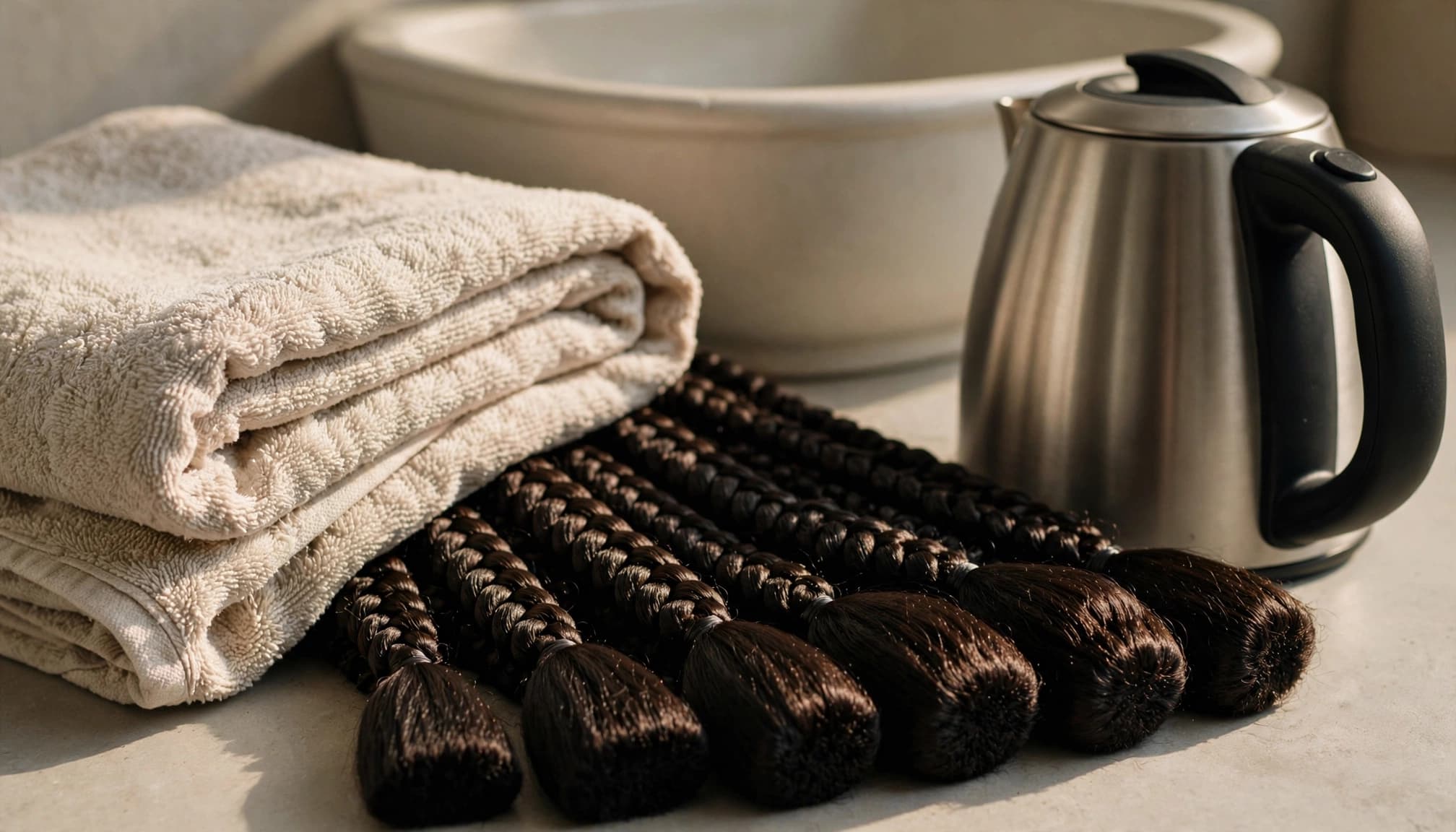
Gather a pot or kettle with a stable handle, a thick cotton towel, and thick gloves before you bring the water over. If another person is receiving the style, cover their shoulders with a waterproof cape and keep their face, neck, skin, and scalp clear of the dipping area. An adult must remain present whenever a child is involved.
Separate the braids into manageable sections, and keep the ends you're not working on away from the water. Gather the tips evenly and trim only stray or uneven ends before setting them; don't cut the braids too short. For safety, position the pot where it can't be knocked over, and don't carry a full pot of hot water across the room.
Set the temperature with the product instructions
A common routine is to bring water close to a boil, turn off the heat, then let it sit for about five minutes. That wait isn't a substitute for checking the temperature, and it doesn't guarantee a safe or correct temperature for every product. Check the manufacturer's range, and let the water cool further if it's above the recommended temperature. Never dip into actively boiling water.
Keep any human hair and the natural hair out of the water. Position the braid tips beyond the person's natural hair so you can submerge the braided portion you want to set, while keeping the scalp and skin clear.
How to seal synthetic braiding hair with hot water
Work carefully through one section at a time, and don't rush to dip all the ends together. Hot water dipping sets suitable fibers as they cool, but it can't make an unsuitable fiber safe.
Dip the braid tips in short repetitions
- Gather a small section of braid ends and hold them securely. Trim loose or uneven tips without shortening the braids too much, then point the ends down and away from the person's body.
- Submerge only the portion of a confirmed heat-safe braid that you can keep safely away from skin. Move the ends up and down four to five times, holding each dip for five to ten seconds.
- Saturate as much of each braid as you safely can. Keep the water on the braided length, not the scalp or natural hair.
- Lift the section out slowly and let excess water drain back into the pot. Don't swing or shake the wet braids.
If the ends remain loose, check that the hair is approved for heat setting and that the braid is evenly saturated. Repeating the process can help, but extra heat won't make an unsuitable fiber safe.
Towel-dry and straighten the section
Wrap the wet braid ends in a dry, thick towel. Pull the braids straight through the towel with gentle, even tension until they're just slightly damp. Avoid rubbing, twisting, or squeezing hard, since that can rough up the finish.
Complete the dip and towel-drying process for one section before moving on. Let each section cool in its straight shape. Don't touch the tips while they're hot, and don't use an open flame on synthetic hair.
Keep hot-water dipping safe
Hot water can cause serious burns if a pot tips or spills. A Children's Wisconsin safety article on dipping braids describes a child who suffered burns over more than 18 percent of her body. Boiling water remains a burn hazard after you turn off the stove.
Control the pot, the person, and the work area
For safety, keep the pot on a stable, heat-safe surface and use its handle to position it. Wear thick gloves, use a waterproof cape, and keep a towel within reach. Don't hold a child over a pot, and keep children away from the work area.
If you can't keep the pot steady and the ends away from skin, choose a heat-free finish. Children's Wisconsin says a regular hot shower can relax braids and set the ends, but it still involves hot water. Keep the temperature comfortable, protect the face and scalp, and never expose skin to scalding heat.
Know what to do after a scald
For burns, move away from the water and cool the affected area under cool running water for 20 minutes. The Royal Children's Hospital burn and scald guidance explains this first-aid step. Don't apply ice. Seek urgent medical help for serious burns, a large affected area, or an injury to a child.
Shop Best Sellers
-
Short Goddess Faux Locs Wig | Brown Highlight Crochet Dreadlock Wig
Prezzo di listino Da $158.00 USDPrezzo di listino$190.00 USDPrezzo scontato Da $158.00 USDIn offerta -
30 Inch Burgundy 99J Curly Human Hair Wig | 13x6 Lace Frontal | 200% Density
Prezzo di listino Da $257.00 USDPrezzo di listino$0.00 USDPrezzo scontato Da $257.00 USD -
12A Deep Wave Remy Human Hair Bundles | 30 to 32 Inch Weft Extensions
Prezzo di listino $364.00 USDPrezzo di listino$0.00 USDPrezzo scontato $364.00 USD -
#350 Knotless Box Braids Wig | Short Lace Frontal Bob | Dark Ombre Ginger
Prezzo di listino $262.50 USDPrezzo di listino$0.00 USDPrezzo scontato $262.50 USD -
Short Afro Faux Dreads Wig | Synthetic Braided Wig for Men and Women
Prezzo di listino $90.00 USDPrezzo di listino$120.00 USDPrezzo scontato $90.00 USDIn offerta -
12A Raw Vietnamese Bouncy Wave Wig | 13x4 Lace Frontal | 250% Density
Prezzo di listino Da $242.00 USDPrezzo di listino$0.00 USDPrezzo scontato Da $242.00 USD -
Men's Wingtip Derby Shoes | Genuine Leather Colour Block Lace-Ups
Prezzo di listino $263.00 USDPrezzo di listino$301.00 USDPrezzo scontato $263.00 USDIn offerta -
Brazilian Human Hair 13x4 Lace Front Wig | Glueless, Pre-Plucked with Baby Hair
Prezzo di listino Da $99.00 USDPrezzo di listino$132.00 USDPrezzo scontato Da $99.00 USDIn offerta






Heat-free ways to seal braid ends with a slipknot, nylon thread, elastics, or glue
If the fiber is heat-sensitive, the braids are human hair, or dipping isn't practical, use a heat-free finish. Human hair and heat-sensitive synthetic hair shouldn't be treated with hot water. For sealing long braids without bringing water near the person's body, choose one of these methods.
Try a slipknot or nylon thread tie
A small, tight slipknot at the braid tip holds the strands without an elastic and can stay nearly invisible when it matches the braid. Trim excess braid only after securing the knot, and leave enough length to keep it from loosening.
For a nylon thread tie, wrap nylon thread around the end three to five times, then double-knot it. Some vendor instructions recommend 40 to 50 lb test thread, but that's not a universal requirement. Keep the wrap snug without crushing the braid, then trim excess thread close to the knot.
Use elastics or glue with care
Elastics offer a simple hold when a knot won't stay secure. Choose elastics that grip without cutting into the hair. Rubber bands can snag or pull strands during removal, so don't wrap elastics too tightly.
Nail glue or super glue can dry quickly on synthetic tips, but it's less forgiving. Apply only a tiny amount to the synthetic end, away from skin and natural hair, and follow the product label. Avoid it on human hair, since it can bond strands and make removal difficult. Contact with skin or eyes can be harmful. Never use an open flame on synthetic hair.
Keep the ends neat after braiding
A clean finish lasts longer when braids stay dry, the scalp feels comfortable, and friction is low. Aftercare also helps you spot when it's time to remove a style.
Wash gently and reduce friction
Wash braids about once every one to three weeks with a lightweight shampoo. Clean your scalp gently, rinse well, and avoid rough scrubbing at the ends to prevent frizz. For box braids, rinse between sections to clear shampoo residue.
Between washes, wipe the skin with a cloth dipped in a mixture of three parts water to one part apple cider vinegar. Don't apply diluted apple cider vinegar to irritated or broken skin.
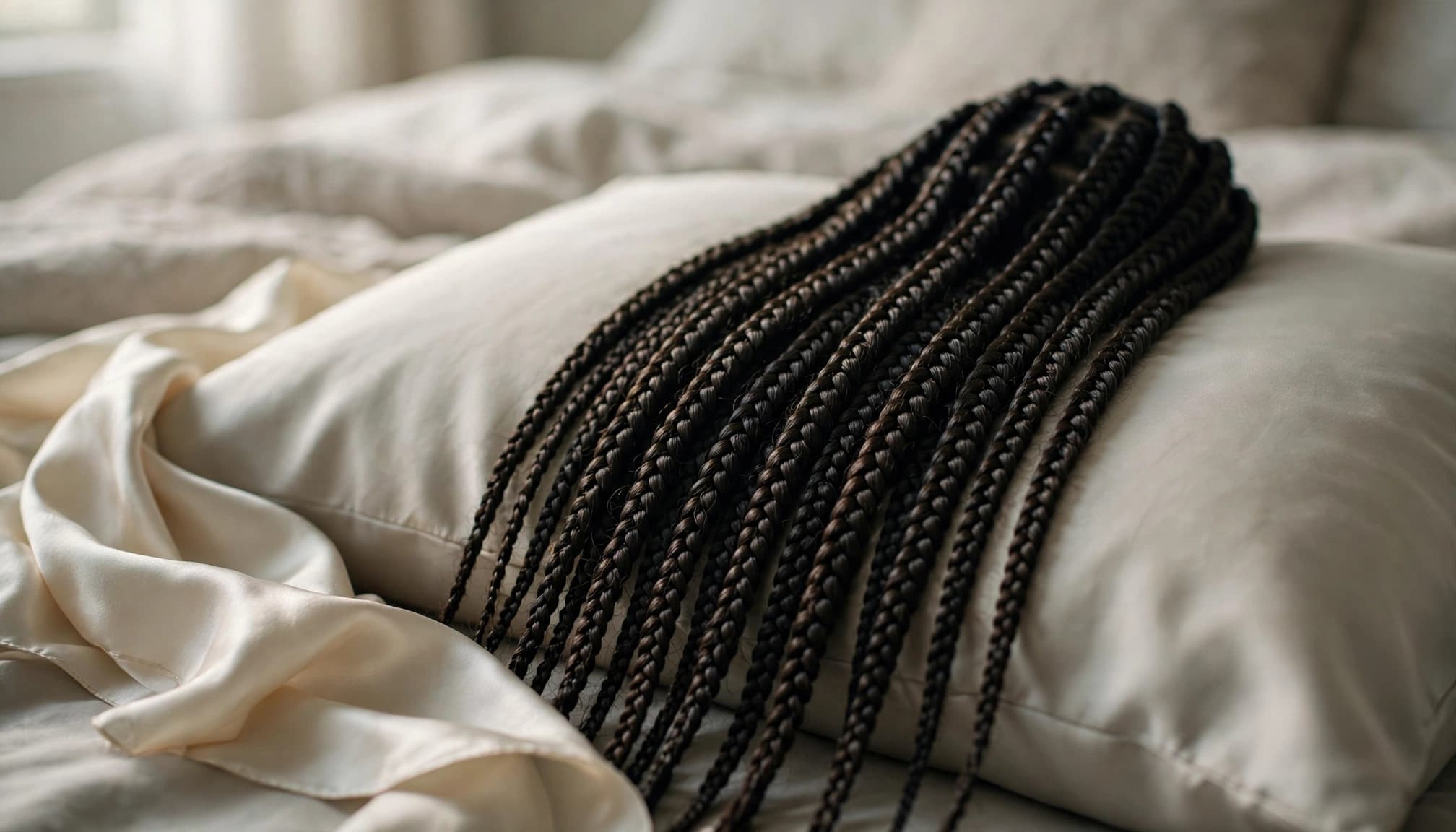
A silk or satin pillowcase reduces friction and helps control frizz. A silk or satin scarf, a silk or satin bonnet, or another silk or satin sleep covering can protect the braids and help limit frizz.
Remove braids before they cause strain
Plan to remove braids within about two months, though wear time varies by style. Box braids may last longer than cornrows, but remove them sooner if you feel pain, notice matting, or see pulling at your edges.
Common questions about sealing braid ends
How hot should the water be?
Use hot water within the temperature range specified by the hair manufacturer. For Kanekalon, official guidance is 70 to 90°C (160 to 190°F); don't use actively boiling water.
Why does hot water keep Kanekalon ends from unraveling?
Heat-safe Kanekalon softens during dipping and sets as it cools. This helps the fibers hold their braided shape. The method doesn't work the same way on human hair, and unsuitable synthetic fibers may be damaged by heat.
How can I seal a braid without an elastic?
Tie a small slipknot at the tip or use nylon thread with three to five wraps and a double knot. These options work for human hair and avoid putting an elastic near the scalp.
Can I dip braids on a child?
An adult must control the setup and keep the child away from the water. Choose a heat-free method if you can't prevent spills or skin contact.
A neat finish starts with the right method
Hot water can set heat-safe kanekalon, but follow the fiber's instructions and control the temperature. For human hair or heat-sensitive extensions, use a knot or thread tie. If the fiber is unknown, avoid heat.
Work in small sections and protect the person from spills. A clean finish keeps braid ends secure without damaging the hair.