
Yaki vs Silky Straight Wigs: Choose Your Ideal Finish
Two straight wigs can look completely different once the light hits them or you run your fingers through the strands. When comparing yaki vs silky wigs, the main difference is texture: Yaki has a fine, pressed-hair grain, while silky straight usually looks smoother and more reflective.
Neither finish suits everyone. Your preferred level of texture, shine, volume, and styling flexibility can guide the choice, but the wig's fiber, density, length, and cap construction matter too. Start with what each texture looks and feels like.
Yaki vs silky wigs: the texture difference
What Yaki texture looks like and feels like
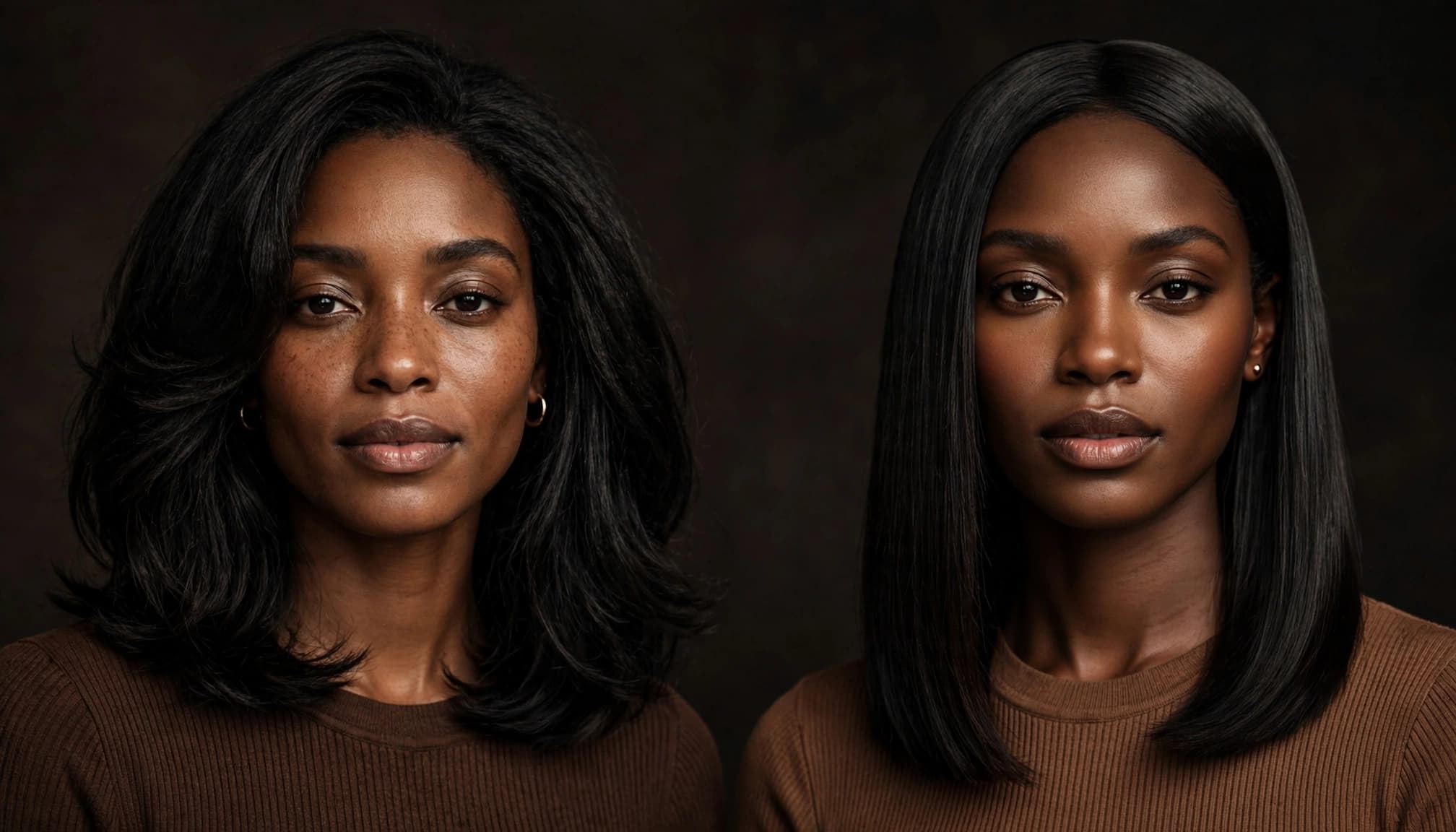
Yaki describes a straight texture designed to resemble relaxed Afro-textured hair. Rather than looking perfectly uniform, the strands often have a subtle grain or fine ridged appearance. This gives the wig a natural-looking, pressed finish with more visible texture than a glossy, pin-straight style.
The feel can vary. Some Yaki textures are soft and light, while others have more noticeable texture. Mayvenn distinguishes regular Yaki, which has more grain, from Silky Yaki, which looks freshly flat-ironed. Onychair also describes Yaki Straight as mimicking relaxed Afro-textured strands. Those terms help, but product descriptions matter because sellers may use texture labels differently.
What silky straight looks like and feels like
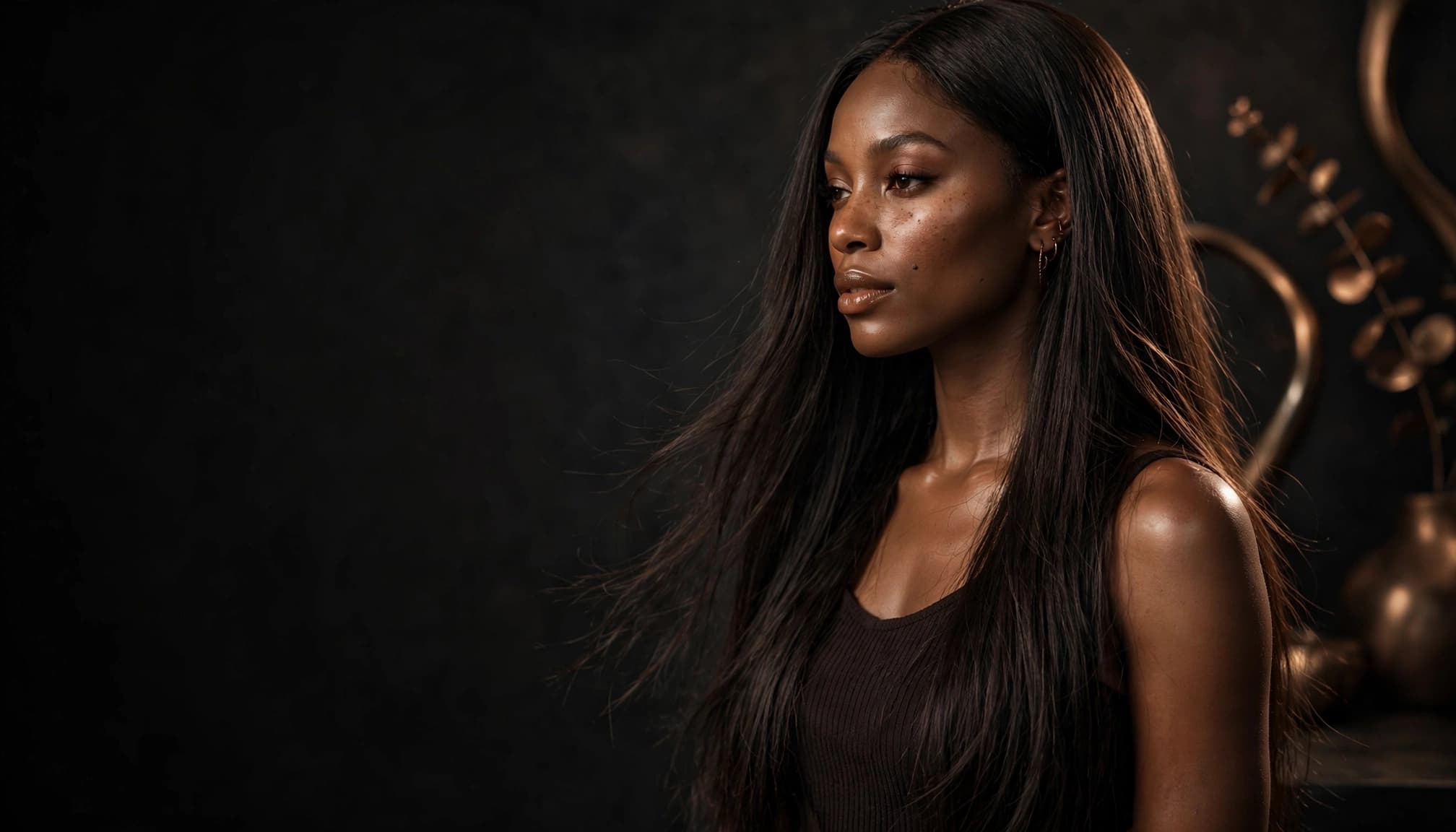
Silky straight hair has a smoother, more even surface. It usually reflects more light, so it can appear shinier and sleeker than Yaki. Strands tend to lie close together, creating a polished finish with less visible grain.
The effect can range from softly smooth to very sleek, depending on the hair and styling. A silky straight wig isn't automatically flat or thin, just as a Yaki wig isn't automatically coarse. Density and cut influence the overall shape as much as texture does.
Choose the finish that feels like you
Yaki is a strong match if you want straight hair with a little texture and body. Its less uniform surface can blend well with relaxed hair, especially if you're aiming for a pressed look that doesn't appear glassy. It may also appeal if high shine isn't part of your preferred style.
Silky straight may suit you if you like a smooth, refined finish that catches the light. It works well for styles where you want the strands to appear sleek and orderly, such as a center part or a long, straight silhouette. If you enjoy shine, this texture puts it front and center.
Think about how you want the wig to look in everyday settings, not only in a product photo. Studio lighting can intensify sheen, and images may not show subtle texture clearly. Compare several angles, read the listing's description, and look for buyer photos when available.
Match the texture to your styling routine
Both textures can be worn as straight styles, but they create different impressions. Yaki's grain makes a straight look feel less uniform, while silky straight emphasizes smoothness. Your usual part, preferred shape, and how much fullness you like can help you decide.
Consider how you plan to wear it
If you often wear your hair with a side part, a deep part, or tucked behind one ear, check that the wig's lace and cap allow the placement you want. A 5x5 closure, for example, doesn't offer the same parting area as a larger lace frontal. Lace construction affects styling options independently of texture.
For a high ponytail or updo, check whether the listing specifies a 360 lace design or another construction that supports styling around the hairline. Don't assume every straight wig can be pulled back the same way. The fit, lace coverage, and cap design all matter.
Consider how much shine and texture you want
Look at the finish in natural-looking light if product photos provide different views. A silky unit can show more reflected light, while a Yaki texture tends to show more surface detail. Neither quality is a measure of quality; they simply create different visual effects.
Keep fiber type and care in the decision
Texture alone doesn't tell you how to care for a wig. Human hair and synthetic fibers have different styling limits, and care instructions can vary between products. Follow the product guidance before applying heat or using styling products.
If a human-hair listing says the wig can be curled, straightened, or restyled, check the directions for that specific unit. Luxegan's listing for its light Yaki wig with 13x6 HD lace describes the texture as soft and silky, and says the hair can be restyled. That detail is specific to the listed product, not a guarantee for every Yaki wig.
A sleek finish may show changes in alignment or flyaways more clearly, while texture can make individual strands less visually uniform. These are appearance differences, not promises about maintenance time or durability. Consider how you typically style and store wigs, then use the care directions as your guide.
Check the full product description before buying
The texture name is only one part of the listing. Before ordering, check the fiber type, density, length, lace coverage, cap size, and included features. Two wigs with the same texture name can wear very differently if one is longer, fuller, or built with a different cap.
Density and length change the silhouette
Density affects how full the wig appears, and length changes how the texture falls. For example, Luxegan lists its Light Yaki wig in 150%, 180%, and 250% density options. The brand also lists a 32-inch Yaki wig at 250% density. Those specifications describe individual products, not standard requirements for Yaki.
A silky straight option can also have substantial length and fullness. Luxegan's 5x5 silk top silky straight human hair wig is listed as Peruvian Remy human hair and 26 inches or longer. Check the photos and measurements to see whether the shape suits your preferred look.
Lace and parting affect the finish
Lace type and cap construction influence how the hairline looks and how you can part the wig. A silky texture may draw attention to a clean part, while Yaki's texture can add detail around the face. Either way, a natural-looking finish depends on fit, lace placement, and color match as well as the strands.
For a very sleek option, Luxegan's pin-straight Brazilian Remy human hair wig is listed at 30 inches with 360-degree parting. Compare those construction details with your styling plans before choosing a texture based on photos alone.
Shop Straight Wigs
-
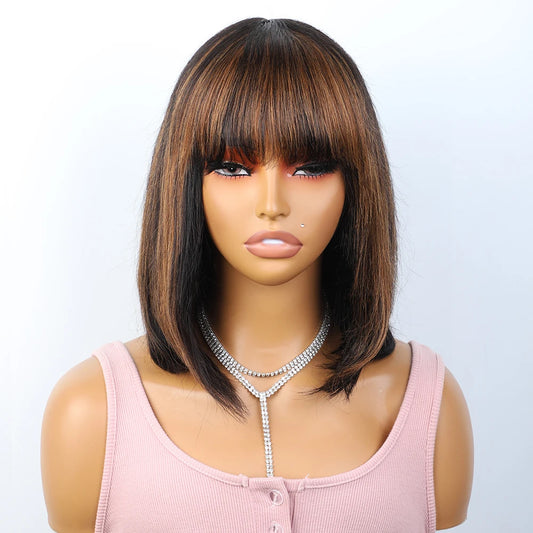
"Put On & Go" Straight Bob Wig | Easy Wear Human Hair with Bangs & Realistic Scalp
Prezzo di listino Da $111.00 USDPrezzo di listino$133.00 USDPrezzo scontato Da $111.00 USDIn offerta -
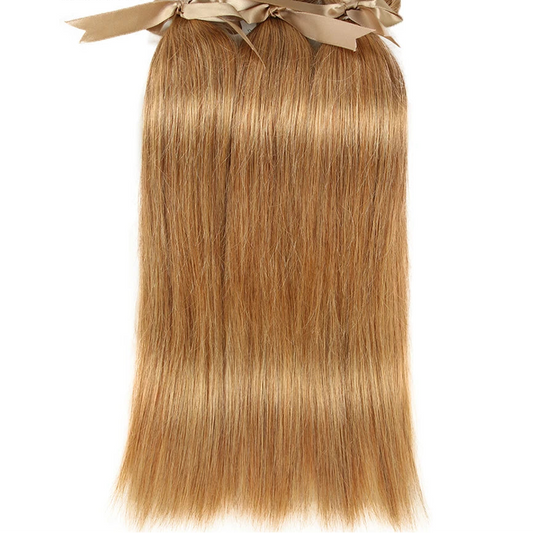
#27/30 Honey Blonde Auburn Straight Human Hair Bundles | Premium Brazilian Remy Human Hair Weaving | Multidimensional Highlighted Sew-In Extension Bundles (3-Piece Multipack)
Prezzo di listino $221.00 USDPrezzo di listino$0.00 USDPrezzo scontato $221.00 USD -
#4 Brown Pixie Short Cut Wig with Bangs | Straight Human Hair Full Machine Made
Prezzo di listino $112.00 USDPrezzo di listino$168.00 USDPrezzo scontato $112.00 USDIn offerta -
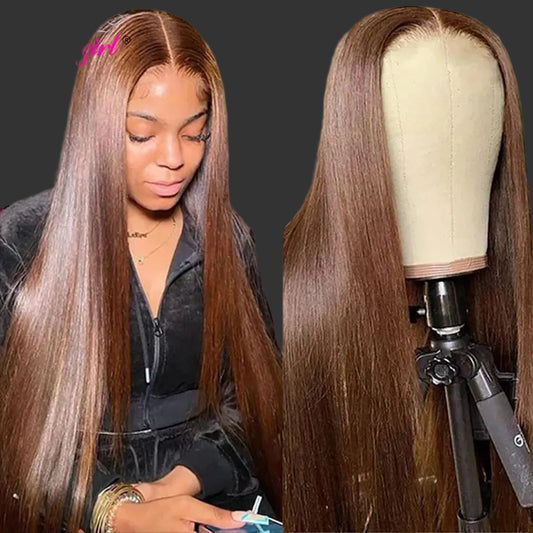
#4 Chestnut Brown Straight Lace Front Wig | 13x4 & 13x6 Transparent Swiss Lace Frontal Wig | 150% & 180% Density 100% Brazilian Remy Human Hair Long Closure Wig for Women (26+ Inch)
Prezzo di listino Da $364.00 USDPrezzo di listino$0.00 USDPrezzo scontato Da $364.00 USD -
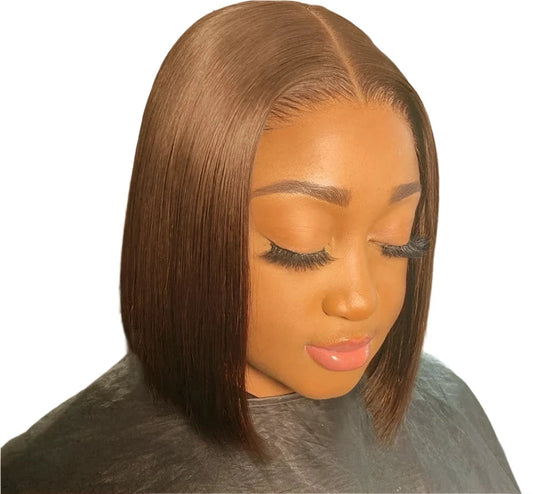
#4 Chocolate Brown Bob Wig | Glueless | Ready To Wear | Brazilian Hair | Human Hair | Straight | Invisible | Closure Wigs For Women
Prezzo di listino Da $151.00 USDPrezzo di listino$172.00 USDPrezzo scontato Da $151.00 USDIn offerta -
#4 Chocolate Brown Straight Bob Wig | Sophisticated 200% Density HD Transparent Lace Frontal | Elegant "Short Bob" Silhouette | "Dignified" Pre-Plucked Brazilian Remy Human Hair for Radiant Versatile Styling
Prezzo di listino $150.00 USDPrezzo di listino$200.00 USDPrezzo scontato $150.00 USDIn offerta -
10-16 inch Short Straight Bob Wig | Brazilian Remy Human Hair | 13x4 Lace Frontal | Natural Looking | Ready to Wear
Prezzo di listino $72.51 USDPrezzo di listino$120.85 USDPrezzo scontato $72.51 USDIn offerta -
10-Inch Glueless Bob Wig | Sophisticated 4x4 HD Transparent Lace Closure | Elegant "Ready to Wear" Brazilian Human Hair | "Dignified" Pre-Cut Lace Straight Remy Wig for Radiant Versatile Styling
Prezzo di listino Da $140.00 USDPrezzo di listino$160.00 USDPrezzo scontato Da $140.00 USDIn offerta








Who each straight texture may suit
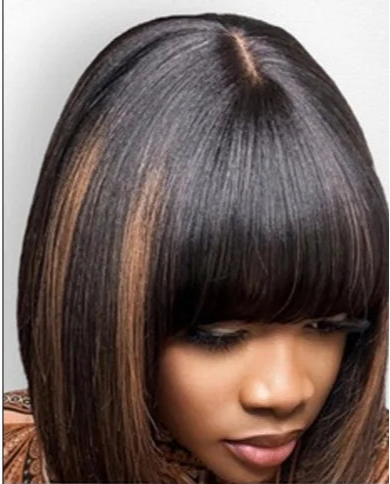
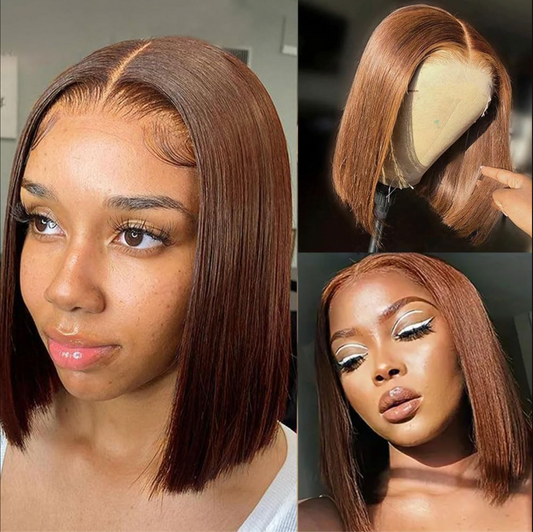
Choose Yaki if you prefer a straight style with a subtle grain and a relaxed, natural-hair impression. It can work especially well when you want visible texture rather than a mirror-smooth finish. If you're unsure, a light Yaki option may offer a less pronounced texture than a coarser Yaki variation, but check the seller's description and images.
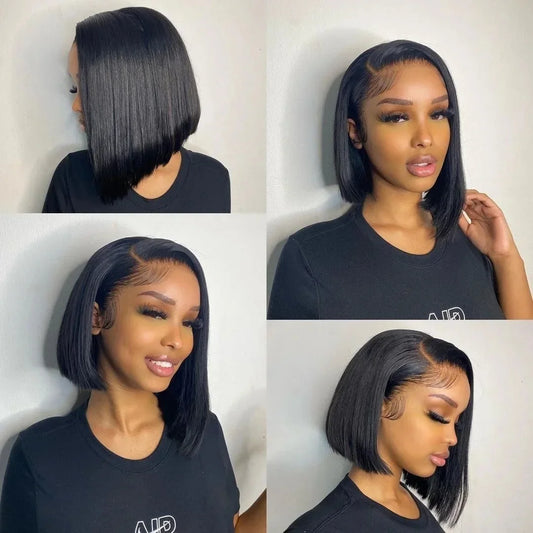
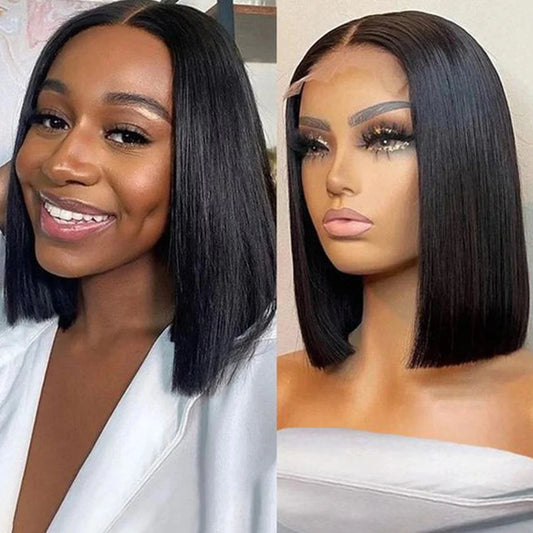
Choose silky straight if you favor a smoother surface, noticeable shine, and a sleek outline. It can suit polished styles where uniform strands are part of the look. However, a silky unit can still be styled with layers, curls, or a side part if its fiber and construction permit it.
For either texture, think beyond the name. A product with the right density, length, lace, and cap fit is more likely to match your expectations than a texture label alone. If possible, compare the listed wig with your desired everyday style before you buy.
Key takeaways
- Yaki has a subtle grain and often mimics the look of relaxed hair.
- Silky straight has a smoother surface and usually reflects more light.
- Texture labels vary, so read the exact product description and inspect photos.
- Fiber type, density, length, lace, and cap design also shape the final look.
- Styling options depend on the specific wig, not only its texture.
Frequently asked questions
Is Yaki hair curly or straight?
Yaki is generally a straight texture with a visible grain. It's designed to resemble relaxed hair rather than perfectly smooth strands. Some sellers offer variations, so check whether a listing describes light, regular, coarse, or Silky Yaki.
Does silky straight always look shinier than Yaki?
Silky straight is usually described as smoother and more reflective, but the finish varies by product. Lighting, color, styling, and hair condition can affect how shiny a wig looks. Product photos from several angles can give you a better sense of its finish.
Can you straighten a Yaki wig?
Some human-hair Yaki wigs can be straightened or restyled, but that depends on the product. For example, Luxegan's 32-inch Yaki listing describes styling options that include straightening. Check the care directions for the exact wig before applying heat.
Which texture looks more natural?
Either can look natural when its texture matches the finish you want. Yaki may blend more easily with relaxed hair, while silky straight can look natural if you prefer a smooth, sleek style. Fit, hairline, color, and lace also affect the result.
Choose the texture that matches your finish
Yaki and silky straight offer distinct looks: one has more visible texture, and the other emphasizes smoothness and shine. Neither is the universal choice. Decide which finish feels right, then compare the wig's fiber, density, length, and construction before purchasing.