

How to Refresh Synthetic Wig Hair Between Washes
A synthetic wig can look tired long before it needs a full wash. The right way to refresh synthetic wig fibers is to remove surface odor, loosen tangles, calm static, and restore shape without soaking the cap.
Heavy sweat and product buildup need proper washing, but many in-between problems take only a few careful minutes. Use synthetic-safe products, gentle tools, and low-friction handling to keep your style looking polished. Start by checking what the wig needs today.
How to Refresh Synthetic Wig Hair Between Washes
An in-between refresh is surface maintenance, not a replacement for washing. It works well when the wig has light odor, minor frizz, dull-looking ends, static, or a style that has flattened during wear.
Place the wig on a stand before touching it. This gives you a stable shape and prevents you from pulling against the lace, wefts, or cap. Let the fibers cool if you wore the wig outdoors or near heat.
Look closely at the ends, nape, and area around the ears. These spots collect the most friction, sweat, and clothing fibers. If the hair feels sticky, greasy, or coated, avoid adding more spray. The wig needs a wash instead.
A quick refresh should leave the fibers light and touchable. If the hair feels heavier after treatment, you used too much product or chose one that isn't made for synthetic hair.
Gather the right tools and test the fibers
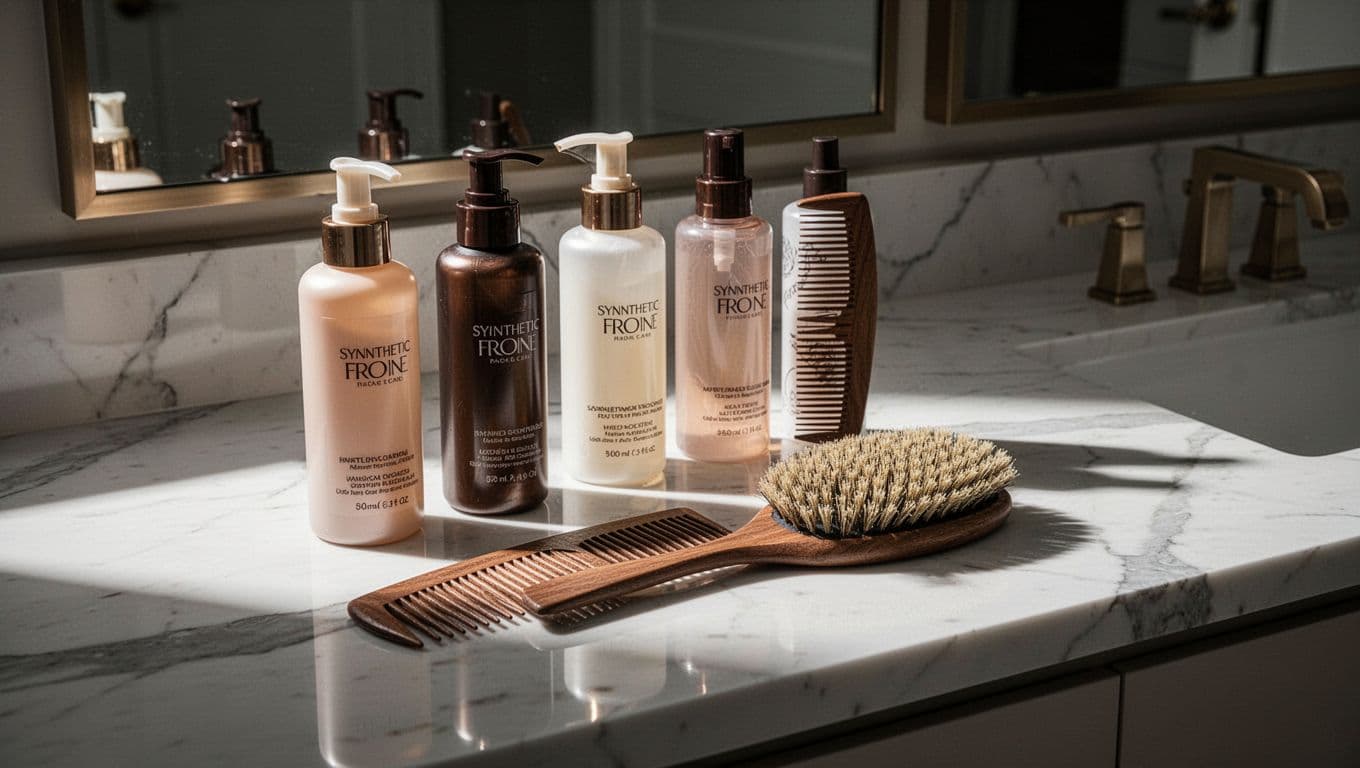
You don't need a large collection of products. A few suitable tools protect the wig while helping you fix its most common problems.
Use a wig stand or mannequin head, a wide-tooth comb, and a brush designed for wigs. A wide-tooth comb works well for straight styles and loose waves. Curly synthetic wigs often need finger separation instead of regular brushing, especially when you want to preserve the curl pattern.
Keep these products nearby:
- A detangling spray or conditioner spray labeled safe for synthetic wigs.
- A wig-specific anti-static spray for flyaways and friction.
- A matte spray or dry shampoo labeled for synthetic fibers when shine is the concern.
- A clean microfiber cloth for wiping the cap and lightly cleaning the nape.
Read the label before spraying anything. Products made for human hair often contain oils, heavy silicones, or ingredients that leave synthetic fibers coated. Regular leave-in conditioner, hair oil, serum, and hairspray can make a synthetic wig greasy or stiff.
Test every new product on a hidden section near the back. Apply a small amount, let it dry, and check the texture and color before treating the visible hair. This step matters most with heat-friendly fibers, colored wigs, and lace-front styles.
Hold the bottle several inches away and use a light mist. Oversaturating the wig can flatten its shape, dampen the cap, and create residue that attracts more dust.
Follow a gentle refresh routine
Work slowly around the wig instead of brushing through the entire style in one pass. The goal is to release surface tangles without stretching or snapping the fibers.
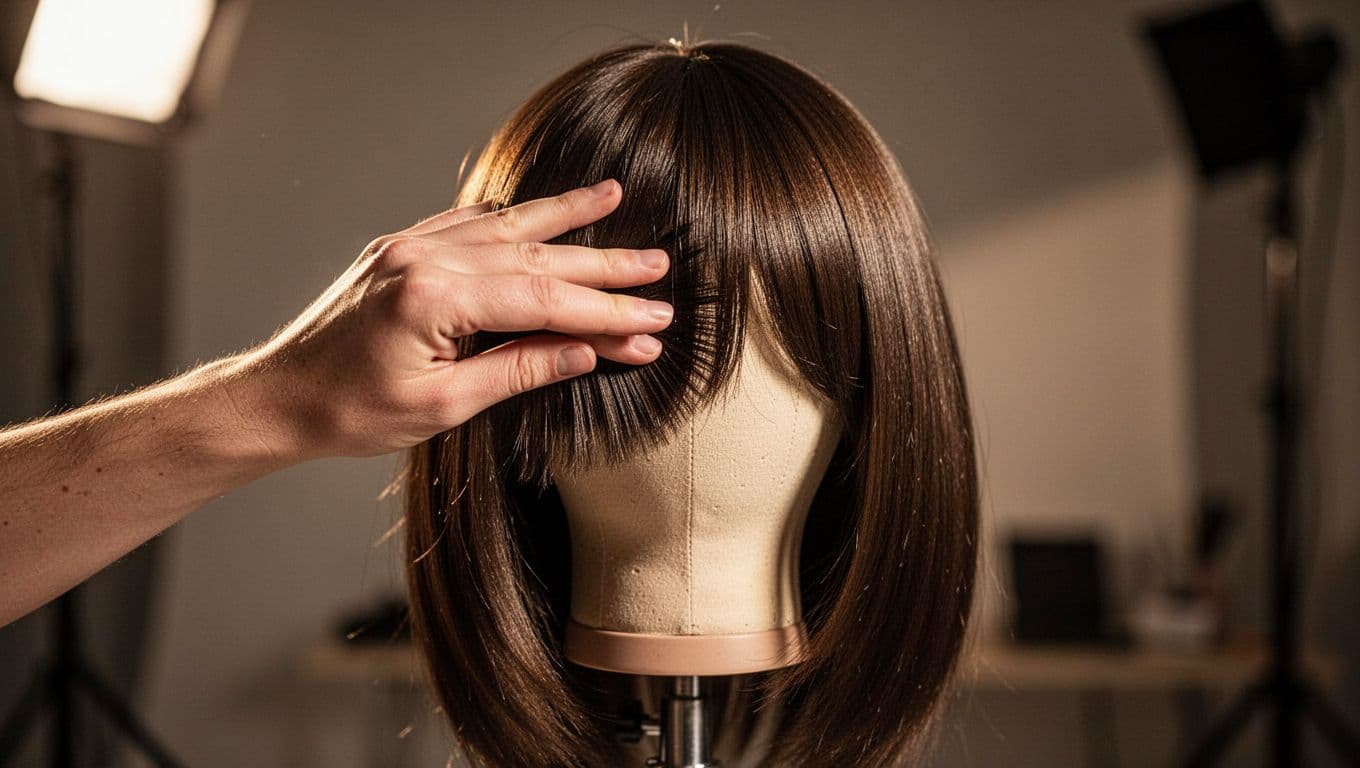
- Place the dry wig on a stand. Check the cap, part, hairline, and ends. Remove visible lint with clean fingers or a soft cloth. Don't pull at knots near the lace.
- Separate the hair into manageable sections. For a long wig, divide it into two or four loose sections. Keep clips away from delicate lace and avoid tight bands that crease the fibers.
- Apply a small amount of synthetic-safe detangler. Mist the mid-lengths and ends rather than soaking the roots or cap. Give the product a moment to spread through the fibers.
- Start at the ends. Hold the hair above the section you're working on. Use short, gentle strokes with a wide-tooth comb, moving gradually toward the cap as each knot loosens.
- Use your fingers around the nape. This area can mat quickly because it rubs against collars and skin. Separate the strands with your fingertips before using a comb.
- Smooth the surface after detangling. Guide the hair into its original direction with your hands or a wig brush. Avoid repeated brushing once the fibers look neat.
- Let the wig air-dry completely. Keep it on the stand in a cool, ventilated room. Don't wear it while the product is still damp, and don't store it in a closed bag until the hair and cap are dry.
Curly and wavy wigs need a different touch. Lightly mist a synthetic-safe curl refresher, then reshape a few sections with your fingers. Scrunching can disturb the curl pattern, so use gentle upward movements and stop when the shape returns.
A refresh synthetic wig routine should stay light. One controlled pass is better than repeated spraying and brushing throughout the day.
Remove odor, shine, and static without buildup
Different problems need different treatments. Adding one product to every issue often creates the buildup you were trying to avoid.
Light odors
Air out the wig after each wear. Place it on a stand near an open window or in a well-ventilated room, away from direct sun. This helps release everyday odors caused by sweat, cooking, and indoor air.
For a stronger but still light odor, use a deodorizing spray labeled for synthetic wigs. Mist the inside of the cap and the lower lengths lightly, following the product directions. Avoid spraying perfume, body mist, or deodorant directly onto the fibers. Fragrance products can leave residue, and some contain alcohol that may dry or roughen the surface.
Wipe the inside of the cap with a barely damp microfiber cloth if sweat is the main concern. Keep moisture controlled, especially around lace and elastic areas.
Excess shine
Some synthetic fibers look glossy under bright light. A matte spray or dry shampoo made for synthetic wigs can soften that appearance. Apply a small amount to a hidden section first, then use a light mist on the shiny areas.
Brush or shake out the product only after it dries. Applying several layers can make the wig look dusty and dull instead of natural. Avoid baby powder, cornstarch, and regular dry shampoo unless the packaging clearly says the product is safe for synthetic wig fibers.
Static and light frizz
Static often appears after friction with coats, scarves, car seats, or dry indoor air. Use a synthetic-safe anti-static spray and smooth the surface with clean hands. A tiny amount is enough.
Skip oils and silicone serums intended for human hair. They may make the wig feel slick at first, but they can attract lint and leave the fibers difficult to clean.
If the wig feels tacky after refreshing, stop adding product. That sticky texture usually means residue has built up and needs to be washed away.
Shop Wigs
-
Musicology, White Is Wight, Eau De Parfum, Unisex, 95 ml
Normaler Preis $404.33 USDNormaler Preis -
36 Inch Knotless Box Braided Wig with Curly Ends | Full Lace Boho Braided Wig | 5 Colors
Normaler Preis $163.00 USDNormaler Preis$186.00 USDVerkaufspreis $163.00 USDSale -
Jerry Curly Human Hair Wig – Short Pixie Afro Kinky Curly Wig with Bangs
Normaler Preis $104.00 USDNormaler Preis$125.00 USDVerkaufspreis $104.00 USDSale -
Wigundle Kanekalon Pre-Stretched Crochet Braiding Hair Extensions – Jumbo Braids for Women
Normaler Preis Von $105.00 USDNormaler Preis$133.00 USDVerkaufspreis Von $105.00 USDSale -
Short Water Wave Curly Bob Human Hair Wig 10in – Glueless Brazilian Remy Wig | Brown, Black, Red & Blonde
Normaler Preis Von $114.00 USDNormaler Preis$136.00 USDVerkaufspreis Von $114.00 USDSale -
Pixie Cut Wig for Black Women – Straight Remy Human Hair | Short 6in | Bangs | Machine Made
Normaler Preis Von $103.00 USDNormaler Preis$123.00 USDVerkaufspreis Von $103.00 USDSale -
Short Pixie Afro Kinky Curly Wig for Black Women – Glueless Brazilian Remy Human Hair | Bob with Bangs
Normaler Preis Von $95.00 USDNormaler Preis$126.00 USDVerkaufspreis Von $95.00 USDSale -
Highlight P4/30/27 Brazilian Straight Human Hair Wig with Bangs – 100% Remy | Full Machine Made | 16–28 Inch
Normaler Preis Von $162.00 USDNormaler Preis$185.00 USDVerkaufspreis Von $162.00 USDSale













Restore the style without excessive heat
Synthetic fibers usually hold the shape created during manufacturing. Excessive heat can melt, shrink, frizz, or permanently alter them. Check the wig's care label before using a blow dryer, curling iron, flat iron, steamer, or hot rollers.
For a straight style, smooth the hair with your hands and comb it in the original direction. Let small bends relax while the wig rests on its stand. A cool-air setting is safer than hot air, but use a dryer only when the manufacturer permits it.
For waves and curls, use a light mist of water or synthetic-safe curl refresher. Shape individual curls with your fingers, then allow them to air-dry. Don't brush a curly wig when it's dry unless you want to loosen the pattern and create more frizz.
Heat-friendly synthetic wigs still need care. "Heat-friendly" doesn't mean heat-proof. Use only the temperature range listed by the manufacturer, keep the tool moving, and test a hidden strand first. Never apply heat to a standard synthetic wig because a quick styling session can cause damage that washing won't reverse.
Reduce friction after styling. Store the dry wig on a suitable stand or in a clean, breathable bag. Keep it away from bathroom steam, radiators, direct sunlight, and rough fabrics. If you sleep in a wig, friction can create tangles at the nape, so removing it before bed gives the fibers a better chance to keep their shape.
Know when a full wash is necessary
Refreshing works for light surface issues. Washing is the better choice when the cap feels oily, the hair has visible product, or the odor returns soon after airing out.
Wash the wig according to its care instructions with shampoo labeled for synthetic wigs. Use cool or lukewarm water unless the manufacturer gives different directions. Avoid scrubbing, twisting, or rubbing the fibers together. Those actions can create tangles and disturb the style.
A full wash is usually needed when you notice:
- Sticky or stiff hair that doesn't improve after gentle brushing.
- Persistent smoke, food, sweat, or fragrance odor.
- Visible residue near the hairline, part, or nape.
- Tangling that returns immediately after detangling.
- A cap that feels damp or greasy against your skin.
There isn't one correct washing schedule for every wig. Frequency depends on how often you wear it, how much product you use, the weather, and how much you sweat. A light refresh between washes can extend wear time, but it shouldn't hide signs that the wig needs a proper clean.
Keep your synthetic wig fresh between wears
To refresh synthetic wig hair safely, match the treatment to the problem. Use a synthetic-safe detangler for knots, a wig-specific matte product for shine, and a light anti-static spray for flyaways. Air the wig out, protect the cap, and keep moisture and product under control.
Gentle handling matters more than a crowded product shelf. With careful detangling, limited spray, and no unapproved heat, you can keep a synthetic wig looking soft, shaped, and ready for its next wear.